
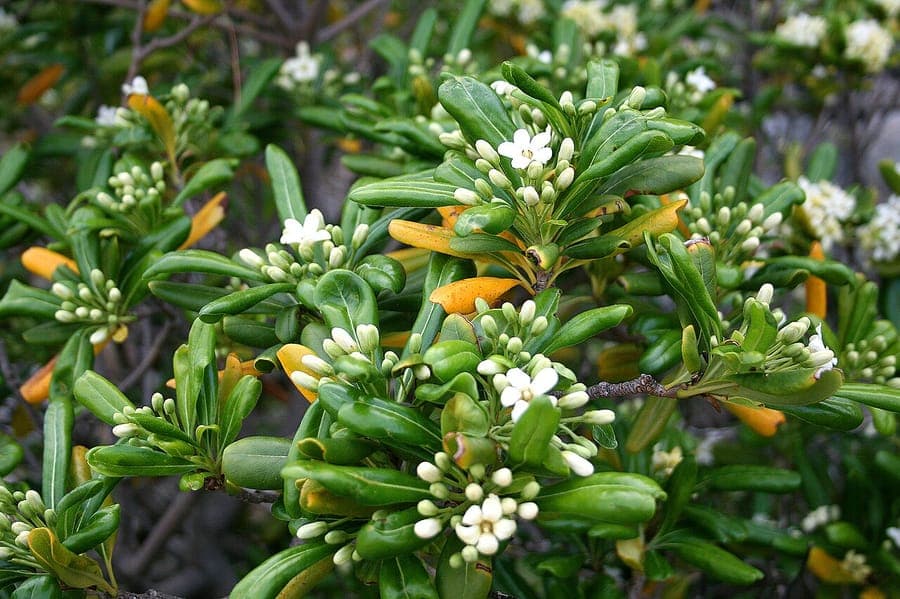
Jean-Pol GRANDMONT / CC BY 3.0, via Wikimedia Commons
Pittosporum tobira: complete guide
Pittosporum tobira
¿Quieres ver Pittosporum tobira: complete guide en tu jardín?
1 minuto, sin tarjeta de crédito
Overview
Pittosporum tobira, also known as Japanese cheesewood or mock orange, is a beautiful evergreen shrub native to Japan and South Korea. This plant has become a favourite among garden designers for its compact growth habit, glossy foliage, and delightfully fragrant white flowers that appear in spring. The plant combines ornamental beauty with practical screening capabilities and fits perfectly into Mediterranean and contemporary garden styles.
The botanical name references the sticky seeds contained in orange seed capsules - "pittosporum" literally means "sticky seed". This characteristic feature makes the plant interesting from both a botanical and ecological perspective.
Appearance and Bloom
Pittosporum tobira grows as a shrub reaching approximately 2-3 metres tall with nearly equal spread. The leaves are dark green, glossy, and leathery, often with a greyish-green tint. They remain attractive throughout the year, making this plant a valuable winter garden element with year-round interest.
Small white to cream-coloured flowers appear in dense clusters from May to June. They carry a strong, pleasant fragrance that intensifies in the evening - ideal for gardens where you spend time outdoors. After flowering, orange capsular fruits develop and persist for months, attracting birds and wildlife.
Ideal Location
Pittosporum tobira prefers full sun to light shade. Minimum 4-5 hours of direct sun daily is ideal for optimal flowering. In warmer climates, the plant can tolerate afternoon shade, particularly from southern exposure.
The plant is less suitable for very windy locations, though it has moderate wind tolerance. Provide shelter from strong cold winds. In northern European regions, windbreak protection improves winter survival rates.
Soil
Ideal soil is well-draining and slightly acidic to neutral (pH 5.5-7). Pittosporum tobira tolerates reasonably fertile soil but absolutely hates waterlogged conditions. Heavy clay soils must be improved with sand and organic matter for better drainage.
Amend the planting hole with at least one-third compost or leaf mould. This assists root establishment and provides slow-release nutrients that benefit the plant for years.
Watering
Once established, Pittosporum tobira is relatively drought-tolerant thanks to its deep root system. However, young plants require regular watering during their first two growing seasons for proper establishment.
Water when the top 2-3 cm of soil feels dry to touch. During extremely dry periods, supplementary watering may be necessary. Ensure water drains well - wet feet are unfavourable. In very hot summers, moderate additional water can promote better growth and vigour.
Diseño gratis
¿Quieres ver Pittosporum tobira: complete guide en tu jardín? Crea un diseño gratis ahora.
Pruning
Pittosporum tobira does not require mandatory pruning but responds well to shaping. Gently prune the plant in spring (March-April) to form a balanced shape. This stimulates dense growth and attractive form.
Remove any frost damage carefully in spring. The plant tolerates light shaping better than heavy pruning cuts.
Maintenance Calendar
January-February: Check for frost damage, perform heavy pruning if needed. March-April: Spring maintenance, apply fertiliser, shape and form. May-June: Enjoy fragrant flowers, no intervention needed. July-August: Monitor for drought stress, water supplementarily if needed. September-October: No special maintenance, enjoy the fruit display. November-December: Winter preparation, remove dead plant material.
Winter Hardiness
Winter hardiness varies significantly by region. Pittosporum tobira tolerates down to approximately -8 to -10 degrees Celsius, which is marginal for many northern European gardens. It performs best in zones where minimum temperatures don't drop below -5 degrees.
In colder climates, plant against a sunny, south-facing wall or provide bubble wrap protection during severe winters. In cooler regions, grow in large containers so plants can be moved indoors during harsh freezes.
Companion Plants
Pittosporum tobira combines beautifully with other Mediterranean species: excellent companions include Cistus varieties, Rosemary, Lavender, and Santolina. Ensure companion plants share similar water and light requirements for cohesive design.
Contrast purple Sage varieties or blue Ceanothus cultivars for striking colour schemes. For seasonal colour in the foot zone, plant Verbena, Petunia, or Impatiens.
Conclusion
Pittosporum tobira is a refined choice for those seeking Mediterranean or estate-garden style. With its glossy foliage, fragrant flowers, and interesting fruit display, this plant offers structure and seasonal interest. In northern regions, provide frost protection during harsh winters, but in Mediterranean-climate zones it grows without difficulty.
For purchase, try specialist nurseries for healthy specimens with good growing instructions. Gardenworld.app can help you integrate Pittosporum tobira into your perfect garden design. Gardenworld.app offers additional guidance for incorporating exotic species into temperate climate gardens.
¿Quieres ver Pittosporum tobira: complete guide en tu jardín? Crea un diseño gratis ahora.
Sube una foto, elige un estilo y obtén un diseño fotorrealista con lista de plantas en menos de un minuto.
Más de 10.000 jardines diseñados
Sin tarjeta de crédito


Plantas similares
Pittosporum eugenioides: complete guide
Pittosporum eugenioides
Pittosporum eugenioides (lemonwood) is a New Zealand hedging plant with glossy leaves. Learn siting, pruning and winter protection.
Pittosporum phillyreoides: complete guide
Pittosporum phillyreoides
Pittosporum phillyreoides is an Australian weeping tree for dry gardens. Discover siting, soil needs and winter protection tips.
Pittosporum senacia: complete guide
Pittosporum senacia
Pittosporum senacia is a glossy-leaved evergreen from the Mascarene Islands. Learn its location, soil and container overwintering needs.