
J.M.Garg / CC BY-SA 3.0, via Wikimedia Commons
Pithecellobium dulce: complete guide
Pithecellobium dulce
¿Quieres ver Pithecellobium dulce: complete guide en tu jardín?
1 minuto, sin tarjeta de crédito
Overview
The Manila Tamarind (Pithecellobium dulce) is a fast-growing tropical tree native to Mexico through Guyana and Peru. This tree is known by many names - in Spanish-speaking regions as guamachil, in others as madras thorn, rain tree, or sweet pod. The tree is arguably the fastest-growing fruit tree in tropical regions.
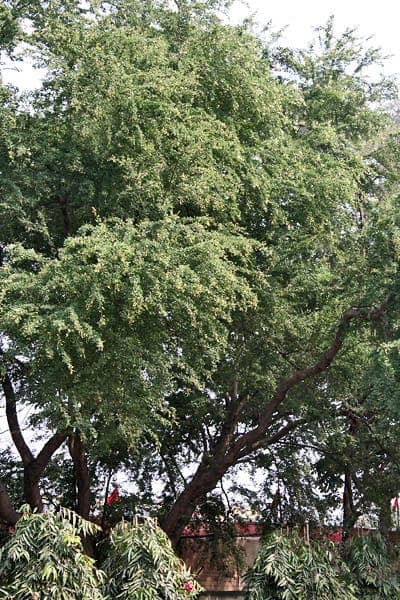
The tree grows as a characteristic, broad dome with fine, feathery leaves resembling mimosa. The flowers are small, white to cream, and tightly clustered. But most striking are the so-called pods - elongated, spiral-shaped legumes that start green and later turn brown.
Appearance and Bloom
Pithecellobium dulce can grow extremely fast, reaching 10-15 meters tall in ideal conditions. The tree grows wide, forming a screen-like crown of broad branches that cast excellent shade. The bark is gray-green and smooth.
The leaves are fine, doubly feathered (bipinnate) leaflets, much similar to Acacia species. They possess a fine texture and give the tree a light, open appearance. The leaves can fold at night (nyctinasty).
Flowers appear in dense clusters (flower balls) about 1-2 centimeters in diameter. They are yellow-white to cream with long stamens extending from the flower - making them quite striking. The scent is pleasantly sweet.
The pods are characteristically spiral or twisted (hence sometimes called "twisted pod"). They reach about 10-15 centimeters long and 1-2 centimeters wide. When ripe they turn brown. The interior contains a sweet, white pulp containing very hard seeds.
Ideal Location
Pithecellobium dulce thrives in hot, full sun settings. Plant it where it receives at least 8 hours of direct sunlight daily. The tree is extremely heat-tolerant and flourishes even in extreme heat locations.
The tree is extremely wind-tolerant - it even grows well in windy coastal areas. In temperate climates, plant the tree in a protected microclimate, perhaps against a south-facing wall.
Soil
Pithecellobium dulce is unpretentious regarding soil. The tree grows in almost any soil - sand, clay, stone, even very poor soils. The tree acts somewhat like a pioneer plant establishing itself on degraded terrain.
Preference goes to well-draining soils. In areas with very heavy clay or very wet terrain, plant the tree in a raised bed. The tree handles acidic to neutral pH (5.0-7.0).
Although the tree establishes in nutrient-poor soils, it will grow better and produce more fruit if you add several handfuls of compost or manure in the first year.
Diseño gratis
¿Quieres ver Pithecellobium dulce: complete guide en tu jardín? Crea un diseño gratis ahora.
Watering
Once established, Pithecellobium dulce is extremely drought-resistant. In its natural habitat it grows in areas with sparse rainfall. This makes it ideal for dry gardens.
During the first growing season, water regularly - approximately once weekly (depending on rainfall). After the first year, you can significantly reduce watering.
In very dry periods (longer than 4 weeks without rain) you can water the tree, but usually this isn't necessary. The tree deserves more respect for its resilience than many other fruit trees.
Pruning
Pithecellobium dulce grows as a naturally attractive tree and needs virtually no pruning. The tree automatically forms a beautiful, broad crown.
When pruning proves necessary, prune only to maintain shape or remove dead branches. It's good to shape young trees somewhat in the first year. However, very heavy pruning can slow growth.
Maintenance Calendar
Spring: Check for pests. Add nutrients to young trees. Begin regular watering.
Summer: Regular watering especially in very dry periods. Monitor for fruit flies.
Autumn: Water less as rainy season diminishes. Begin harvesting fruit.
Winter: Minimal watering (only in very dry winters). This is rest period.
Winter Hardiness
Pithecellobium dulce is not winter-hardy. Although the tree is frost-sensitive, it can briefly tolerate light frosts to -2 to -3°C. In USDA 9b-11 you can keep it outside. In colder climates you must protect or overwinter indoors.
Frost events can cause serious damage. In temperate climates it's better to grow the tree in a container and move it inside for winter.
Companion Plants
Given the tropical nature and preference for full sun, these plants work well with Pithecellobium dulce:
- Mango (fruit tree, similar needs)
- Psidium guajava (guava, drought-tolerant)
- Coconut palm (warm, sunny)
- Calliandra (pink powder puff, beautiful flowers)
- Caesalpinia (golden shower, yellow flowers)
Group all strong sun-lovers together.
Conclusion
Pithecellobium dulce is a special choice for gardeners in warm climates wanting a fast-growing tree with food production. Manila Tamarind offers a combination of strength, beauty, and fruit production rarely found.
In temperate regions you can grow this tree mainly in very protected locations or greenhouses. Online plant suppliers sometimes offer young specimens. Start small and give it a warm location.
More tropical fruit trees and gardening tips at gardenworld.app.
¿Quieres ver Pithecellobium dulce: complete guide en tu jardín? Crea un diseño gratis ahora.
Sube una foto, elige un estilo y obtén un diseño fotorrealista con lista de plantas en menos de un minuto.
Más de 10.000 jardines diseñados
Sin tarjeta de crédito


Plantas similares
Tall Silky Lupine: complete guide
Lupinus elatus
Tall silky lupine is a fast-growing Californian perennial with silvery foliage and blue-purple flower spikes, ideal for a prairie-style garden.
Garfield Lupine: complete guide
Lupinus garfieldensis
The Garfield lupine is a rare, fast-growing American perennial for alkaline, dry grassland gardens, with striking blue flower spikes.
Lupinus elegans: complete guide
Lupinus elegans
Lupinus elegans, the elegant lupine, is a spectacular blooming plant from Mexico with blue flower spikes. Care, cultivation and garden use.