
Bill Ebbesen / CC BY-SA 3.0, via Wikimedia Commons
Pisum sativum: complete guide
Pisum sativum
¿Quieres ver Pisum sativum: complete guide en tu jardín?
1 minuto, sin tarjeta de crédito
Overview
Pisum sativum, the garden pea, is one of the oldest and most widely cultivated vegetables in the world. This climbing plant from the legume family is not only nutritious and delicious, but also improves soil fertility thanks to its ability to fix nitrogen. The garden pea is a hearty classic in many kitchens and indispensable in every vegetable garden.
Appearance and bloom
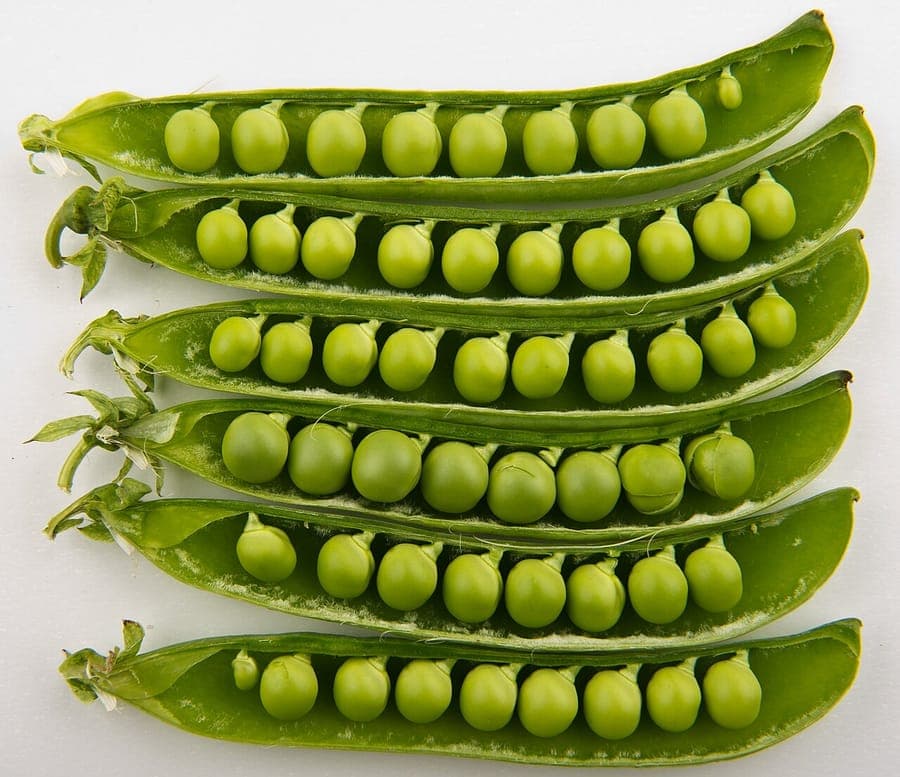
Garden peas grow as slender plants with tendrils that curl around supporting structures. The plant carries small leaves composed of numerous leaflets. The flowers are white to pale pink and group together in clusters. The fruits are pods containing three to nine green or red peas. The plant can grow up to 2 meters tall, depending on the variety.
Ideal location
Garden peas prefer a sunny to semi-shaded location. They thrive in temperate climates and grow optimally at temperatures of 13-18 degrees Celsius. The plant is fairly hardy and can even tolerate light frost. A sheltered position protects the tendrils from strong winds.
Soil
The soil must drain well and have a pH of 6.5 to 7.0. Peas grow well in nutrient-rich soil, but also benefit from a compost layer. Poorly draining soil can cause root rot. Garden peas do not require heavy feeding thanks to their nitrogen fixation by rhizobium bacteria.
Diseño gratis
¿Quieres ver Pisum sativum: complete guide en tu jardín? Crea un diseño gratis ahora.
Watering
Water regularly, especially during flowering and fruiting. Ensure the soil remains consistently moist, but not waterlogged. Water more frequently during dry periods. After flowering, watering can be slightly reduced. Rainwater is best for peas.
Pruning
Pruning is not strictly necessary for peas, but removing dead flowers stimulates further fruit production. Regularly check for diseases and insects. Damaged leaves can be removed to maintain plant health.
Maintenance calendar
Sow seeds in early spring directly into the ground. As the plant grows, provide supporting stakes. Regularly harvest young pods to stimulate continuous flowering. Check for aphids and spider mites and control as needed. After harvest, work plant residues into the ground for nitrogen conservation.
Winter hardiness
Most garden peas are annual plants that do not overwinter. Some winter varieties can be overwintered in milder areas. They tolerate frost temperatures of -5 to -10 degrees Celsius, but growth stops in frost.
Companion plants
Garden peas grow well with carrots, endive, cucumber, squash and kale. They can also grow well between rhubarb and strawberries. Avoid growing in the same location as previous years due to possible diseases.
Closing
Garden peas are a reliable and nutritious harvest for any vegetable garden. With simple care, you and your family will enjoy delicious, fresh peas. Plant them again each year and enjoy this classic vegetable from your own garden.
¿Quieres ver Pisum sativum: complete guide en tu jardín? Crea un diseño gratis ahora.
Sube una foto, elige un estilo y obtén un diseño fotorrealista con lista de plantas en menos de un minuto.
Más de 10.000 jardines diseñados
Sin tarjeta de crédito


Plantas similares
Tall Silky Lupine: complete guide
Lupinus elatus
Tall silky lupine is a fast-growing Californian perennial with silvery foliage and blue-purple flower spikes, ideal for a prairie-style garden.
Garfield Lupine: complete guide
Lupinus garfieldensis
The Garfield lupine is a rare, fast-growing American perennial for alkaline, dry grassland gardens, with striking blue flower spikes.
Lupinus elegans: complete guide
Lupinus elegans
Lupinus elegans, the elegant lupine, is a spectacular blooming plant from Mexico with blue flower spikes. Care, cultivation and garden use.