
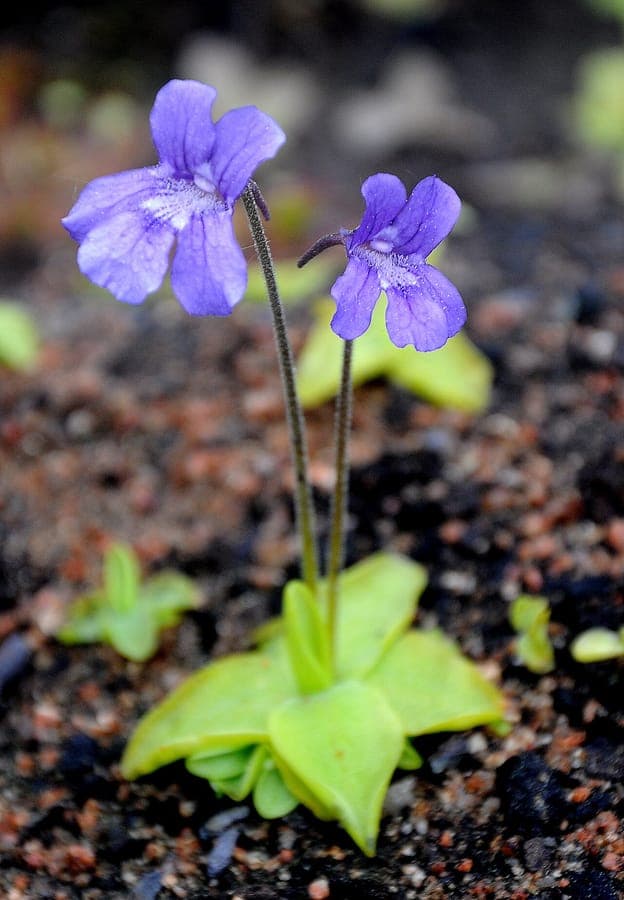
Amada44 / CC BY 3.0, via Wikimedia Commons
Pinguicula grandiflora: complete guide
Pinguicula grandiflora
¿Quieres ver Pinguicula grandiflora: complete guide en tu jardín?
1 minuto, sin tarjeta de crédito
Overview
Pinguicula grandiflora, commonly known as large-flowered butterwort or giant butterwort, is an extraordinary carnivorous plant from Western and Southern Europe. This tiny plant, inhabiting wet bogs and moist cliff faces, stands out for its large violet-blue flowers and fleshy leaves. With maximum dimensions of only 15 to 25 cm in diameter, this is not an imposing shrub but rather a botanical treasure. This guide explains everything needed to cultivate this delicate moorland jewel at home.
Appearance and bloom
Pinguicula grandiflora forms compact rosettes of pale, glossy leaves with a sticky surface. These "adhesive leaves" serve to trap small insects that provide nutrition. The leaves are finely hairy and have a waxy-white sheen. In late spring and summer, May through September, slender flower stems emerge bearing large, striking flowers in bright violet, blue, or pink tones. The flowers have five petals with a narrowed opening at the base, visibly adapted for pollination by flying insects. The blooming season is reasonably long, providing ample opportunity for group pollination. After flowering, seed heads form containing minute seeds.
Ideal location
Pinguicula grandiflora grows best in very moist, semi-shaded environments. The plant tolerates full sun poorly and requires shade, especially in southern regions. In northern areas (UK, Scandinavia) it can tolerate some sunlight. Maintain humidity of 70-90% by misting in warm periods. A wet garden, waterside, or bog are ideal planting spots. Ventilation is important to prevent fungal infections. Underground water courses or spring water sources support growth.
Soil
Pinguicula grandiflora thrives in lime-free, very moist, loamy to sandy soils with pH 7.5 to 8.0. Interestingly, this plant tolerates fairly alkaline soils, in contrast to many carnivorous plants. Ensure exceptional drainage; waterlogging is fatal. A mix of 40% soft peat moss, 30% sandy garden soil, 20% coarse sand, and 10% vermiculite works well. The soil must never dry out completely. Drip irrigation with rainwater is ideal.
Watering
Pinguicula grandiflora requires constantly wet soil without stagnation. This is a true bog dweller. Water daily, especially in warm seasons. Use only rainwater or distilled water without minerals, as hard water causes leaf discoloration. During the growing season (April through October), you can maintain water up to 1 inch below the leaf rosette. In winter it may dry slightly, but never completely. High air humidity is essential; place the plant on a saucer with water around it.
Diseño gratis
¿Quieres ver Pinguicula grandiflora: complete guide en tu jardín? Crea un diseño gratis ahora.
Pruning
Pinguicula grandiflora requires virtually no pruning. Remove wilted flowers and dead leaves immediately upon discovery. Mature leaves at the base may wilt and should be gently removed. Rest the plant especially after blooming; excessive handling damages the delicate specimen. When repotting, usually every 2 years in March, identify the best growth zones and remove damaged parts.
Maintenance calendar
March/April: prepare for growing season, clean water basin, spray against dry air. May through October: regular misting and moistening, observation for insect pests (especially aphids). October/November: reduce water supply for winter dormancy preparation. December through March: keep cool (5-15 degrees Celsius), minimal water, no feeding. In May: monthly feeding with highly diluted houseplant fertilizer (1/10 strength), rainwater only.
Winter hardiness
Pinguicula grandiflora is semi-winter-hardy and tolerates frost temperatures of -5 to -8 degrees Celsius briefly. In areas with heavy frost (below -10 degrees), it disappears quickly. In temperate climates, the plant can overwinter outdoors in protected wet areas. In severe winters, it's better to overwinter this plant in a cool greenhouse at 5-15 degrees with minimal light and water.
Companion plants
Pinguicula grandiflora grows in the wild alongside other carnivorous plants such as droseras (sundews) and utricularias (bladderworts). This combination creates a fascinating wetland effect. Add also low-growing water plants: Mentha aquatica (water mint) and Caltha palustris (marsh marigold) serve as green partners. In aquarium settings, you can combine Pinguicula with small moss species and fine aquatic plants. Avoid direct competition with vigorous growers.
Closing
Pinguicula grandiflora is a rare, carefully cultivated carnivorous plant for enthusiasts of botanical rarities. With continuous moisture maintenance and careful care, this plant delivers years of blooming richness. You'll find seedlings occasionally at specialized nurseries in the UK and Europe. This plant does not belong in mainstream garden design, but therein lies the charm: it attracts attention from every passerby. Visit gardenworld.app for more inspiration on specialty plant material and niche gardens.
¿Quieres ver Pinguicula grandiflora: complete guide en tu jardín? Crea un diseño gratis ahora.
Sube una foto, elige un estilo y obtén un diseño fotorrealista con lista de plantas en menos de un minuto.
Más de 10.000 jardines diseñados
Sin tarjeta de crédito


Plantas similares
Zigzag bladderwort: complete guide
Utricularia subulata
Utricularia subulata, a carnivorous aquatic marvel. Discover care requirements, cultivation tips and fascinating hunting mechanisms.
Pinguicula lusitanica: complete guide
Pinguicula lusitanica
Pale butterwort is a fascinating carnivorous plant with sticky leaves and delicate white flowers. Perfect houseplant. Complete care guide and tips here.
Gibba bladderwort: complete guide
Utricularia gibba
Explore the gibba bladderwort, a fascinating carnivorous plant: aquatic requirements, feeding mechanism, temperature, and care for water gardens.