
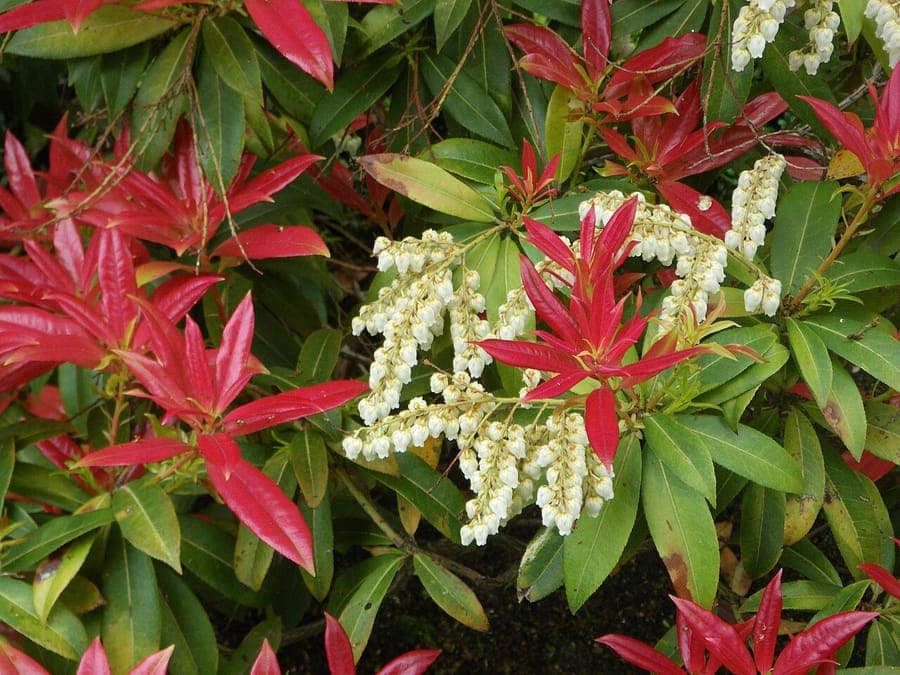
Cillas / CC BY-SA 4.0, via Wikimedia Commons
Pieris formosa: complete guide
Pieris formosa
¿Quieres ver Pieris formosa: complete guide en tu jardín?
1 minuto, sin tarjeta de crédito
Overview
Pieris formosa, commonly known as Formosan pieris or Chinese pieris, is a remarkable shrub native to the Himalayas and central China. This hardy plant deserves pride of place in any garden design. Reaching heights of 3 to 6 meters, Pieris formosa develops into an elegant, evergreen specimen that remains attractive year-round. The plant is renowned for its upright flowers and refined structure. This guide covers everything you need to know for successfully growing this exotic shrub in temperate climates.
Appearance and bloom
The Formosa pieris is an evergreen shrub with graceful, glossy green foliage that remains beautiful throughout the year. The leaves are lanceolate and dark green, providing a strong backdrop for the striking flowers. In spring, typically March through May, long, drooping flower clusters appear in snow-white to soft pink tones. These inflorescences are particularly striking: slender panicles hanging downward like white candlesticks. The flowers attract numerous pollinators, especially bees. After blooming, brown seed capsules form and remain decorative until they fall. The entire plant exudes elegance through its refined texture and rich green coloring.
Ideal location
Pieris formosa grows best in partial shade to full sunlight. In warmer climates, the plant benefits from afternoon shade, as full sun in extreme heat can cause leaf scorch. Provide protection from cold winter winds, particularly in temperate zones. Placement against a south-facing wall or under the dappled shade of other trees offers ideal conditions. The plant thrives in environments with moist air, suggesting it feels at home in the more humid microclimates of your garden.
Soil
Pieris formosa thrives in acidic to slightly acidic soil with a pH between 4.5 and 6.0. The plant will not tolerate chalky soils; in alkaline soils, leaves can yellow due to iron deficiency. Ensure well-draining soil with plenty of organic matter. Add humus, leaf mold, or garden compost to planting holes. The soil must not waterlog, as roots will rot. Heavy clay soils must be improved with sand and organic matter. A soil mix of 50% heather soil or garden soil, 30% humus, and 20% sand provides optimal growing conditions.
Watering
Pieris formosa loves consistently moist but not waterlogged soil. Water regularly during the growing season (April through October), especially during dry spells. In hot summers, daily watering may be necessary. Let the top layer of soil dry slightly before watering again. In winter, water much less, but ensure the plant does not dry out completely. Water preferably early morning or late afternoon to limit evaporation. Use rainwater or soft water low in minerals, as the plant is sensitive to hard water.
Diseño gratis
¿Quieres ver Pieris formosa: complete guide en tu jardín? Crea un diseño gratis ahora.
Pruning
Pieris formosa requires minimal pruning. In spring, after flowering, remove dead or damaged branches. If you want the shrub more compact, you can remove some heavy branches to improve air circulation. Avoid aggressive pruning, as this can limit flower formation. Young plants can be lightly cut back to encourage denser growth, but mature plants look best with natural growth forms.
Maintenance calendar
In spring (March), apply special fertilizer for ericaceous plants to support blooming and growth. Mulch around the plant with 5-7 cm of leaf mold or wood chips to improve moisture retention. In May through June, after flowering, is a good time for any pruning. Continue regular watering through October. In November, lift the mulch and replace if needed. Winter is primarily an observation period: watch for frost damage or disease.
Winter hardiness
Pieris formosa is semi-hardy and tolerates frost periods of -5 to -10 degrees Celsius. In severe frost, young growth can be damaged, especially if the frost period is prolonged. In harsh climates, protect the plant with burlap or branches from December through February. Avoid fall feeding, as this stimulates soft growth vulnerable to frost. After frost damage, you will need to remove dead material in spring.
Companion plants
Pieris formosa combines well with other ericaceous plants such as rhododendrons, azaleas, and magnolias. They share the same soil requirements. Add supporting evergreen shrubs like Ilex aquifolium (holly). Low heathers behind the pieris, such as Erica carnea in yellow or red, beautifully accentuate the white flowers. In larger gardens, position young trees behind such as Prunus serrulata or Acer palmatum for additional depth and structure. Shade plants like Hosta and Helleborus beneath the pieris create a lovely understory layer.
Closing
Pieris formosa is a frost-sensitive jewel for those seeking an elegant, evergreen shrub with beautiful spring blooming. With the right growing location, acidic soil, and regular watering, this plant delivers years of enjoyment. You'll find seedlings or grafted specimens at major garden centers in the UK and across Europe. Not only do wildlife gardeners and nature enthusiasts appreciate this plant; garden designers also recognize in Pieris formosa a versatile partner for gardens with more character. Visit gardenworld.app for inspiration and practical tips on integration into your green sanctuary.
¿Quieres ver Pieris formosa: complete guide en tu jardín? Crea un diseño gratis ahora.
Sube una foto, elige un estilo y obtén un diseño fotorrealista con lista de plantas en menos de un minuto.
Más de 10.000 jardines diseñados
Sin tarjeta de crédito


Plantas similares
Zenobia pulverulenta: complete guide
Zenobia pulverulenta
Everything about Zenobia pulverulenta (honeycup): siting, acid soil, pruning and the fragrant white bells, in this complete care guide.
Dwarf huckleberry: complete guide
Gaylussacia dumosa
Everything about dwarf huckleberry (Gaylussacia dumosa): acidic soil, partial shade, pruning and care for this compact North American berry shrub.
Drooping leucothoe: complete guide
Leucothoe fontanesiana
Everything about drooping leucothoe (Leucothoe fontanesiana): shade tolerance, soil, watering, pruning, hardiness and companion plants.