
Wikimedia Commons / CC BY-SA 3.0, via Wikimedia Commons
Phyteuma spicatum: complete guide
Phyteuma spicatum
¿Quieres ver Phyteuma spicatum: complete guide en tu jardín?
1 minuto, sin tarjeta de crédito
Overview
Phyteuma spicatum, commonly known as Spiked Rampion, is a charming perennial from the alpine regions of Europe. This is an excellent choice for gardeners seeking refined flowering displays in their front garden. The plant belongs to the Campanulaceae family.
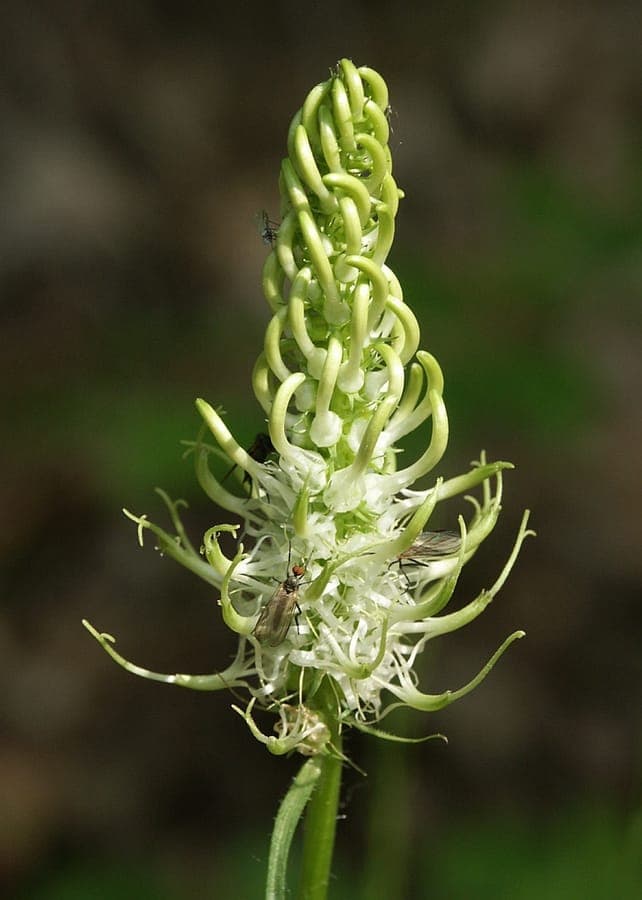
The plant is celebrated for its distinctly prominent, tall, pointed flower spikes that appear in white to cream-white coloring. These characteristic pointed flower clusters are more elegant and slender than related Phyteuma nigrum or P. orbiculare. Phyteuma spicatum reaches 30-60 centimeters in height and forms upright, elegant plants.
From gardenworld.app: A front garden featuring Phyteuma spicatum gains immediate height and refinement through these striking white flower spikes.
Appearance and Bloom
The leaves of Spiked Rampion are elongated, 5-10 centimeters long, with matte green texture. They grow alternately along the stems in a regular pattern. The foliage is smooth and tapering at the tips.
The flower spikes are the star of this plant. They are distinctly tall and pointed, usually 5-10 centimeters in length, and consist of countless small white to cream-yellow flowers. Flowers appear from May through July. The pointed shape of the flower clusters clearly distinguishes this plant from other rampions.
After flowering, small seed capsules develop. The entire plant dies back in winter.
Ideal Location
Phyteuma spicatum grows best in sunny to half-shaded locations. At least 4-6 hours of direct sunlight daily is ideal. The plant also tolerates considerable shade, though flowering becomes less prolific.
The plant originates from alpine areas and thrives in well-ventilated, cooler environments. Avoid warm, very humid corners. The plant performs well on sunny slopes and in alpine garden settings.
Phyteuma spicatum is suitable for stone gardens, alpine gardens, and grouping between pathways.
Soil Requirements
Phyteuma spicatum prefers well-draining, slightly acidic to neutral sandy or stony growing medium. Ideal pH ranges between 5.5 and 7. The plant also performs well in less fertile soils provided drainage is excellent.
Winter water stagnation is very dangerous for this plant. Ensure excellent drainage and elevate the planting hole at least 5 centimeters above surrounding soil in wet locations. Add sand and gravel to heavy clay soils.
Use mineral-based potting mixes with sand, gravel, and a small portion of peat-free compost. Avoid rich, organic mixes.
Diseño gratis
¿Quieres ver Phyteuma spicatum: complete guide en tu jardín? Crea un diseño gratis ahora.
Watering
Phyteuma spicatum, once established, is moderately drought-tolerant in summer but must remain dry in winter. Water regularly from March through August when soil begins to dry out.
In fall and winter drastically reduce watering. Ensure water does not stagnate around the plant's base, especially in wet winters.
Young plants need more regular watering until well-established. Once established you can minimize watering significantly.
Pruning
Phyteuma spicatum requires minimal pruning. Remove only dead or damaged portions.
After flowering (July/August) you may remove spent flower spikes if desired, though you can also leave them for their interesting seed structures.
In spring (March) remove dead foliage when new growth begins.
Maintenance Calendar
March: Remove dead foliage, top-dress with draining medium. April-May: Growth accelerates, water regularly. Flowering begins. May-July: Full bloom with characteristic tall pointed white flower spikes. August: Flowering fades, reduce watering. Spent flower spikes can be removed. September-October: Seed capsules ornamental, minimal watering. November-February: Winter dormancy. Plant largely absent above ground. Minimal watering, dry conditions.
Winter Hardiness
Phyteuma spicatum is very winter hardy and can tolerate temperatures down to -20 to -25 degrees Celsius. In the Netherlands the plant is fully winter hardy. The greatest winter threat is again excessive moisture, not frost.
Ensure perfect drainage in winter and avoid situations where water pools around the plant's base. Snow cover helps provide protection against extreme freezing and moisture fluctuations.
Companion Plants
Phyteuma spicatum combines well with:
- Other alpine plants: Saxifraga, Silene, Dianthus alba
- Low gray-foliaged plants: Stachys byzantina, Cerastium
- Stone-based elements: looks stunning against gray stone
- Groups of the same Phyteuma for impactful height
- Contrasting low growers around the base
Avoid heavy growers that might overshadow the plant.
Conclusion
Phyteuma spicatum is an elegant addition to any front garden where you can provide excellent drainage. The combination of graceful white flower spikes, alpine robustness, and refined growth makes it a true treasure. With proper placement and drainage you can enjoy this fascinating plant for many years.
Seeking more garden design inspiration? Visit gardenworld.app for professional garden designs incorporating alpine plants. Phyteuma spicatum is usually available at specialized nurseries and alpine plant vendors. Check local garden centers for availability.
¿Quieres ver Phyteuma spicatum: complete guide en tu jardín? Crea un diseño gratis ahora.
Sube una foto, elige un estilo y obtén un diseño fotorrealista con lista de plantas en menos de un minuto.
Más de 10.000 jardines diseñados
Sin tarjeta de crédito


Plantas similares
Campanula alaskana: complete guide
Campanula alaskana
Discover Campanula alaskana, the delicate alpine bellflower from Alaska. Growing tips, hardy requirements, and design ideas for rock gardens and alpine troughs.
Campanula scouleri: complete guide
Campanula scouleri
Discover Campanula scouleri, the refined Pacific bellflower. Growing tips, care requirements, and design ideas for woodland and mountain gardens.
Doublehorn calicoflower: complete guide
Downingia bicornuta
All about Downingia bicornuta - the doublehorn calicoflower: sowing, location, bloom and care for this rare annual in your garden.