
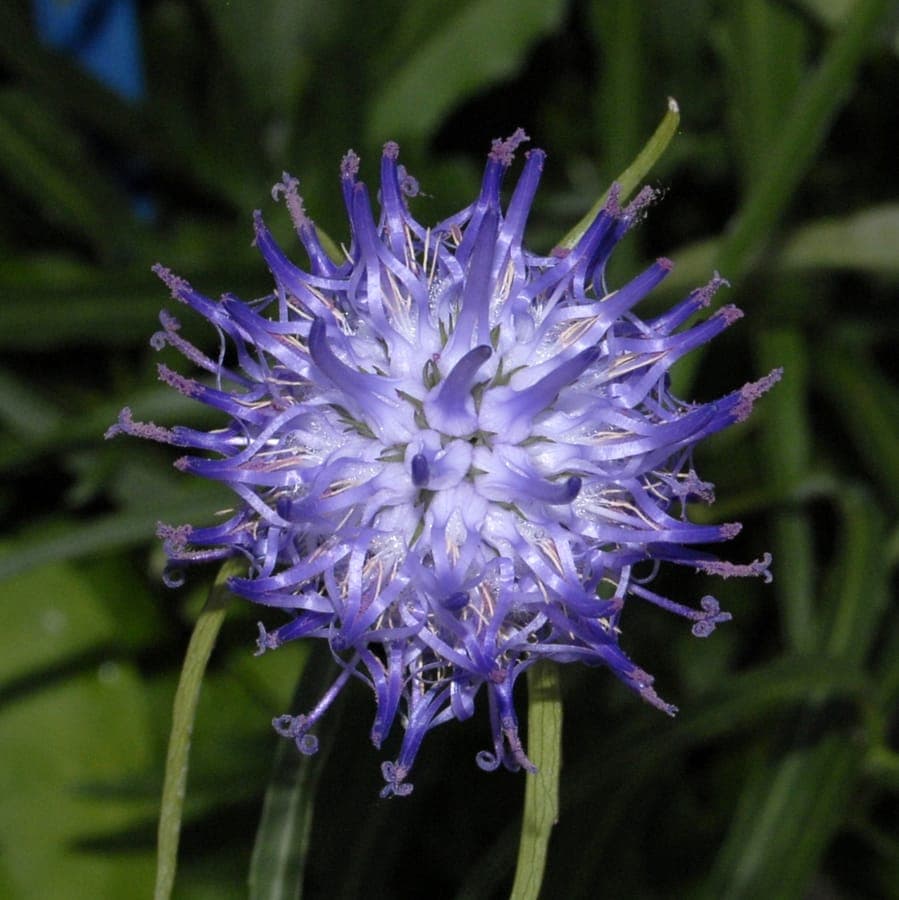
Hectonichus / CC BY-SA 3.0, via Wikimedia Commons
Horned rampion: complete guide
Phyteuma scheuchzeri
¿Quieres ver Horned rampion: complete guide en tu jardín?
1 minuto, sin tarjeta de crédito
Overview
Horned rampion, scientifically known as Phyteuma scheuchzeri, is a small alpine plant originating from the southern Alps and northern Apennines. This rare and delicate species produces striking blue-violet flower spikes from May to July. At only 10 to 30 centimeters in height, it forms compact cushions ideal for alpine rock gardens, mountain beds, and alpine potted plants.
This plant belongs to the family of Bellflowers (Campanulaceae) and is highly valued by specialists in alpine plants. It distinguishes itself through its abundant flowering and elegant narrow leaves. The Horned rampion is considerably more difficult to grow than common varieties, but its spectacular flowers make this truly worthwhile. In the Alps, it is known as a true mountain beauty that deserves careful care.
The natural habitat of this plant is found on alpine meadows at altitudes between 2000 and 3000 meters, where it grows in full sun with well-drained mountain soils. This fact is important for successful cultivation in lowland gardens. The plant is very popular among alpine gardeners and can also be found in specialized plant collections.
Appearance and bloom
Horned rampion is a compact alpine plant with narrow, lance-shaped leaves approximately 2 to 4 centimeters in length. The leaves are arranged in basal rosettes and along the flower stems. The foliage is light green to medium green and has a very fine, elegant structure.
The flowers are the true charm. They are small, approximately 5-6 millimeters long, and are arranged in dense cone-shaped flower spikes of 2 to 3 centimeters in length. The individual flowers are blue-violet with sometimes purple shades. Flowering begins in May and continues through July, producing an abundance of color.
After flowering, small seed pods form, giving the plant an interesting appearance even after the end of the flowering period. Seed dispersal is important for natural multiplication and can also be observed in potted gardens.
Ideal location
Horned rampion prefers a sunny to partially shaded location. It loves cool places with some protection from intense afternoon sunlight in warm regions. In high mountain areas, it naturally grows in zones with diffuse light, which suggests that it appreciates light shade.
This plant is ideal for alpine rock gardens and mountain beds, where it can be planted on well-drained slopes. It is not suitable for cultivation in warm, sunny lowland areas where temperatures can be very high. A cool, well-lit place in northwest aspect is often ideal.
Diseño gratis
¿Quieres ver Horned rampion: complete guide en tu jardín? Crea un diseño gratis ahora.
Soil
Horned rampion prefers well-drained, slightly acidic to neutral soil (pH 6.5 to 7.0), enriched with fine gravel. The soil should be poor in organic matter but rich in minerals. A classic alpine plant mix consisting of coarse sand, pumice, and some black earth is perfectly suitable.
The plant does not tolerate permanent moisture. Good drainage is essential to prevent root rot. Some specialists even recommend letting the soil dry out somewhat between watering. This simulates the dry mountain conditions in which the plant naturally grows.
Watering
Horned rampion needs moderate and regular watering during the growing season. However, the soil should never be waterlogged. Light and frequent watering is preferable to abundant and irregular watering.
During flowering, keep the soil constantly moist but never waterlogged. In winter, reduce watering considerably and allow the plant to dry out somewhat between waterings. Water that accumulates between the leaves can cause rot, so water preferably from below.
Pruning
Horned rampion requires practically no pruning. After flowering, you can gently remove the withered flower stems to promote a compact shape and encourage further flowering next year.
Never cut back the basal foliage, as this could kill the plant. Only remove dead or diseased foliage as needed. Careful pruning can help remove old leaves.
Maintenance calendar
March-April: Plant new specimens once the soil becomes workable. Give light alpine plant fertilizer. May-July: The plant flowers abundantly. Water regularly and gently remove faded flowers. August-September: Gradually reduce watering. October-November: Prepare the plant for winter. A light mulch of fine gravel can help. December-February: The plant is dormant. Minimal watering is sufficient.
Winter hardiness
Horned rampion is extremely winter hardy and can tolerate temperatures down to about -25 degrees Celsius. It overwinters without problems in mountain regions. In lowland areas with wet winters, it may, however, experience difficulties. Good drainage in winter is crucial to prevent rot from moisture. Snow cover can provide protection.
Companion plants
Horned rampion combines well with other compact alpine plants such as Androsace and Saxifrage, small Sedum and other alpine succulents, alpine Flax and moss and lichen cushions. These combinations create an authentic alpine garden.
Conclusion
Horned rampion is a spectacular alpine plant for rock gardens and mountain beds. Although it is more difficult to grow than common varieties, its extraordinary blue-violet flowers make it a true treasure. Look for it from specialists in alpine plants or mountain nurseries that offer high-quality specimens.
¿Quieres ver Horned rampion: complete guide en tu jardín? Crea un diseño gratis ahora.
Sube una foto, elige un estilo y obtén un diseño fotorrealista con lista de plantas en menos de un minuto.
Más de 10.000 jardines diseñados
Sin tarjeta de crédito


Plantas similares
Campanula alaskana: complete guide
Campanula alaskana
Discover Campanula alaskana, the delicate alpine bellflower from Alaska. Growing tips, hardy requirements, and design ideas for rock gardens and alpine troughs.
Campanula scouleri: complete guide
Campanula scouleri
Discover Campanula scouleri, the refined Pacific bellflower. Growing tips, care requirements, and design ideas for woodland and mountain gardens.
Doublehorn calicoflower: complete guide
Downingia bicornuta
All about Downingia bicornuta - the doublehorn calicoflower: sowing, location, bloom and care for this rare annual in your garden.