
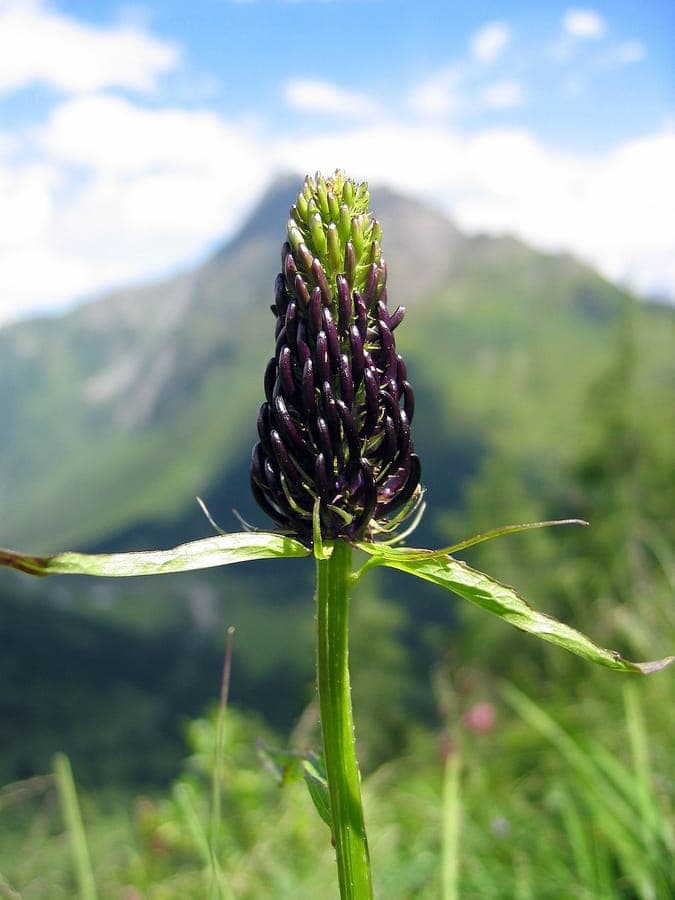
User:Tigerente / CC BY-SA 3.0, via Wikimedia Commons
Haller's Rampion: complete guide
Phyteuma ovatum
¿Quieres ver Haller's Rampion: complete guide en tu jardín?
1 minuto, sin tarjeta de crédito
Overview
Haller's Rampion, scientifically known as Phyteuma ovatum, is a charming alpine wildflower native to the mountain ranges of southern Europe. This plant thrives naturally from the Pyrenees to the Alps, where it has adapted perfectly to rocky, high-altitude environments. The plant was formally described in 1782 and has remained a favourite among alpine gardeners ever since.
In gardens, Haller's Rampion serves as a delightful focal point in rock gardens, alpine troughs, and scree beds. Beyond its ornamental appeal, the plant attracts numerous pollinators including bees and butterflies, making it valuable for biodiversity. Its compact growth habit and stunning purple flowers make it worth seeking out from specialist nurseries.
Appearance & bloom cycle
Haller's Rampion is a compact, low-growing plant that typically reaches 20-40 cm in height, depending on growing conditions. The foliage forms dense basal rosettes with small, lance-shaped leaves that hug the ground, creating a neat, tufted appearance.
The flowers are the true stars of this plant. They appear in dense, ovate inflorescences atop thin stems, with numerous tiny, purple-violet, five-petaled star-shaped flowers clustered together. This distinctive flower arrangement gives the plant its common name reference to Rapunzel, evoking a tower or gathering of delicate blooms.
The flowering season extends from June through August, providing several weeks of colour. After pollination, seed capsules develop and ripen, eventually dispersing their tiny seeds to establish new plants in suitable locations.
Ideal location
Haller's Rampion demands a sunny position to thrive and display its flowers properly. Choose a spot receiving at least 6-8 hours of direct sunlight daily. The plant grows naturally in fully exposed alpine meadows where sunlight is abundant and unobstructed.
Place the plant where air circulation is good, as this reduces moisture buildup and fungal issues. Rock gardens, scree beds, alpine troughs, and sunny slopes are ideal locations. The plant performs excellently in stone walls, between paving stones, or on sloping terrain where drainage occurs naturally.
Extremely hardy and frost-tolerant, Haller's Rampion can survive year-round outdoors in temperate and cold climates. In warmer regions, some afternoon shade during scorching summers may help, though this is rarely necessary in most European gardens.
Soil requirements
Haller's Rampion absolutely requires gritty, well-draining, nutrient-poor soil. This reflects its natural habitat on rocky alpine meadows with minimal soil development. Success depends on creating a very free-draining growing medium.
Ideal soil mix:
- 40% coarse sand
- 30% gravel or grit
- 20% compost or garden soil
- 10% extra perlite or volcanic ash
The soil pH should be neutral to slightly acidic (pH 6.5-7.5). Heavy clay soils are the worst possible choice for this plant, so avoid them entirely. If you have heavy soil, amend substantially with grit and sand, or grow the plant in an alpine trough or raised bed with custom soil mix.
Watering
Despite its alpine heritage, Haller's Rampion requires regular water during the growing season. Water when the soil surface feels dry to a depth of 2 cm, typically once or twice per week during spring and summer, depending on weather.
Ensure water never becomes stagnant. Always use very free-draining compost and ensure adequate drainage holes. Excess moisture is more harmful than drought to this plant.
During autumn and winter, reduce watering considerably. If growing in pots, you may stop watering entirely once flowering ends and the plant enters dormancy.
Rainwater is preferable to tap water, especially in hard-water areas, as it prevents calcium buildup around the roots.
Diseño gratis
¿Quieres ver Haller's Rampion: complete guide en tu jardín? Crea un diseño gratis ahora.
Pruning
Haller's Rampion requires minimal pruning. After flowering ends, you can remove spent flower heads to maintain a neat appearance and prevent excessive seed set (unless you want self-sown seedlings).
Gently remove dead foliage in autumn and winter to prevent moisture accumulation that can encourage fungal diseases. If the plant becomes untidy, you can lightly trim stems in early spring before growth resumes, but avoid heavy pruning.
The plant recovers poorly from severe cutting back, so gentle, selective work is best. Light deadheading and tidy-up are all that's required.
Maintenance calendar
March-April: Prepare for growth. Check drainage is working. Add a light compost top-dressing if needed.
May-June: Flowering begins. Water regularly. Deadhead spent flowers for tidiness.
July-August: Peak flowering season. Continue regular watering during dry spells. Observe visiting insects.
September: Flowering ends. Allow seed to ripen or cut off spent flower stems.
October-November: Prepare for winter. Gradually reduce watering frequency.
December-February: Winter dormancy. Minimal watering. Plant lies dormant; snow provides natural protection.
Winter hardiness
Haller's Rampion is exceptionally hardy, tolerating temperatures down to -25 degrees Celsius. This makes it ideal for European gardens, even in mountainous regions with severe winters.
The plant enters dormancy and largely disappears above ground, but the roots survive easily in the soil. In spring, new foliage emerges reliably.
In very wet winters, root rot can become problematic, particularly in heavy soils. This presents a greater risk than frost itself. Always ensure excellent drainage to prevent this issue.
Snow actually provides insulation and protection, so no winter protection is necessary in typical European winters.
Companion plants
Haller's Rampion pairs beautifully with other alpine plants. Consider these combinations:
- Saxifraga species: These small saxifrages flower simultaneously and share identical growing requirements.
- Sedum varieties: Sedums like Sedum spathulifolium or Sedum album fit perfectly into alpine compositions.
- Sempervivum: Houseleeks create striking foil with their rosette growth habit.
- Armeria maritima: Sea pink shares the preference for excellent drainage.
- Dianthus alpinus: Alpine pinks add colour and have compatible needs.
Combine these plants in an alpine trough or rock garden for maximum visual impact.
Conclusion
Haller's Rampion is an excellent choice for gardeners seeking to grow authentic alpine flora. This plant offers delicate purple flowers, exceptional hardiness, and minimal care once established in suitable conditions. The key to success lies in providing excellent drainage and a sunny position.
Seek this plant from specialist alpine nurseries or check garden centres for alpine plant collections. Once established, Haller's Rampion returns reliably year after year, always a highlight of the summer garden.
Discover more plant guides and design inspiration at gardenworld.app, where you can explore creating complete alpine garden schemes. Let this charming alpine beauty inspire your next garden project!
¿Quieres ver Haller's Rampion: complete guide en tu jardín? Crea un diseño gratis ahora.
Sube una foto, elige un estilo y obtén un diseño fotorrealista con lista de plantas en menos de un minuto.
Más de 10.000 jardines diseñados
Sin tarjeta de crédito


Plantas similares
Campanula alaskana: complete guide
Campanula alaskana
Discover Campanula alaskana, the delicate alpine bellflower from Alaska. Growing tips, hardy requirements, and design ideas for rock gardens and alpine troughs.
Campanula scouleri: complete guide
Campanula scouleri
Discover Campanula scouleri, the refined Pacific bellflower. Growing tips, care requirements, and design ideas for woodland and mountain gardens.
Doublehorn calicoflower: complete guide
Downingia bicornuta
All about Downingia bicornuta - the doublehorn calicoflower: sowing, location, bloom and care for this rare annual in your garden.