
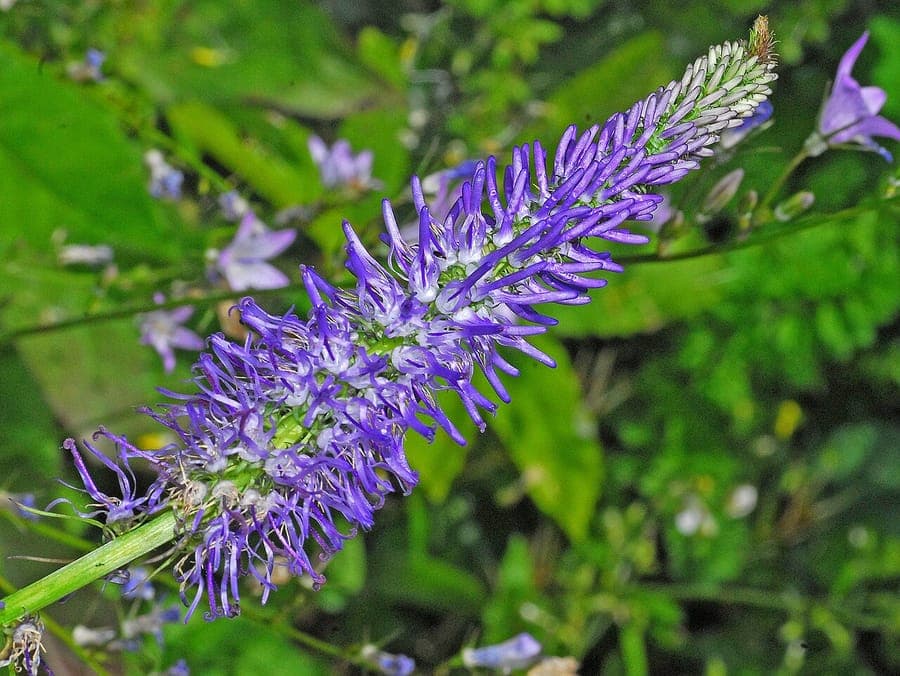
Hectonichus / CC BY-SA 4.0, via Wikimedia Commons
Betony-leaved rampion: complete guide
Phyteuma betonicifolium
¿Quieres ver Betony-leaved rampion: complete guide en tu jardín?
1 minuto, sin tarjeta de crédito
Overview
The Betony-leaved rampion (Phyteuma betonicifolium) belongs to the Campanulaceae family. This is a perennial alpine plant occurring naturally in the Alps of Central Europe. The plant is recognized for its compact growth and striking blue flower spikes. It is a popular choice for sparse alpine gardens and rock gardens.
Appearance and bloom
The Betony-leaved rampion grows as a dense mat only 15 to 30 centimeters tall. The leaves are oblong, green, and betony-like (from which the plant derives its name). Basal rosettes form characteristic leaf arrangements. The flowers are the most striking feature: small, bright blue florets gathered in dense, globular to cylindrical spikes appear from July to August. The plant blooms for an extended period.
Ideal location
The Betony-leaved rampion grows best in sunny to semi-shaded alpine terrain. The plant prefers well-drained, rocky or gravelly soil. In gardens, it grows better on raised beds or in rock gardens with excellent drainage. Protection from heavy snow load may be needed.
Soil
This alpine plant grows best on very well-drained, poor to moderately nutrient-rich soil. The plant accepts acidic soils (pH 4 to 4.5 is ideal). Sandy, stony, or gravelly substrate is necessary. In rich garden soil, the plant performs poorly and may rot.
Watering
The Betony-leaved rampion is drought-tolerant once established. Regular water is important during the first growing season. Once established, the plant tolerates extended drought. Excess water causes root rot, especially in winter. Drip irrigation or dry winter conditions are important.
Diseño gratis
¿Quieres ver Betony-leaved rampion: complete guide en tu jardín? Crea un diseño gratis ahora.
Pruning
Pruning is not necessary for this alpine plant. The plant grows compactly and naturally forms an attractive shape. Dead flower spikes can be removed, but this is optional. Careful removal of dead plant material can be done.
Maintenance calendar
April: Growth begins, monitor moisture loss. June: Leaf formation complete, ensure sunny position. July-August: Flowering period, water regularly. September-October: Flowering diminishes, minimize water.
Winter hardiness
The Betony-leaved rampion is fully hardy in the Alps and related mountain areas. The plant survives cold winters and frost well. In lower elevations with less intense frost, it also grows well. This is a true alpine hardy perennial plant.
Companion plants
The Betony-leaved rampion pairs beautifully with other alpine flowers such as sunrose, alpine aster, and alpine primrose. This plant grows well with other alpine Campanula species. Green sedums and alpine grasses create lovely contrasts.
Closing
The Betony-leaved rampion is a beautiful choice for rock gardens and alpine plant enthusiasts. With adapted soil and good drainage, this alpine jewel blooms reliably. You find this plant sometimes at specialized alpine nurseries. For more information see gardenworld.app. Enjoy this European alpine flora in your garden.
Discover more plant guides on gardenworld.app.
¿Quieres ver Betony-leaved rampion: complete guide en tu jardín? Crea un diseño gratis ahora.
Sube una foto, elige un estilo y obtén un diseño fotorrealista con lista de plantas en menos de un minuto.
Más de 10.000 jardines diseñados
Sin tarjeta de crédito


Plantas similares
Campanula alaskana: complete guide
Campanula alaskana
Discover Campanula alaskana, the delicate alpine bellflower from Alaska. Growing tips, hardy requirements, and design ideas for rock gardens and alpine troughs.
Campanula scouleri: complete guide
Campanula scouleri
Discover Campanula scouleri, the refined Pacific bellflower. Growing tips, care requirements, and design ideas for woodland and mountain gardens.
Doublehorn calicoflower: complete guide
Downingia bicornuta
All about Downingia bicornuta - the doublehorn calicoflower: sowing, location, bloom and care for this rare annual in your garden.