
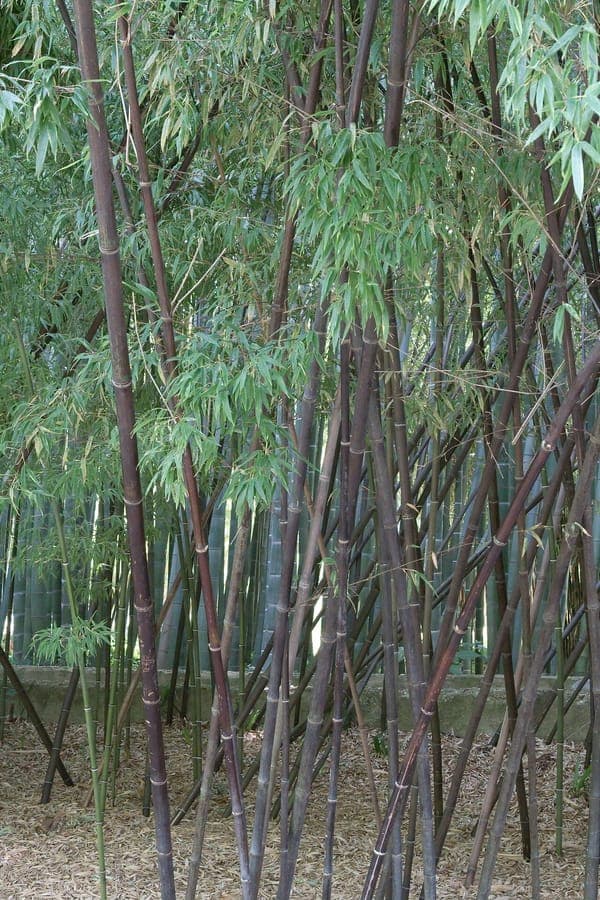
Georges Seguin (Okki) / CC BY-SA 3.0, via Wikimedia Commons
Phyllostachys nigra: complete guide
Phyllostachys nigra
¿Quieres ver Phyllostachys nigra: complete guide en tu jardín?
1 minuto, sin tarjeta de crédito
Overview
Black bamboo (Phyllostachys nigra) is a frost-hardy bamboo species from the Poaceae family, native to China. This impressive plant is known for its dark, almost black culms that strongly contrast with the fine, green foliage. Unlike many tropical bamboo varieties, Phyllostachys nigra can thrive well in temperate climates to some extent.
The plant grows rapidly and can form dense structure within a few years, making it ideal for creating garden screens, hedges and visual separations. The elegant dark culms provide a Japanese or Chinese garden feel, while the plant also offers practical benefits by providing privacy and wind-breaking. This is the perfect choice for those who want to enjoy exotic bamboo without the frost sensitivity of tropical species.
Appearance and bloom
The most striking feature of Phyllostachys nigra is the dark culms that become black or very dark green as they age. Young culms are green and gradually darken, usually after 2-3 years. This maturation process adds visual dynamism as the plant grows.
The culms are relatively slender, about 1-2 cm thick, and grow upright to a height of 5-8 meters under ideal conditions. The foliage is finely divided, linear and light green, providing beautiful contrast to the dark culms.
Black bamboo rarely flowers in cultivation, which is usually beneficial since flowering consumes a lot of energy. The flowers, if they appear, are small greenish blossoms that are not particularly ornamental. The rare flowering makes this plant reliable for long-term garden management.
Ideal location
Black bamboo grows best in locations with plenty of sunlight, at least 4-6 hours of direct sunlight per day. The plant can also grow in partial shade but will be less dense and less frost-hardy there.
Protection from strong, sustained winds is important. Although the plant is tough, strong winds can damage the slender culms. A location with some wind protection is therefore recommended. Strong winds in open spaces can also cause problems.
Moisture-retaining locations are ideal. Bamboo thrives well along water edges, in semi-wet gardens and in areas where regular rainfall can be expected. This does not mean, however, that waterlogging is acceptable.
Soil
Phyllostachys nigra requires well-draining, moist soil. A mixture of garden soil, sand and organic matter (in a 2:1:1 ratio) is ideal. The plant can adapt to various pH levels, from slightly acidic to neutral (pH 5.5-7.0).
Adding ripe compost or leaf mold helps improve soil and promote moisture retention. A 5 cm thick layer of mulch around the plant helps retain soil moisture and suppress weeds.
Nutrient-rich soil promotes healthy growth. An annual application of balanced fertilizer in spring supports the growing season. However, excessive nitrogen can lead to weak growth.
Diseño gratis
¿Quieres ver Phyllostachys nigra: complete guide en tu jardín? Crea un diseño gratis ahora.
Watering
Black bamboo needs regular water, especially in the first growing season after planting. Water the plant deeply but not too frequently - make sure the soil is moist but not waterlogged. Twice a week under normal conditions is sufficient; more during dry periods.
During dry periods or heat waves, daily watering may be needed. In winter, watering frequency can be reduced, but ensure the soil does not completely dry out, even during the rest period.
Because bamboo grows rapidly, it consumes a lot of water. In very dry climates, supplemental irrigation may be needed to maintain optimal appearance.
Pruning and maintenance
Black bamboo grows rapidly and can be easily pruned. The plant recovers quickly from pruning, making it an excellent choice for creating shapes and sizes as desired.
Regularly remove dead or damaged culms. This promotes new, healthier growth. Prune the plant about 1/3 of the height each spring for better shape and density.
It is important to check invasive growth. Bamboo roots can become aggressive and displace neighboring plants. Plant bamboo in confined containers or boundary systems to prevent this, especially in smaller gardens.
Maintenance calendar
March to April: Beginning of growing season. Add fertilizer and check for pests.
May to August: Peak of growth. Regular watering and possible pruning for shape.
September to October: Growth slows. Less water needed.
November to February: Rest period. Minimal maintenance. Add mulch for winter protection.
Winter hardiness
Black bamboo is frost-hardy to about -15 to -18 degrees Celsius in well-drained soil. In colder areas, protective materials can help - for example, cover the base with thick mulch.
In very cold winters, some culms may die, but the plant will recover from underground rhizomes. This is normal and not a problem for the overall health of the plant.
Ensure the plant is well-rooted before winter. A young specimen planted in fall needs extra moisture protection.
Companion plants
Black bamboo combines beautifully with other Asian plants such as Japanese maple, rhododendron and fine foliage shrubs. This combination creates an authentic Japanese garden feel.
Alpine sedums, saxifrages and other low-growing plants make nice underplanting companions. The height and elegance of bamboo contrasts nicely with more compact forms.
In European gardens, black bamboo can also be combined with climbing plants and large shrubs for more diverse vegetation.
Closing
Phyllostachys nigra is a magnificent plant for gardens seeking elegance, privacy and exotic allure. With regular watering, proper maintenance and protection from strong winds, this bamboo will grow into an impressive garden element. The dark culms provide year-round visual interest. Since bamboo grows rapidly, check regularly for boundaries and ensure limitation where necessary. If you are looking for this bamboo species, visit local garden centers for plant material and advice. Gardenworld.app also offers inspiration for designing gardens around bamboo elements. Enjoy the elegant beauty that black bamboo brings to your garden.
¿Quieres ver Phyllostachys nigra: complete guide en tu jardín? Crea un diseño gratis ahora.
Sube una foto, elige un estilo y obtén un diseño fotorrealista con lista de plantas en menos de un minuto.
Más de 10.000 jardines diseñados
Sin tarjeta de crédito


Plantas similares
Sporobolus pungens: complete guide
Sporobolus pungens
Sporobolus pungens is a stoloniferous Mediterranean coastal grass with outstanding salt and drought tolerance, perfect for seaside and dry gardens.
Mediterranean aegilops: complete guide
Aegilops biuncialis
Everything about Aegilops biuncialis, a Mediterranean annual grass with ornamental spikes and outstanding drought tolerance for dry gardens.
Silver bluestem: complete guide
Bothriochloa saccharoides
Full guide to Bothriochloa saccharoides (silver bluestem): site, soil, watering, winter hardiness, pruning, and garden companions.