
Abhishek Jacob (talk) / CC BY-SA 3.0, via Wikimedia Commons
Indian-gooseberry: complete guide
Phyllanthus acidus
¿Quieres ver Indian-gooseberry: complete guide en tu jardín?
1 minuto, sin tarjeta de crédito
Overview
The Indian-gooseberry (Phyllanthus acidus) is an interesting tropical fruit tree from Brazil and other parts of Southeast Asia. The tree is famous for its unique, tart fruits that are widely used in the kitchens of tropical countries. This is a plant that combines elegance and nutrition, perfect for those who like to try something different.
The tree is compact and can even grow indoors, though full sun and warm conditions are needed. With patience, you can grow your own exotic fruits in a greenhouse.
Appearance and Bloom
The Indian-gooseberry is a compact-growing tree or shrub that usually grows 4-8 meters tall in nature, but smaller in cultivation. The plant has very interesting, feathery, finely branched leaves that look elegant.
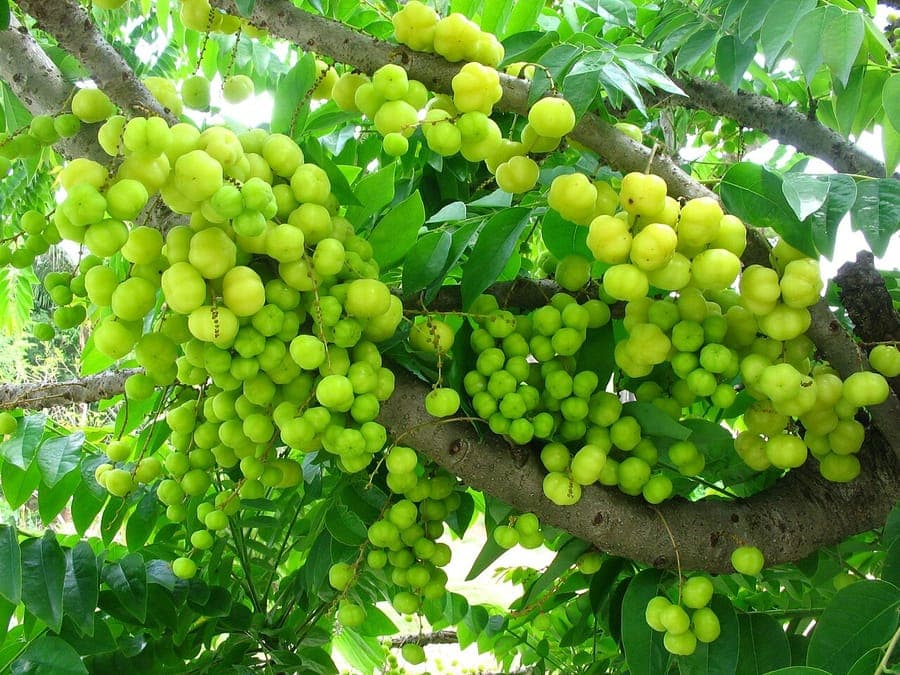
The flowers are inconspicuous and small, but give way to very distinctive, spherical green fruits with longitudinal grooves. These fruits ripen red-orange and have a strong tart taste. The fruits appear year-round in tropical conditions.
Ideal Location
The Indian-gooseberry needs full sun with at least 8 hours of direct sunlight daily. In temperate climates, a greenhouse or conservatory is ideal. The tree loves warm conditions and cannot tolerate cold.
Place the tree protected from wind if growing outdoors. The tree is compact enough to grow in large pots on a sunny terrace or balcony.
Soil
The Indian-gooseberry thrives best in nutrient-rich, well-draining soil. A mixture of garden soil, compost and sand helps. The pH should be between 5.5 and 7.0.
Ensure good drainage as the tree doesn't like water stagnation. Add organic material and provide regular feeding.
Diseño gratis
¿Quieres ver Indian-gooseberry: complete guide en tu jardín? Crea un diseño gratis ahora.
Watering
The Indian-gooseberry needs regular watering, especially during growing and fruiting periods. Keep the soil moist but not waterlogged. Daily watering may be needed during the growing season. Reduce water during rest periods.
Mist the tree regularly to increase humidity. Ensure excess water drains well.
Pruning
The Indian-gooseberry can be pruned to shape and keep it compact. Remove dead branches and cut back excessive growth. Regular pruning stimulates branching and side growth, leading to more fruit.
The tree responds well to forming and can be shaped into interesting forms.
Maintenance Calendar
Spring: Start regular feeding and increase watering. Summer: Keep soil moist, feed bi-weekly. Fall: Gradually reduce feeding. Winter: Minimal care, no feeding.
Winter Hardiness
The Indian-gooseberry is not winter hardy and cannot tolerate temperatures below 10 degrees Celsius. In temperate climates, the tree must be kept indoors or in a greenhouse. This is a fully tropical plant.
Companion Plants
The Indian-gooseberry grows well with other tropical fruit trees. The tree can be self-pollinating but produces more fruit with two trees. Other tropical trees like mango or papaya can grow well together.
Closing
The Indian-gooseberry offers unique flavor and exotic beauty. This is a plant for adventurous gardeners. Visit gardenworld.app/en for more garden inspiration. Discover more tropical fruits at gardenworld.app/en.
¿Quieres ver Indian-gooseberry: complete guide en tu jardín? Crea un diseño gratis ahora.
Sube una foto, elige un estilo y obtén un diseño fotorrealista con lista de plantas en menos de un minuto.
Más de 10.000 jardines diseñados
Sin tarjeta de crédito


Plantas similares
Breynia disticha: complete guide
Breynia disticha
Discover the Snowbush: a frost-sensitive houseplant with stunning red-white foliage. Perfect growing guide for terrariums.
Bridelia micrantha: complete guide
Bridelia micrantha
Bridelia micrantha, or Mitzeerie, is a tropical African shrub supporting bird populations. This native plant provides food and shelter throughout the year.
Flueggea leucopyrus: complete guide
Flueggea leucopyrus
Discover the Spinous flueggea, a robust shrub with sharp thorns from tropical regions. Perfect for dry gardens and demanding conditions.