
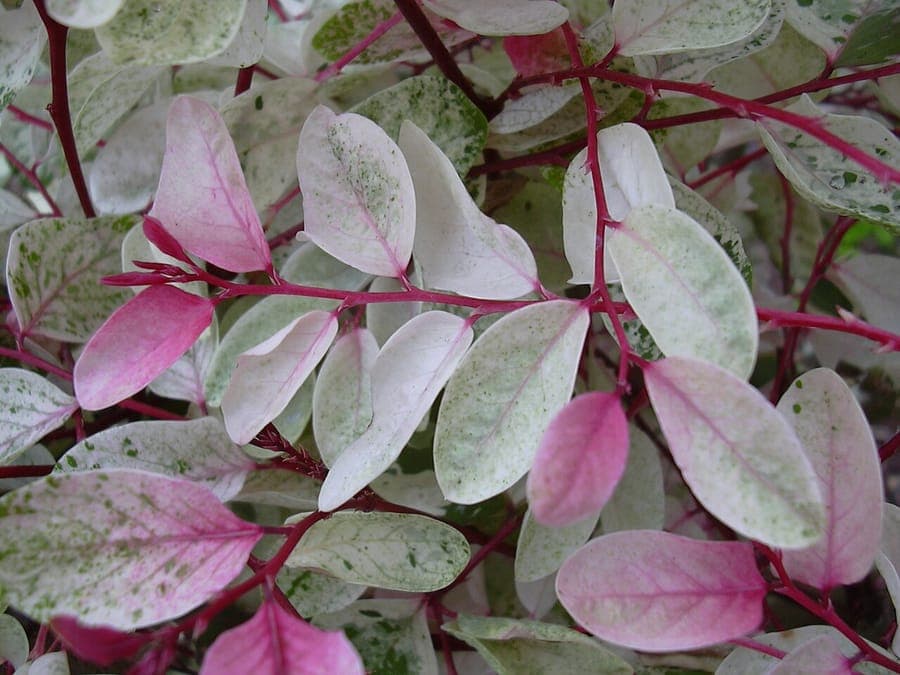
Forest & Kim Starr / CC BY 3.0, via Wikimedia Commons
Breynia disticha: complete guide
Breynia disticha
¿Quieres ver Breynia disticha: complete guide en tu jardín?
1 minuto, sin tarjeta de crédito
Overview
Breynia disticha, commonly called Snowbush or Foliage-flower, is a remarkable houseplant from the Phyllanthaceae family. This shrub originates from the rainforests of New Caledonia and Vanuatu and is now cultivated worldwide as an ornamental. What makes this plant truly special is its spectacular foliage featuring red and white tones that intensify or fade depending on light exposure.
In temperate zones, Breynia disticha grows exclusively as a houseplant or in a terrarium. It typically reaches 60 to 120 centimeters tall and develops as a bushy, compact plant with densely branching stems. It is highly popular for modern interior design styles.
Appearance and Bloom
The distinctive features of Breynia disticha are unmistakable. The leaves are small to medium-sized, approximately 2 to 5 centimeters long, and grow in opposite pairs along the branches. The color ranges from dark green to intense red, often with white stripes or spots depending on the cultivar and light intensity.
The flowers are also interesting, though modest in appearance. They are tiny, greenish to reddish, and appear along the stems. While inconspicuous, they contribute to the overall aesthetic. Small red berries follow the flowers, further enhancing the decorative effect.
Most cultivars display more intense colors under higher light intensity. 'Red Spine' for example shows more red in the leaves and stems, while other forms display predominantly white coloring.
Ideal Location
Breynia disticha thrives best in a location with abundant indirect light. The plant must not be exposed to direct sunlight, especially the hot afternoon sun, as this can cause leaf burn. A spot near an east or north-facing window is ideal, or anywhere at some distance from a south or west-facing window.
The plant is extremely sensitive to cold and must never be exposed to temperatures below 10 to 12 degrees Celsius. In non-tropical climates, it must always remain indoors. Temperatures between 18 and 24 degrees are ideal.
Air humidity is essential. Breynia disticha loves humid air and grows best in environments with at least 50 percent relative humidity. A terrarium, bathroom, or humidity tray location is therefore recommended.
Soil
Use a light, well-draining potting mix, preferably blended with perlite or foam chips. A mixture of two parts general or florist potting soil with one part perlite and one part orchid bark works excellently. The pH should be slightly acidic, around 6.0 to 6.5.
Ensure the pot has good drainage holes. Breynia disticha does not tolerate waterlogging well and quickly develops root rot if the root zone stays too wet.
Diseño gratis
¿Quieres ver Breynia disticha: complete guide en tu jardín? Crea un diseño gratis ahora.
Watering
Water when the top layer of potting soil feels dry. During the growing season (spring through fall) this typically means watering weekly, but depends on temperature, humidity, and ventilation. In winter, water less frequently.
Use lukewarm water. Many tropical plants respond better to room-temperature water than cold water. Avoid spraying water directly on leaves as this can cause spotting. Misting the sides of the plant helps increase air humidity.
If the plant receives too little water, the leaves roll and wilt. Overwatering causes root rot. Find balance between these extremes.
Pruning
Breynia disticha grows fairly quickly and can be pruned regularly to maintain a full, bushy shape. Pinch out the tips of young shoots in spring and summer to encourage branching. Remove all dead or damaged wood.
If the plant becomes too large, you can cut larger branches back to a node. The plant quickly sprouts again from the base.
Maintenance Calendar
Spring: Begin feeding every two weeks. Check for spider mites. Water more as temperatures rise. Pruning can occur.
Summer: Water weekly. Feed every two weeks. Ensure adequate humidity by misting regularly (the air, not the leaves). Keep away from direct sunlight.
Fall: Gradually reduce watering and feeding. Move the plant away from heating sources as they become active.
Winter: Water minimally, only when the top centimeter of potting soil feels dry. Stop fertilizing. Maintain temperatures above 15 degrees, preferably above 18.
Cold Hardiness
Breynia disticha is absolutely not hardy in temperate climates. The plant cannot tolerate frost or even prolonged cold temperatures. Indoors, temperature must always stay above 12 degrees, preferably above 18 degrees.
In warm climate gardens (USDA zones 10-11) Breynia disticha can grow outdoors, but even there frost protection is necessary during cold nights from December to February.
Companion Plants
Breynia disticha pairs beautifully with other houseplants requiring the same tropical conditions. Peperomia, small Ficus cultivars, Anthurium, and Calathea are ideal companions. Some red-leaved succulents like red-tinted Echeveria also create lovely combinations.
In tropical and subtropical gardens you can pair Breynia disticha with other vines and shrubs that thrive in partial shade.
Closing
Breynia disticha is a fascinating plant for anyone who loves tropical houseplants. With its striking red-white foliage and compact growth it delivers the decorative impact of larger room plants while taking up less space. With proper attention to humidity, warmth, and light, your plant will remain stunning for years.
Whether setting up a terrarium or simply seeking something special for your home, Breynia disticha definitely deserves a place in your plant collection. Visit gardenworld.app for more inspiration on tropical plant combinations and creating a microclimate at home!
Enjoy your Breynia disticha!
¿Quieres ver Breynia disticha: complete guide en tu jardín? Crea un diseño gratis ahora.
Sube una foto, elige un estilo y obtén un diseño fotorrealista con lista de plantas en menos de un minuto.
Más de 10.000 jardines diseñados
Sin tarjeta de crédito


Plantas similares
Bridelia micrantha: complete guide
Bridelia micrantha
Bridelia micrantha, or Mitzeerie, is a tropical African shrub supporting bird populations. This native plant provides food and shelter throughout the year.
Flueggea leucopyrus: complete guide
Flueggea leucopyrus
Discover the Spinous flueggea, a robust shrub with sharp thorns from tropical regions. Perfect for dry gardens and demanding conditions.
Andrachne telephioides: complete guide
Andrachne telephioides L.
Mediterranean andrachne, elegant shrubby plant for dry rocky banks with fine leaves and bird seed. Hardy and low-maintenance for arid gardens.