
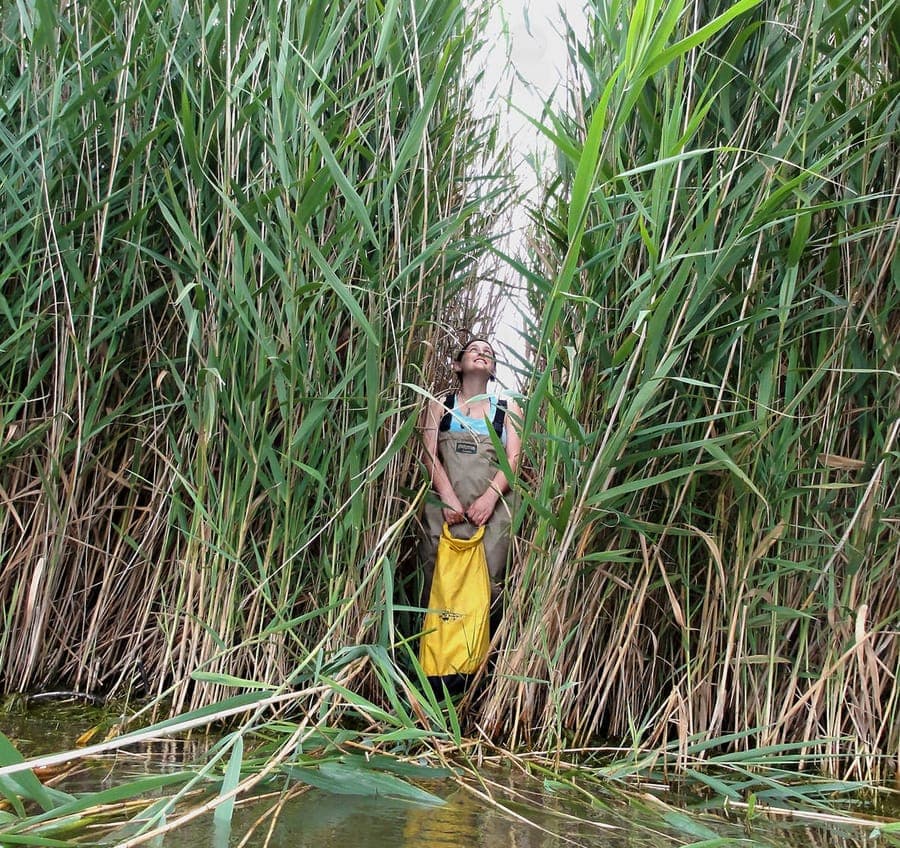
NASA Goddard Space Flight Center from Greenbelt, MD, USA / CC BY 2.0, via Wikimedia Commons
Phragmites australis: complete guide
Phragmites australis
¿Quieres ver Phragmites australis: complete guide en tu jardín?
1 minuto, sin tarjeta de crédito
Overview
Phragmites australis, commonly known as common reed, is a vigorous grass species from the Poaceae family. This plant grows naturally in wetland environments worldwide, from marshes and ponds to river and coastal areas. Although reed is sometimes seen as undesirable because it can become invasive, it plays a crucial role in natural ecosystems by providing food and shelter for waterfowl and other animals.
Common reed is an excellent choice for those who want to create a natural water landscape. The plant grows rapidly and forms dense vegetation that improves water quality by absorbing polluting substances. This process is called constructed wetland wastewater treatment and makes reed invaluable for environmentally conscious gardeners. However, caution should be exercised as reed can grow aggressively.
Appearance and bloom
Phragmites australis grows as a tall grass, usually between 1.5 to 3 meters. The stems are upright, hollow and have a light blue to greenish tint. The leaves are long, linear and relatively broad, distinguishing reed from many other grass species.
The most characteristic feature of reed is its flowering plumes. These large, dense, feathery inflorescences appear in summer and fall and have a brownish to dark red appearance. These flowers are very attractive and give the plant extra ornamental value. After flowering, they form seeds that are dispersed by wind.
The plant is semi-evergreen in mild climates and dies back in harsh winters, regressing from roots in spring. This annual dying and reviving adds visual interest to different seasons.
Ideal location
Reed grows optimally in wetland environments with virtually foot-deep water. The plant can adapt to various water depths, from swampy ground to about 1 meter of water. Slopes along ponds are ideal.
Sunlight is essential for growth. Place reed in zones that receive at least 6 hours of direct sunlight per day. In less sunny locations, the plant will grow more slowly, but can still thrive.
Protection from strong waves and water movement is beneficial, although reed is quite tough. In open lakes or oceans, the plant can be damaged. Sheltered ponds, canals and downstream sections of streams are therefore ideal.
Warning: reed can grow aggressively and become invasive, especially in cultivated environments. Always plant it in confined spaces such as pond containers or enclosed areas.
Soil
Reed is not very fussy about soil as long as it is moist. Muddy soil rich in organic matter is ideal. The plant can adapt to both acidic and alkaline soils.
Nutrient-rich soils, especially with nitrogen and phosphorus, promote faster growth. This makes reed useful for wastewater treatment as it absorbs polluting nutrients. For decorative purposes in a pond, add a layer of muddy substrate on which reed can grow.
To prevent invasion, plant reed in specific zones with soil restrictions. Planting baskets or plastic liners can help.
Diseño gratis
¿Quieres ver Phragmites australis: complete guide en tu jardín? Crea un diseño gratis ahora.
Watering
Reed is an aquatic plant and needs plenty of water. Place the plant in shallow water areas, with a large portion of the base underwater. The plant can die in dry periods if it does not receive water regularly.
In ponds, reed must always have sufficient water, even in winter. If you grow reed in pots, make sure water is regularly topped up and the growing medium remains continuously moist.
The water temperature should be between 5 and 25 degrees Celsius for normal growth. Although reed can tolerate colder temperatures, it thrives better in warm conditions.
Pruning and maintenance
Reed grows rapidly and can tolerate heavy pruning. Many gardeners cut it in late fall or early winter as it begins to die back. This promotes recovery in spring and prevents dead material from remaining in the water.
It is important to prune reed occasionally to prevent spread. Remove dead or outdated stems and remove seeds before they disperse. This helps keep the plant under control.
Also make regular inspections for insect pests and diseases. Reed is relatively disease-resistant but can sometimes be attacked by insects. Biological control is usually sufficient.
Maintenance calendar
March to May: Growing season begins. Check water levels and add nutrients.
June to August: Peak growth and bloom. Check for unwanted spread.
September to October: Flowers mature. Check seed dispersal.
November to February: Rest period. Prune end of stems in preparation for next season.
Winter hardiness
Reed is very winter-hardy in temperate climates and can tolerate temperatures down to -20 degrees Celsius. In severe winters, the above-ground parts die back, but the underground rhizomes survive and revive in spring.
In tropical and subtropical climates, reed grows year-round. In very cold climates, however, extra protection may be beneficial. Cover the plant base with mulch or organic material.
Make sure water in ponds does not freeze completely. However, this can be difficult, so ensure depth (minimum 0.75 m) so that lower parts do not freeze solid.
Companion plants
Reed combines well with other aquatic plants such as water lilies, irises and cattails. This combination creates natural water landscapes.
Bank plants such as hostas and cypress can also beautifully contribute to a transition from water to dry land. The height of reed provides background structure.
Waterfowl and dragonflies are attracted to reed, making it useful for biodiversity. This is essential for gardens that want to mimic a natural ecosystem.
Closing
Phragmites australis is a powerful aquatic plant that brings beauty and ecological benefits to gardens. With careful placement and regular monitoring, this plant can create a natural and dynamic water feature. However, be cautious about its invasive nature. Always plant reed in confined spaces. Many local garden centers have water plant sections with reed and advice. Gardenworld.app can help you visualize how water features fit into your garden. Enjoy the natural beauty and ecological benefits that reed provides.
¿Quieres ver Phragmites australis: complete guide en tu jardín? Crea un diseño gratis ahora.
Sube una foto, elige un estilo y obtén un diseño fotorrealista con lista de plantas en menos de un minuto.
Más de 10.000 jardines diseñados
Sin tarjeta de crédito


Plantas similares
Sporobolus pungens: complete guide
Sporobolus pungens
Sporobolus pungens is a stoloniferous Mediterranean coastal grass with outstanding salt and drought tolerance, perfect for seaside and dry gardens.
Mediterranean aegilops: complete guide
Aegilops biuncialis
Everything about Aegilops biuncialis, a Mediterranean annual grass with ornamental spikes and outstanding drought tolerance for dry gardens.
Silver bluestem: complete guide
Bothriochloa saccharoides
Full guide to Bothriochloa saccharoides (silver bluestem): site, soil, watering, winter hardiness, pruning, and garden companions.