
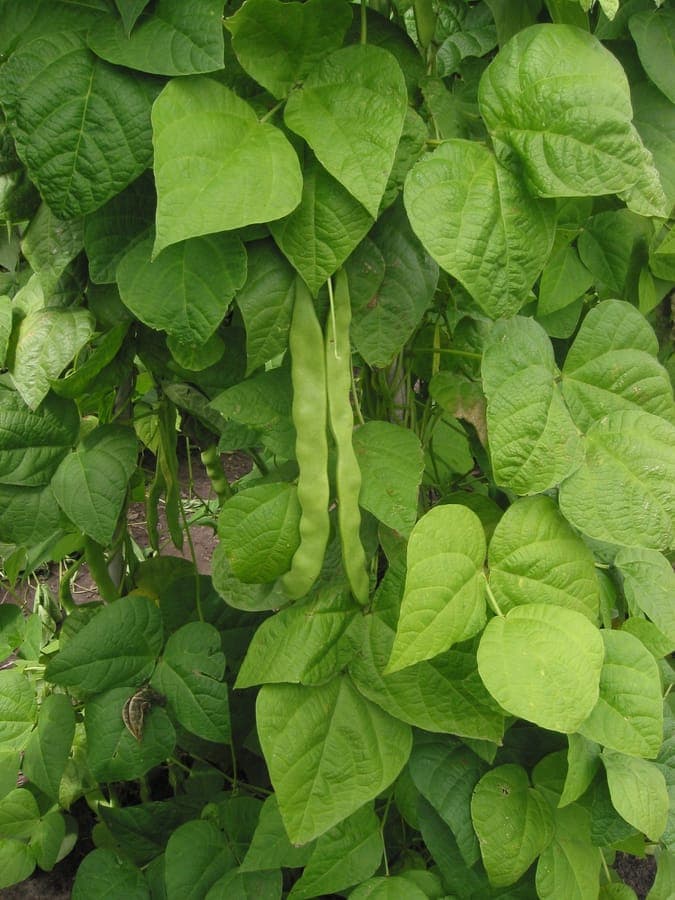
Rasbak / CC BY-SA 3.0, via Wikimedia Commons
Common bean: complete guide
Phaseolus vulgaris
¿Quieres ver Common bean: complete guide en tu jardín?
1 minuto, sin tarjeta de crédito
Overview
The common bean (Phaseolus vulgaris), known as the 'kidney bean' or 'garden bean', is one of the most widely cultivated vegetable plants globally. Originally from Mexico and Central America, it has become a staple food and garden crop in nearly every country. Belonging to the Fabaceae family, common beans are renowned for their nutritious seeds and pods.
Unlike runner beans, common beans typically grow as compact, bushy plants (though climbing varieties exist). This makes them ideal for smaller gardens and productive even in limited space. They're one of the easiest vegetables for beginners to grow.
Appearance & bloom cycle
Common beans typically grow as compact bushes 30-60 cm tall, though climbing varieties reach 2 metres. Leaves are trifoliate and deep green. Flowers appear in white, pink, purple, or mixed colours from June through September depending on planting time and climate.
Pods grow 12-20 cm long and green, containing seeds that vary from cream to dark red, purple, and striped depending on variety. Seeds can be eaten fresh in immature pods or dried and stored for cooking.
Ideal location
Common beans thrive in full sun with 6-8 hours of direct daily light. They tolerate partial shade though productivity decreases. In very hot climates, afternoon shade helps prevent heat stress.
Sow directly in garden beds or start in containers for transplanting. Ensure locations are well-drained and not prone to waterlogging. For climbing varieties, provide support structures.
Soil requirements
Common beans grow well in moderately fertile, well-draining soil with pH 6.0 to 7.5. Add organic matter before planting to improve structure and nutrition. The plant's nitrogen-fixing ability means little additional feeding is needed.
Heavy clay soils benefit from added sand and organic matter. Preventing waterlogging is essential, especially in wet seasons.
Diseño gratis
¿Quieres ver Common bean: complete guide en tu jardín? Crea un diseño gratis ahora.
Watering
Keep soil consistently moist, especially during flowering and pod development. Daily watering may be necessary during dry periods. Water at plant bases to avoid fungal diseases.
Excellent drainage helps prevent moisture problems. During the growing season (May to October), maintain regular, consistent watering for optimal growth and productivity.
Pruning
Common beans generally require no pruning. For bush varieties, occasionally remove dead leaves or diseased stems. For climbing varieties, pinch tips once plants reach desired height.
Regularly remove faded flowers and damaged pods to maintain plant health and encourage continued flowering.
Maintenance calendar
April-May: Sow seeds directly into warm soil once all frost danger has passed.
June-July: Water regularly, monitor for pests and diseases.
August-September: Harvest pods regularly, especially if you prefer tender young beans.
October: Harvest mature pods for seed-saving. Allow some to fully ripen on plants for dry beans.
November: Remove plants from beds, work remains into soil for nitrogen benefit.
Winter hardiness
Common beans are not winter-hardy in temperate European climates. These are warm-loving annuals killed by frost. In USDA zones below 9 (virtually all of northern Europe), replant annually.
In warm climates, they may grow nearly year-round with successive sowings. Dry seeds store well through winter for next season's planting.
Companion plants
Common beans work well with:
- Carrots: Grow below without root competition.
- Brassicas: Benefit from nitrogen fixation.
- Squash and courgette: Can grow beneath beans.
- Calendula: Helps distract pests.
Avoid fennel and garlic nearby, which suppress nitrogen fixation.
Closing
The common bean is a reliable, nutritious vegetable replanted annually. With good drainage, regular watering, and sunlight, you'll achieve good harvests of fresh or dried beans. This is a traditional crop throughout Europe with many benefits. Use gardenworld.app to plan your vegetable garden and find inspiration for integrating beans and other crops. Enjoy your own harvested, nutritious beans and experiment with different varieties!
¿Quieres ver Common bean: complete guide en tu jardín? Crea un diseño gratis ahora.
Sube una foto, elige un estilo y obtén un diseño fotorrealista con lista de plantas en menos de un minuto.
Más de 10.000 jardines diseñados
Sin tarjeta de crédito


Plantas similares
Tall Silky Lupine: complete guide
Lupinus elatus
Tall silky lupine is a fast-growing Californian perennial with silvery foliage and blue-purple flower spikes, ideal for a prairie-style garden.
Garfield Lupine: complete guide
Lupinus garfieldensis
The Garfield lupine is a rare, fast-growing American perennial for alkaline, dry grassland gardens, with striking blue flower spikes.
Lupinus elegans: complete guide
Lupinus elegans
Lupinus elegans, the elegant lupine, is a spectacular blooming plant from Mexico with blue flower spikes. Care, cultivation and garden use.