
Wikimedia Commons / Public domain, via Wikimedia Commons
Runner bean: complete guide
Phaseolus coccineus
¿Quieres ver Runner bean: complete guide en tu jardín?
1 minuto, sin tarjeta de crédito
Overview
The runner bean (Phaseolus coccineus), a native of Mexico and Central America, is a climbing vegetable plant beloved by gardeners worldwide. Named for the way beans "run" up climbing supports, this plant has been cultivated for centuries. It's prized for its spectacular red flowers and edible pods, making it one of the most ornamental vegetables you can grow.
Belonging to the Fabaceae family, runner beans are nitrogen-fixing plants that benefit soil health. The plant is a true climber, naturally twining around supports and reaching heights of up to 3 metres in suitable conditions. It's especially popular in UK and European kitchen gardens.
Appearance & bloom cycle
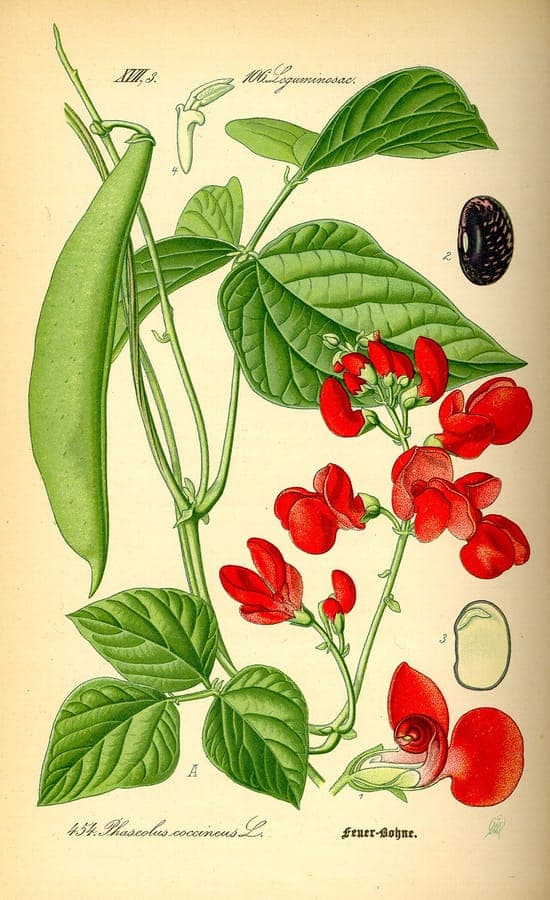
Runner beans grow as vigorous climbers reaching 2.5 to 3 metres tall with proper support. The leaves are trifoliate (composed of three leaflets) with a soft green appearance. The flowers are the plant's standout feature - appearing in brilliant red, white, or bicolour varieties from June through October depending on planting time.
The long, slender pods reach 15-20 cm in length, starting green and darkening as they mature. The seeds themselves are attractively patterned in red and black. The entire plant presents an elegant appearance, especially when trained along a framework or pergola.
Ideal location
Runner beans thrive in full sun with at least 6-8 hours of direct daily light. This maximizes flowering and pod production. The plant can tolerate part-shade but will flower less abundantly.
Provide strong support such as bamboo canes, netting, string, or wooden trellises before planting to prevent damage to young growth. The plant naturally twines around these structures as it grows. Multiple plants spaced 15-20 cm apart along a support create a dense, productive display.
Soil requirements
Runner beans prefer moderately fertile, well-draining soil with a pH of 6.0 to 7.0. Amend soil with compost or well-rotted manure before planting to improve structure and moisture retention. Avoid heavy feeding as excess nitrogen reduces flowering in favour of leaf growth.
Drainage is crucial - waterlogged soil causes root rot. In clay soils, add coarse sand or grit to improve drainage. The plant's nitrogen-fixing ability means it needs little additional feeding during the season.
Diseño gratis
¿Quieres ver Runner bean: complete guide en tu jardín? Crea un diseño gratis ahora.
Watering
Keep soil consistently moist but not waterlogged throughout the growing season. Once flowering begins, water more generously and frequently - daily in hot summers. Water at the base of plants to avoid fungal diseases on foliage.
During the peak growing season (May to September), plants may need daily watering in very warm conditions. Apply mulch around plants to conserve moisture and keep soil cool. Reduce watering in wet autumn weather.
Pruning
Runner beans require minimal pruning but benefit from removing the growing tip when it reaches the top of its support to encourage lateral flowering shoots. Remove any dead or diseased foliage to maintain plant health.
In very vigorous plants, pinching out excess growth channels energy toward flowers and pods rather than excessive vegetative growth. This extends the productive season.
Maintenance calendar
May-June: Prepare bed, install supports, sow seeds or plant seedlings once soil is warm.
July-August: Water regularly, harvest young pods frequently to encourage continued flowering.
September-October: Continue harvesting, enjoy peak flowering. Allow later pods to mature for seed-saving.
October-November: Remove plants when frost threatens. Store dried seeds in cool conditions for next year.
Winter hardiness
Runner beans are tender annuals killed by the first frost. In USDA zones below 9 (most of northern Europe), they must be replanted annually. Some gardeners in protected microclimates against warm walls or in greenhouses may overwinter plants, but this is uncommon.
Dry seed storage through winter is the most reliable approach. Seeds germinate reliably the following spring when soil warms.
Companion plants
Runner beans work well with:
- Maize: Tall plants provide natural support.
- Nasturtium: Flowers attract beneficial insects and distract pests.
- Carrots: Grow below without competing for nutrients.
- Brassicas: Benefit from nitrogen left by bean root nodules.
Avoid planting near onions and garlic as these suppress nitrogen fixation.
Closing
Runner beans reward gardeners with months of stunning red flowers and abundant harvests. With proper support, sunshine, and regular watering, you'll have an ornamental and productive addition to any garden. Explore gardenworld.app for design inspiration incorporating vegetable plants, and check our plant guides for harvest tips. Save your own seed and enjoy the cycle of growth year after year!
¿Quieres ver Runner bean: complete guide en tu jardín? Crea un diseño gratis ahora.
Sube una foto, elige un estilo y obtén un diseño fotorrealista con lista de plantas en menos de un minuto.
Más de 10.000 jardines diseñados
Sin tarjeta de crédito


Plantas similares
Tall Silky Lupine: complete guide
Lupinus elatus
Tall silky lupine is a fast-growing Californian perennial with silvery foliage and blue-purple flower spikes, ideal for a prairie-style garden.
Garfield Lupine: complete guide
Lupinus garfieldensis
The Garfield lupine is a rare, fast-growing American perennial for alkaline, dry grassland gardens, with striking blue flower spikes.
Lupinus elegans: complete guide
Lupinus elegans
Lupinus elegans, the elegant lupine, is a spectacular blooming plant from Mexico with blue flower spikes. Care, cultivation and garden use.