
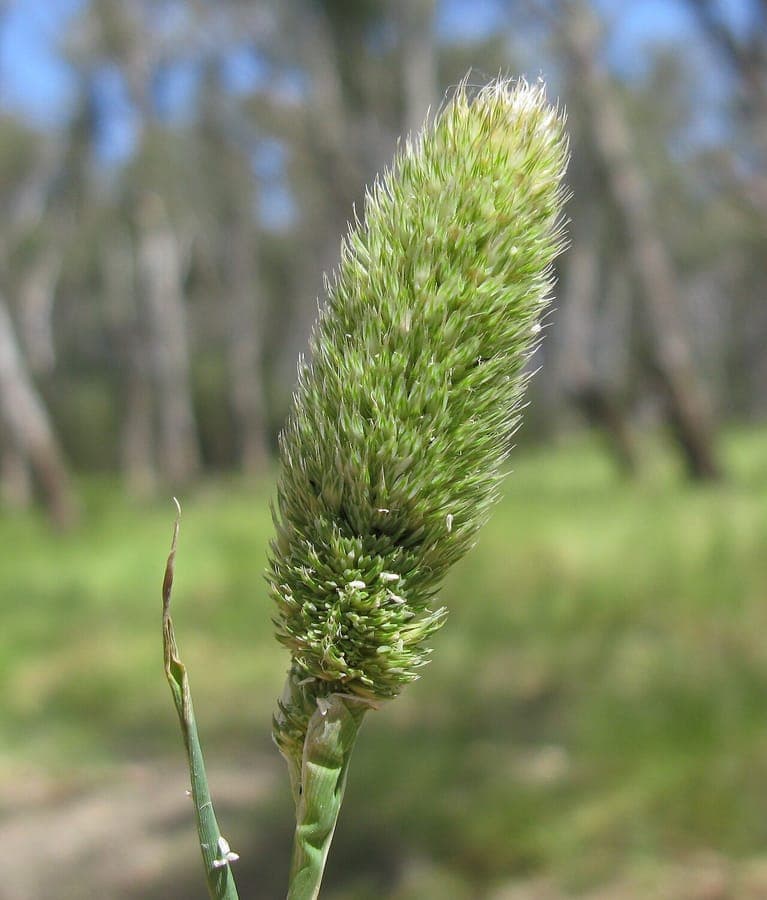
Macleay Grass Man / CC BY 2.0, via Wikimedia Commons
Phalaris paradoxa: complete guide
Phalaris paradoxa
¿Quieres ver Phalaris paradoxa: complete guide en tu jardín?
1 minuto, sin tarjeta de crédito
Overview
Phalaris paradoxa, also known as paradoxa grass or awned canary grass, is a truly remarkable grass species from the Poaceae family. This annual grass is native to the Mediterranean region and extends to Pakistan. What makes Phalaris paradoxa unique are the extremely bizarre and striking flower spikes: they have a strange, angular form with very short, dense spikes that look like little clusters. This characteristic shape gives the plant a surreal, almost unreal appearance.
In Dutch and Belgian gardens, Phalaris paradoxa is much less known than other ornamental grasses, but it certainly deserves more attention. The grass grows 40 to 70 centimeters tall and blooms from April through July. For gardeners who want something truly different, paradoxa grass offers unique, conversation-starting beauty. On gardenworld.app, we use this grass selectively as an eye-catcher in modern garden designs.
Appearance and Bloom
Phalaris paradoxa forms slender, upright clumps with narrow, gray-green leaves. The plant grows to 40 to 70 centimeters tall. Most striking, however, are the flower spikes: they have a very strange, angular, almost cubic form. The spikes are compact, approximately 1 to 1.5 centimeters long, and densely packed. This bizarre form is truly unique among ornamental grasses and immediately catches the eye.
In early growth stages, the spikes have a grayish green color. After ripening, they become golden brown, providing a warm, intricate color effect. The entire plant has a mysterious, almost alien appearance that certainly sets it apart from conventional ornamental grasses.
The seeds are small but valuable for bird feeding, which will appeal to bird lovers.
Diseño gratis
¿Quieres ver Phalaris paradoxa: complete guide en tu jardín? Crea un diseño gratis ahora.
Ideal Location
Phalaris paradoxa thrives best on warm, sunny locations with at least 6 to 8 hours of direct sun daily. The grass tolerates full sun and strong UV radiation well. In partial shade, the grass grows more sprawled and less compactly.
The grass is very wind-firm and can be planted in open, windy gardens.
Soil Type
Phalaris paradoxa grows best in well-draining, sandy soils with pH around 7.0. The grass feels at home in lean soils and requires minimal fertilization. Heavy clay should be substantially improved with sand.
Watering
Once established, Phalaris paradoxa requires very little water. In normal summers, rainfall alone is completely sufficient. Young material should be kept consistently moist for 4 to 6 weeks.
Pruning
Phalaris paradoxa requires minimal pruning. In autumn, you can cut the plant back to just above ground level.
Maintenance Calendar
April to May: Water young plants. May to July: Full growth and bloom; water only when dry. July to October: Seed ripening; birds enjoy it. November to March: Hard cutback.
Winter Hardiness
Not winter hardy. Treat as an annual grass.
Companion Plants
Phalaris paradoxa combines beautifully with:
- Centaurea (blue)
- Salvia (diverse)
- Lavender (purple)
- Poppies (red)
- Agapanthus (blue)
Conclusion
Phalaris paradoxa is a spectacular, bizarre grass species for the lover of the unusual. With unique spikes and minimal maintenance requirements, the grass offers true garden art. For gardenworld.app designs, this grass fits perfectly in avant-garde gardens. Transform your front yard into something truly remarkable on gardenworld.app.
¿Quieres ver Phalaris paradoxa: complete guide en tu jardín? Crea un diseño gratis ahora.
Sube una foto, elige un estilo y obtén un diseño fotorrealista con lista de plantas en menos de un minuto.
Más de 10.000 jardines diseñados
Sin tarjeta de crédito


Plantas similares
Sporobolus pungens: complete guide
Sporobolus pungens
Sporobolus pungens is a stoloniferous Mediterranean coastal grass with outstanding salt and drought tolerance, perfect for seaside and dry gardens.
Mediterranean aegilops: complete guide
Aegilops biuncialis
Everything about Aegilops biuncialis, a Mediterranean annual grass with ornamental spikes and outstanding drought tolerance for dry gardens.
Silver bluestem: complete guide
Bothriochloa saccharoides
Full guide to Bothriochloa saccharoides (silver bluestem): site, soil, watering, winter hardiness, pruning, and garden companions.