
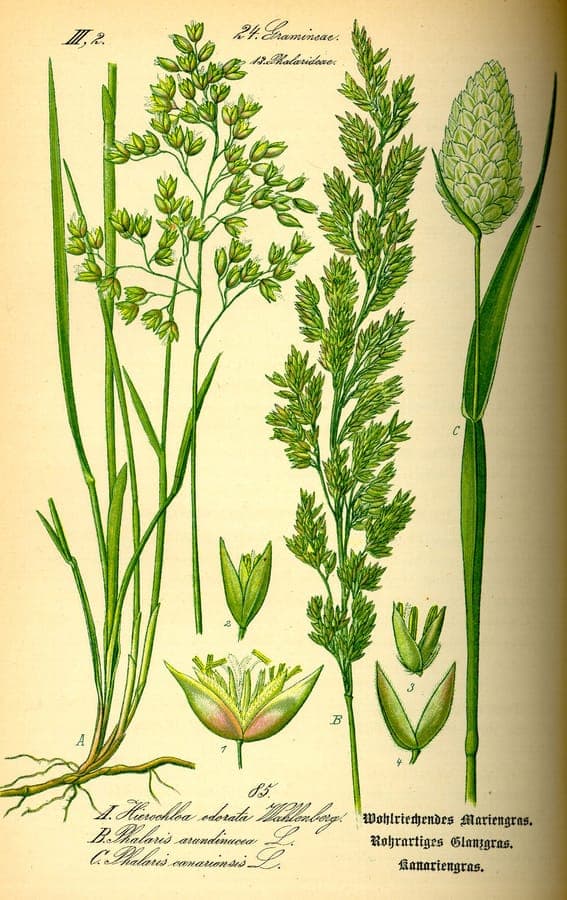
Wikimedia Commons / Public domain, via Wikimedia Commons
Phalaris canariensis: complete guide
Phalaris canariensis
¿Quieres ver Phalaris canariensis: complete guide en tu jardín?
1 minuto, sin tarjeta de crédito
Overview
Phalaris canariensis, commonly called Canary Seed Grass, is an annual grass from the Poaceae family. This grass naturally occurs on the Canary Islands and in Morocco. It is prized for its nutritious seeds, traditionally used as birdseed. The plant is easy to grow and reaches full potential in a single season. Phalaris canariensis offers both visual beauty and practical bird food.
Appearance and bloom
Phalaris canariensis reaches heights of 50 to 100 centimeters. The plant has slender, linear green leaves. Flower spikes emerge in July and August and are remarkable: oval, densely packed and roughly 2 to 3 centimeters long. The spikes display characteristic yellow-green to yellow coloring with fine brown stripes. These seed heads are highly decorative and catch immediate attention. Seeds mature in September and October.
Ideal location
Phalaris canariensis thrives in full sun. The plant needs at least 6 hours of direct sunlight daily. Shade significantly reduces seed yield. Choose a spot with good air circulation. The plant grows well in open beds, vegetable gardens and border plantings. Avoid locations with excessive tree shade.
Soil
Phalaris canariensis grows in virtually all soil types. The plant prefers well-draining soil. The ideal pH range is 6.0 to 7.5. Heavy clay soils can be problematic. For best results work sand or compost in to improve drainage. Nutrient-rich soil produces better seeds.
Watering
Phalaris canariensis has moderate moisture needs. Water regularly after sowing until plant is established. Once growing, the plant tolerates drought well. Excessive water promotes leaf growth at the expense of seed production. Water at plant base, not on foliage.
Diseño gratis
¿Quieres ver Phalaris canariensis: complete guide en tu jardín? Crea un diseño gratis ahora.
Maintenance
Phalaris canariensis is very low maintenance. No fertilization needed for normal growth. The plant needs no staking or training. Weeds can be removed by hand. If you want to save seeds for next season, allow several plants to self-seed. Harvest seed heads when they turn dry and brown.
Maintenance calendar
April to May: Sow directly in ground. June: Plant establishes. July to August: Bloom and seed formation. September to October: Seed maturation. November: Harvest seeds for birdseed or seed saving.
Winter hardiness
Phalaris canariensis is not winter hardy. It is an annual that dies when temperatures drop. This is no problem as seed is easily saved. Dry seed heads can be stored throughout winter in cool, dry conditions.
Companion plants
Phalaris canariensis grows well with other annual grasses. Plant it alongside sunflowers, nigella and other summer flowers. The grass also works well in bird gardens with other seed-producing plants. Combine with flowers that attract birds for a complete bird paradise.
Closing thoughts
Phalaris canariensis is perfect for gardeners seeking both beauty and function. This grass produces birdseed while remaining decorative in the garden. The seeds are nutritious and highly loved by canaries and other birds. Plant this grass this season and enjoy the birds it attracts. Learn more about bird gardens and wildlife-friendly plant design on gardenworld.app. Let gardenworld.app inspire you to create a bird paradise garden with the right plant selection today.
¿Quieres ver Phalaris canariensis: complete guide en tu jardín? Crea un diseño gratis ahora.
Sube una foto, elige un estilo y obtén un diseño fotorrealista con lista de plantas en menos de un minuto.
Más de 10.000 jardines diseñados
Sin tarjeta de crédito


Plantas similares
Sporobolus pungens: complete guide
Sporobolus pungens
Sporobolus pungens is a stoloniferous Mediterranean coastal grass with outstanding salt and drought tolerance, perfect for seaside and dry gardens.
Mediterranean aegilops: complete guide
Aegilops biuncialis
Everything about Aegilops biuncialis, a Mediterranean annual grass with ornamental spikes and outstanding drought tolerance for dry gardens.
Silver bluestem: complete guide
Bothriochloa saccharoides
Full guide to Bothriochloa saccharoides (silver bluestem): site, soil, watering, winter hardiness, pruning, and garden companions.