
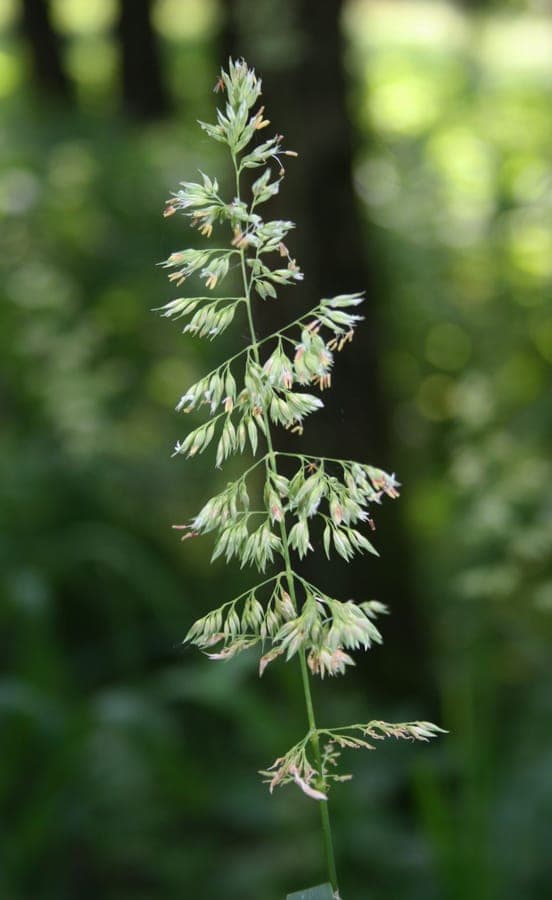
Franz Xaver / CC BY-SA 3.0, via Wikimedia Commons
Phalaris arundinacea: complete guide
Phalaris arundinacea
¿Quieres ver Phalaris arundinacea: complete guide en tu jardín?
1 minuto, sin tarjeta de crédito
Overview
Phalaris arundinacea, commonly called Gardener's Garters, is a perennial grass from the Poaceae family. This grass is prized for its striking white-green striped foliage. It naturally occurs in temperate and subtropical northern hemispheres. The grass spreads via underground runners and forms dense mats. Phalaris arundinacea is ideal for garden backgrounds and border plantings.
Appearance and bloom
Phalaris arundinacea reaches heights of 80 to 150 centimeters. The foliage is distinctly yellow-white striped or green-white variegated. This gives the grass very decorative appearance year-round. Flower spikes emerge June to July, compact and patterned, roughly 5 to 8 centimeters long. The spikes are gray to violet colored. The grass forms dense tufts remaining attractive for years.
Ideal location
Phalaris arundinacea thrives in full sun to partial shade. Full shade diminishes foliage color noticeably. The plant prefers moist to wet soils but is flexible. Ideal spots include water edges, wetlands and moist gardens. The grass is highly resilient growing in challenging conditions. Protect from intense afternoon sun in very warm climates.
Soil
Phalaris arundinacea grows in virtually all soil types. It prefers moist, nutrient-rich soils. The ideal pH range is 5.5 to 7.5. The grass thrives in heavy clay soil. Sulfur-rich or acid soils can be problematic. Work organic matter in to improve moisture retention.
Watering
Phalaris arundinacea has moderate to high moisture needs. The plant thrives in constantly moist soil. Regular watering is important, especially during growing season. Partial waterlogging is acceptable. In dry conditions the plant may wilt. Water regularly during growing season, less in winter.
Diseño gratis
¿Quieres ver Phalaris arundinacea: complete guide en tu jardín? Crea un diseño gratis ahora.
Maintenance
Phalaris arundinacea is low maintenance. Prune in early spring to remove dead material and encourage new growth. The grass may grow aggressively; containment with root barriers may be needed. Spent flower spikes can be removed. The plant needs no fertilization if soil contains nutrients.
Maintenance calendar
March: Cut back previous season. April to May: New growth. June to July: Bloom and flower spikes. August to October: Seed ripening. November: Winter preparation.
Winter hardiness
Phalaris arundinacea is completely winter hardy in Europe. The plant survives harsh winters without issues. Foliage may turn brownish after frost but regrows in spring. This grass suits all climate zones in Northern Europe.
Companion plants
Phalaris arundinacea combines well with other grasses and perennials. Plant with hostas, ferns and shade-loving plants. It also works well beside aquatic plants and sedges. The contrasting foliage makes it perfect backdrop for dark-leafed plants.
Closing thoughts
Phalaris arundinacea is versatile grass for modern gardens. The colored foliage brings color year-round. Despite aggressive growth it is valuable in well-planned borders. Available at garden centers. Try this beautiful grass this year and enjoy its year-long beauty. Discover more ways to bring foliage color to your garden on gardenworld.app. Let gardenworld.app help you plan a garden design with lasting seasonal color today.
¿Quieres ver Phalaris arundinacea: complete guide en tu jardín? Crea un diseño gratis ahora.
Sube una foto, elige un estilo y obtén un diseño fotorrealista con lista de plantas en menos de un minuto.
Más de 10.000 jardines diseñados
Sin tarjeta de crédito


Plantas similares
Sporobolus pungens: complete guide
Sporobolus pungens
Sporobolus pungens is a stoloniferous Mediterranean coastal grass with outstanding salt and drought tolerance, perfect for seaside and dry gardens.
Mediterranean aegilops: complete guide
Aegilops biuncialis
Everything about Aegilops biuncialis, a Mediterranean annual grass with ornamental spikes and outstanding drought tolerance for dry gardens.
Silver bluestem: complete guide
Bothriochloa saccharoides
Full guide to Bothriochloa saccharoides (silver bluestem): site, soil, watering, winter hardiness, pruning, and garden companions.