
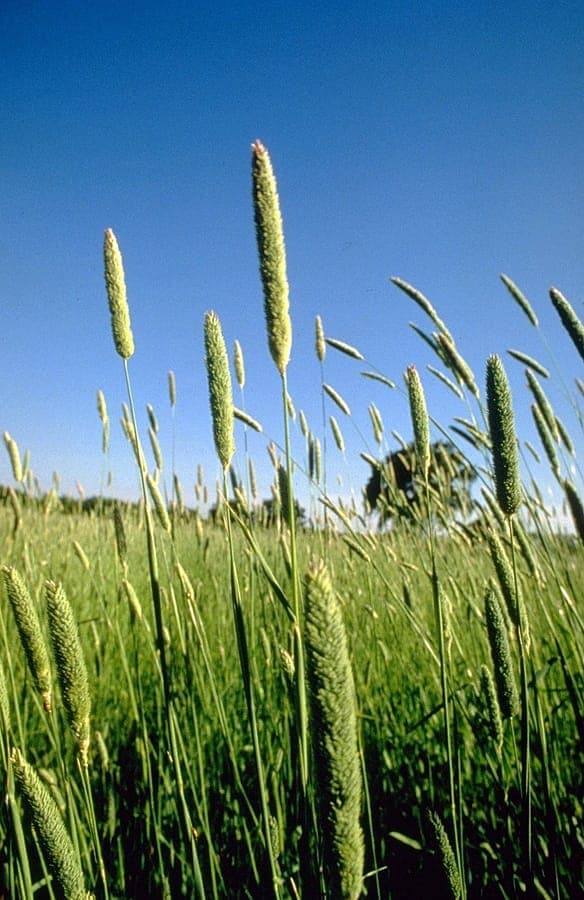
Wikimedia Commons / Public domain, via Wikimedia Commons
Phalaris aquatica: complete guide
Phalaris aquatica
¿Quieres ver Phalaris aquatica: complete guide en tu jardín?
1 minuto, sin tarjeta de crédito
Overview
Phalaris aquatica, commonly called Australian phalaris, is a perennial grass from the Poaceae family. This grass naturally occurs from Macaronesia through the Mediterranean to the Caucasus region. It is a highly resilient plant thriving in wet and moist soils. Phalaris aquatica develops strong root systems that prevent erosion. The plant is ideal for pond edges, drainage channels and wet meadows.
Appearance and bloom
Phalaris aquatica is a sturdy, upright grass reaching 80 to 120 centimeters tall. The leaves are blue-green, long and narrow. From July to August, flower spikes appear, elongated and compact, roughly 3 to 5 centimeters long. The spikes display attractive yellow to brown coloring. The grass blooms faithfully each year and forms dense clumps. The plant spreads via underground runners.
Ideal location
Phalaris aquatica thrives in wet to moist soil. The plant tolerates partial water and even brief flooding. Place the grass in full sun to partial shade. It handles strong wind well. Ideal locations include pond edges, wetlands, marsh areas and water features. The plant also works well in rainwater collection zones.
Soil
Phalaris aquatica is not fussy about soil type but prefers wet conditions. The plant grows well in clay, heavy soils and silty ground. The ideal pH range is 5.5 to 7.5. Well-draining soil is not necessary; in fact, phalaris thrives in waterlogged conditions. Work in organic matter to improve soil structure.
Watering
Phalaris aquatica has very high moisture requirements. The plant thrives in constantly moist to wet soil. Regular watering is not needed; the grass prefers areas with high water tables. Even partial waterlogging is acceptable. This grass is ideal for places where other plants would suffer from excess water.
Diseño gratis
¿Quieres ver Phalaris aquatica: complete guide en tu jardín? Crea un diseño gratis ahora.
Maintenance
Phalaris aquatica requires minimal maintenance. No fertilization needed if the soil contains natural nutrients. You can cut the grass back to 10 centimeters in spring for better growth. Remove dead leaves and spikes in fall. The plant is self-supporting and needs no staking.
Maintenance calendar
March to April: Cut back previous year's growth. May: New growth begins. July to August: Bloom and flower spikes. September to October: Seeds ripen. November: Remove dead matter.
Winter hardiness
Phalaris aquatica is completely winter hardy in temperate climates. The plant does not die back in winter. The foliage may turn brownish, but the grass survives frost without issues. The plant can grow even in very cold regions.
Companion plants
Phalaris aquatica grows well with other moisture-loving plants. Combine with iris, reed mace, common reed and other edge grasses. The plant pairs perfectly with dwarf willows along water features. Plant phalaris around ponds where other ornamental grasses thrive.
Closing thoughts
Phalaris aquatica is essential for wet gardens and water features. The plant combines durability with aesthetics. Whether you seek erosion control or simply want ornamental grasses, phalaris delivers both. The grass is available at garden centers. Try phalaris aquatica this year in your wet zone and enjoy its elegance year-round. Discover more water-adapted plant designs on gardenworld.app. Let gardenworld.app help you create a stunning water garden with the right plant selection today.
¿Quieres ver Phalaris aquatica: complete guide en tu jardín? Crea un diseño gratis ahora.
Sube una foto, elige un estilo y obtén un diseño fotorrealista con lista de plantas en menos de un minuto.
Más de 10.000 jardines diseñados
Sin tarjeta de crédito


Plantas similares
Sporobolus pungens: complete guide
Sporobolus pungens
Sporobolus pungens is a stoloniferous Mediterranean coastal grass with outstanding salt and drought tolerance, perfect for seaside and dry gardens.
Mediterranean aegilops: complete guide
Aegilops biuncialis
Everything about Aegilops biuncialis, a Mediterranean annual grass with ornamental spikes and outstanding drought tolerance for dry gardens.
Silver bluestem: complete guide
Bothriochloa saccharoides
Full guide to Bothriochloa saccharoides (silver bluestem): site, soil, watering, winter hardiness, pruning, and garden companions.