
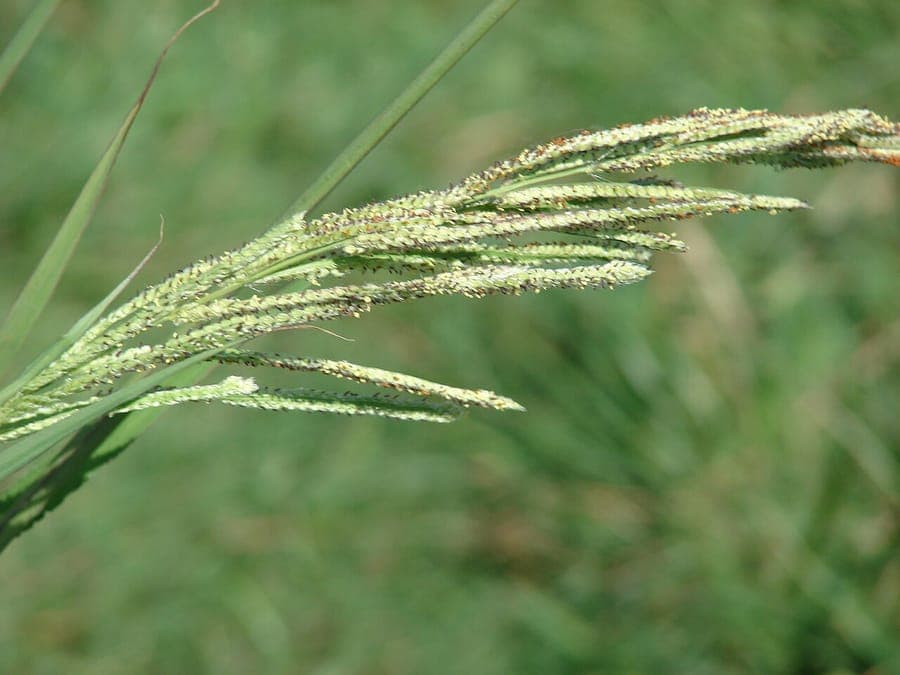
Forest & Kim Starr / CC BY 3.0, via Wikimedia Commons
Paspalum urvillei: complete guide
Paspalum urvillei
¿Quieres ver Paspalum urvillei: complete guide en tu jardín?
1 minuto, sin tarjeta de crédito
Overview
Paspalum urvillei, commonly known as Vasey grass or Vasey's grass, is an attractive ornamental grass from the Poaceae family. Native to South America, particularly Bolivia, Paraguay, and Brazil, this grass thrives in semi-arid savanna environments.
This ornamental grass is characterized by a neat, upright growth habit with fine, grey-green foliage. It normally reaches 80-120 centimeters in height. During summer and autumn, elegant, upright flower spikes emerge, turning bronze-coloured when mature.
Vasey grass offers exceptional qualities for natural garden designs, wildflower ecologies, and as solitary accents in borders. Its remarkable climate tolerance to both drought and moisture makes it a versatile element for gardenworld.app users seeking low-maintenance landscape solutions.
Appearance and Bloom
Paspalum urvillei forms a neat, upright shrubby form with fine, narrow foliage. Individual leaves measure approximately 2-4 millimeters wide and up to 30 centimeters long. Leaf colour varies from mid-green to grey-green with fine texture.
Flower spikes emerge from late summer through autumn (August-October). These are beautifully branched, reddish-brown to bronze-coloured when mature. The inflorescences are elegant, airy structures serving effectively as vertical accents in borders.
Following blooming, small seeds develop that readily self-disperse. This makes the grass suitable for natural installations where voluntary regeneration is desired. In more formal gardens, you may regulate seed-set by gently removing faded flower spikes.
Ideal Location
Vasey grass thrives in very bright light to full sun positions. Place the grass in locations receiving 6-8 hours direct sunlight daily. In shaded environments, the grass will exhibit reduced density and vigour.
Air circulation is important. Ensure good ventilation to prevent fungal infections and encourage natural seed dispersal. Wind-exposed locations can prove beneficial for seed-spreading, though excessively strong winds may cause lodging.
Temperature: The grass is extremely cold-hardy, tolerating temperatures to -15 degrees Celsius, though it prefers warmer climates. In extremely cold areas (below -20 degrees), winter damage may occur, but new growth typically emerges in spring.
Soil
Vasey grass is remarkably versatile regarding soil requirements. It thrives in nearly every soil type, from very dry to moisture-rich soils. Ideally, the plant prefers moderately fertile to nutrient-poor sandy to clay soils.
PH tolerance is broad: the grass grows well in soils ranging from pH 5.0 to 7.5. In nutrient-rich soils, the grass may dominate and suppress companion plants, so moderate nutrient management is advisable in mixed borders.
Drainage is not critical; the grass tolerates excess water well, unlike many other ornamental grasses. In very wet soils, growth remains low and compact. In dry soils, the grass becomes more compact and dwarf-like.
Diseño gratis
¿Quieres ver Paspalum urvillei: complete guide en tu jardín? Crea un diseño gratis ahora.
Watering
Once established, Vasey grass is extremely drought-tolerant. During growing season (spring-summer), water only when prolonged drought occurs, especially during extreme heat. With normal rainfall, supplemental watering is typically unnecessary.
Newly planted specimens require more frequent water. Water regularly during the first growing season until the grass is well-established (usually 8-12 weeks). Once established, water requirements are minimal.
In winter, no watering is required when the grass is dormant. The grass tolerates both winter dryness and dampness equally well.
Pruning
Vasey grass requires annual pruning. In late winter or early spring (January-March), cut the grass back to approximately 15-20 centimeters above ground. This stimulates new growth and keeps the plant youthful and vigorous.
For pruning, cut carefully with hedge shears or electric grass shears around the entire grass perimeter. Remove all brown, dead portions. Leave some green base to stimulate regeneration.
During summer, you may remove flower spikes immediately after bloom if you wish to prevent seed dispersal. This also helps maintain compact form.
Maintenance Calendar
January-February: Pruning time. Cut back to 15-20 centimeters. March-April: Growth initiation. No feeding typically needed; begin regular watering. May-July: Growing period. Minimal feeding (every 4 weeks) helps in nutrient-poor soils. Regular watering only during extreme drought. August-October: Bloom and seed-set. No feeding. Remove spent flowers if seed dispersal is undesired. November-December: Dormancy. No feeding or watering required.
Winter Hardiness
Vasey grass is extremely winter-hardy to approximately -15 degrees Celsius, making it suitable for most European climates. In extremely cold areas (below -20 degrees), severe winter damage may occur, but the grass typically regrows in spring.
Winter maintenance: In snowy regions, snow cover may help insulate the plant. No extra protection typically needed. In extremely harsh climates, the grass grows slower and reaches lower height, a natural adaptation mechanism.
Companion Plants
Vasey grass combines beautifully with other ornamental grasses and herbaceous plants sharing comparable growing requirements. Excellent companions include Rudbeckia, Echinacea, Monarda, Asters, and other wildflowers.
In larger borders, Vasey grass functions excellently in groups (3-5 plants) with back-row positioning, providing vertical accent to lower foreground plantings. Its tall, airy structure allows under-planting with shade-tolerant perennials.
Low ground covers such as Sedum and small Euphorbia species work well beneath the grass structure.
Closing Thoughts
Paspalum urvillei delivers elegance and natural grace to gardens with minimal care. This ornamental grass is ideal for wild gardens, naturalization effects, and forward-thinking landscape designs. With basic annual pruning and optional feeding in poor soils, you'll enjoy years of this attractive grass.
At your garden center, you'll find ornamental grass sections and gardening supplies. For advice on natural garden designs and ecological plant combinations, consult gardenworld.app, where experts help develop wildflower borders and naturalistic grassscapes.
Integrate Vasey grass into your garden for appeal requiring minimal care while delivering maximum ecological value.
¿Quieres ver Paspalum urvillei: complete guide en tu jardín? Crea un diseño gratis ahora.
Sube una foto, elige un estilo y obtén un diseño fotorrealista con lista de plantas en menos de un minuto.
Más de 10.000 jardines diseñados
Sin tarjeta de crédito


Plantas similares
Sporobolus pungens: complete guide
Sporobolus pungens
Sporobolus pungens is a stoloniferous Mediterranean coastal grass with outstanding salt and drought tolerance, perfect for seaside and dry gardens.
Mediterranean aegilops: complete guide
Aegilops biuncialis
Everything about Aegilops biuncialis, a Mediterranean annual grass with ornamental spikes and outstanding drought tolerance for dry gardens.
Silver bluestem: complete guide
Bothriochloa saccharoides
Full guide to Bothriochloa saccharoides (silver bluestem): site, soil, watering, winter hardiness, pruning, and garden companions.