
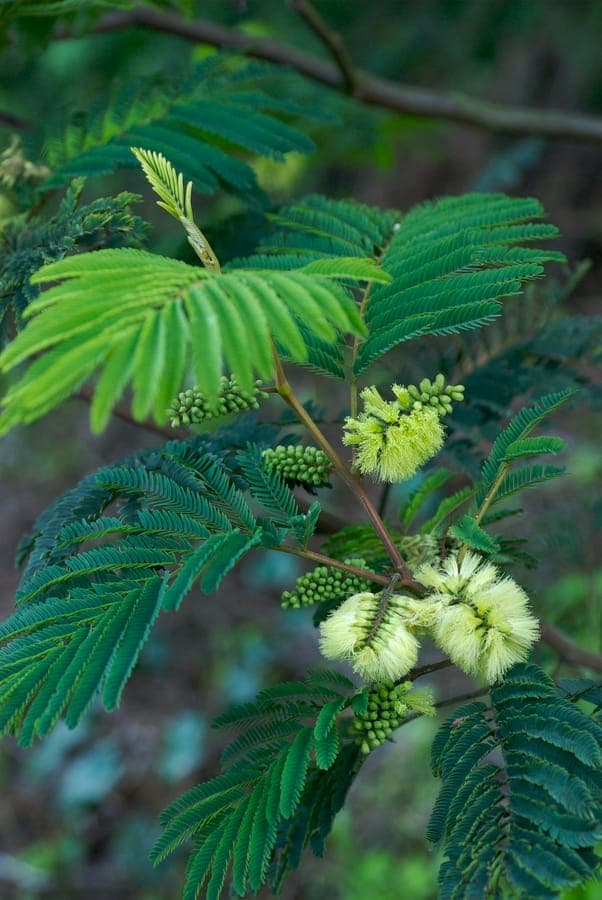
Eric in SF / CC BY-SA 3.0, via Wikimedia Commons
Australian albizia: complete guide
Paraserianthes lophantha
¿Quieres ver Australian albizia: complete guide en tu jardín?
1 minuto, sin tarjeta de crédito
Overview
The Australian Albizia (Paraserianthes lophantha), also called Plume Albizia, is an ornamental tree native to Indonesia and Australia. This fast-growing tree is renowned for its feathery, grey-green foliage and delicate white flower clusters with yellow stamens. It is an excellent tree for Mediterranean and warm gardens.
Paraserianthes lophantha belongs to the Family Fabaceae and forms an important part of tropical and subtropical garden designs. The tree is very fast-growing and can reach significant size within a few years.
Appearance and Bloom
The tree reaches 5 to 10 meters tall, sometimes taller, with a broad, open crown structure. The leaves are twice pinnate with many small leaflets, grey-green in color. In sun these leaflets appear almost silver.
The flowers are cream to white with yellow stamens, blooming in dense 5-8 centimeter long cylindrical spikes. The flowering period runs October to March in warm climates. After flowering, the tree produces long, brown seed pods.
This is a deciduous tree in dry conditions but can be semi-evergreen in moist climates. The tree grows rapidly, approximately 1 meter yearly in good conditions.
Ideal Location
Paraserianthes lophantha grows best in full sun locations. The tree demands complete sunlight for optimal growth and flowering. The tree also grows in partial shade but becomes more open and leggy.
The tree is very tolerant of wind and storm, part of its natural habitat. Plant in open, windy terrain without problem. The tree also tolerates salt and marine influences.
On gardenworld.app we suggest using this tree as a single specimen in warm gardens. Perfect for south-facing terrain in warmer climates.
Soil
Paraserianthes lophantha grows on virtually all soils, from poor to rich. The tree prefers well-draining, slightly sandy ground. The tree is very drought-tolerant and actually prefers poorer, dry soils.
The pH range can vary from 6.0 to 8.0. The tree prefers neutral to slightly alkaline conditions. Extra fertilizer is not critical; actually the tree grows too exuberantly on rich soils.
When planting in pots, use well-draining mix with sand. The tree tolerates sandy, poor soils well.
Diseño gratis
¿Quieres ver Australian albizia: complete guide en tu jardín? Crea un diseño gratis ahora.
Watering
Paraserianthes lophantha is drought-tolerant once established, but needs water during first growing season to build strong root system. Once established the tree tolerates prolonged drought well.
Water only during very severe drought or during growth periods. The tree prefers dry to normal moist conditions. Excessive water can cause disease.
On gardenworld.app we recommend this tree for dry, low-water gardens. The tree is perfect for dry Mediterranean climates.
Pruning
Paraserianthes lophantha needs not be pruned but can be shaped as desired. Prune after flowering in spring. Remove dead branches carefully. This stimulates denser, balanced growth.
The tree can be controlled by pruning the tops to stimulate more bushiness. Do not prune too aggressively as this can lead to disease penetration.
Maintenance Calendar
January-February: Flowering ends. Begin light pruning. March-May: Growth accelerates in warm climates. Water as needed. June-September: Growth continues. Monitor for drought in warm periods. October-December: Flowering begins. Enjoy the flowers.
Winter Hardiness
Paraserianthes lophantha is hardy to approximately -2 degrees Celsius. In cold areas the tree must be grown in containers and overwintered indoors. In warm temperate and Mediterranean climates it can stay outside.
The tree is perfect for subtropical and warm Mediterranean gardens. In colder climates (Benelux) grow in large pots and bring to warm winter quarters. The tree does not tolerate cold well.
Companion Plants
Combine Paraserianthes lophantha with other warm-climate trees and shrubs. Good companions are Ceratonia, Ficus carica, Punica, and other Mediterranean and subtropical species. These combinations create beautiful Mediterranean gardenscapes.
On gardenworld.app we recommend planting this tree as a single specimen for maximum effect. Plant at least 5 meters from buildings and roads for safety.
Closing
The Australian Albizia is a spectacular, fast-growing tree for warm-climate gardens. Although it needs warm weather, it grows practically maintenance-free in suitable conditions. With proper placement and water you will enjoy feathery foliage and white flower clusters.
Find this tree through specialist nurseries. Start creating your subtropical garden on gardenworld.app today!
¿Quieres ver Australian albizia: complete guide en tu jardín? Crea un diseño gratis ahora.
Sube una foto, elige un estilo y obtén un diseño fotorrealista con lista de plantas en menos de un minuto.
Más de 10.000 jardines diseñados
Sin tarjeta de crédito


Plantas similares
Tall Silky Lupine: complete guide
Lupinus elatus
Tall silky lupine is a fast-growing Californian perennial with silvery foliage and blue-purple flower spikes, ideal for a prairie-style garden.
Garfield Lupine: complete guide
Lupinus garfieldensis
The Garfield lupine is a rare, fast-growing American perennial for alkaline, dry grassland gardens, with striking blue flower spikes.
Lupinus elegans: complete guide
Lupinus elegans
Lupinus elegans, the elegant lupine, is a spectacular blooming plant from Mexico with blue flower spikes. Care, cultivation and garden use.