
User:SB_Johnny / CC BY-SA 3.0, via Wikimedia Commons
Paeonia obovata: complete guide
Paeonia obovata
¿Quieres ver Paeonia obovata: complete guide en tu jardín?
1 minuto, sin tarjeta de crédito
Overview
Paeonia obovata, known as Chinese Peony or Japanese Woodland Peony, is a fascinating herbaceous peony in the Paeoniaceae family. This plant grows naturally in mountain woodlands of China, Japan and Russia, thriving in moist, shady environments. With delicate flowers and graceful foliage, this peony is an exceptional addition to shade gardens and woodland edges.
This is not an ordinary peony. Chinese Peony distinguishes itself through woodland-like growth, refined leaf structure and unique preference for half to full shade. In the Netherlands and Germany, this is a relatively unknown peony, perfect for gardeners wanting something special.
Appearance and Bloom
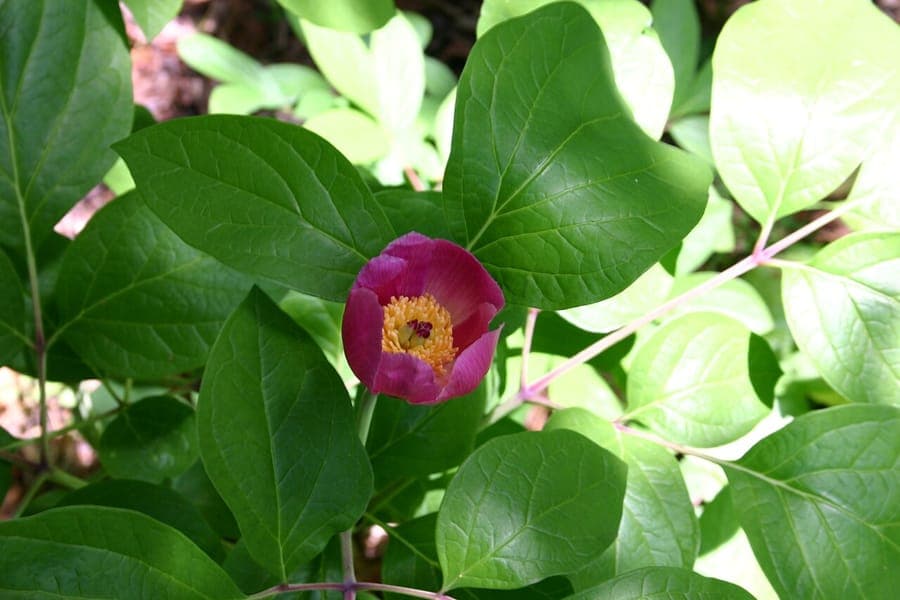
Paeonia obovata forms graceful clumps of dark green, trifoliate leaves. The leaflets are obovate (hence the name), with soft, serrated edges. In spring (May-June), a few flowers per plant appear on slender, elegant stems. Flowers are small to medium, usually rose to purple-red, sometimes white, with yellow stamens.
Foliage colors beautifully yellow-orange in autumn before dropping. The plant reaches 40-60 cm tall and gradually spreads wider. Paeonia obovata is a slow grower requiring more patience than common peonies, but with years becomes a beautiful specimen.
Ideal Location
Directed half to full shade is ideal. The plant grows best in:
- Woodland edge and forest gardens
- Half-shade beneath large trees
- Full shade in warm regions (southern Netherlands, Rhineland)
- Sheltered spots away from strong midday sun
Full sun can cause scorched foliage and reduced bloom. In northern Netherlands, more sun is tolerable if plant receives adequate moisture. Avoid windy locations where delicate stems may break.
Soil
Paeonia obovata prefers abundant organic matter. Ideal soil contains:
- Rich compost or leaf mold (30-50% of planting hole)
- Moisture-retaining but well-draining soil
- Neutral to slightly acidic pH (6.0-7.0)
- Nutrient-rich, not poor soil
Heavy clay soil is acceptable but should be improved with organic matter. Add well-worked compost when planting. A 5-10 cm mulch layer around plant helps retain moisture and keep soil cool.
Watering
Paeonia obovata is sensitive to drought, especially during growing season. The plant needs abundant moisture but no stagnation.
Guideline:
- During growth (March-June): Water regularly, keeping soil constantly moist (not wet)
- During bloom: Regular watering for large flowers
- Summer and autumn: Normal watering, less if outside rains regularly
- Winter: Minimal water if plant not growing
- In containers: Frequent watering
Water cautiously - excessive water causes root rot. Always ensure drainage.
Diseño gratis
¿Quieres ver Paeonia obovata: complete guide en tu jardín? Crea un diseño gratis ahora.
Pruning
Paeonia obovata requires minimal pruning. Simply remove:
- Dead or damaged stems in early spring
- Fallen leaves in autumn
- Spent flower parts after bloom
Complete stem cutting to ground is done after first hard frost (late October to November). Leave twenty cm above ground to protect rootstock.
Maintenance Calendar
Spring (March-April): Remove last year's stems, give organic feeding, water regularly if dry. Summer (May-June): Enjoy bloom, support delicate stems, water during drought, remove spent flowers. Autumn (July-October): Water normally, enjoy foliage color, cut stems after frost. Winter (November-February): Minimal care, add mulch layer for winter protection.
Winter Hardiness
Paeonia obovata is very hardy to zone 6 (-23°C), often to zone 5. The plant tolerates Dutch and German winters well. The rootstock is protected underground. Annual above-ground dieback in autumn is normal.
However, ensure:
- Mulch layer of 10-15 cm in severe winters
- Protection from strong winter winds
- Good drainage against waterlogging
Companion Plants
Paeonia obovata combines beautifully with:
- Shade-loving bloomers: Hosta, Astilbe, Helleborus (Christmas rose)
- Shade foliage partners: Ferns, Epimedium, Hostas
- Spring-blooming bulbs: Trillium, Uvularia, Erythronium
- Forest trees: Beneath small Japanese maples, Ilex crenata
- Specimen: Paeonia obovata also works beautifully as solo planting
Ensure partners share preference for moist, organic-rich soil.
Closing
Paeonia obovata is a unique, slow-growing peony for patient gardeners wanting something special. With regular water, organic matter and half-shade, this exquisite plant will bloom and grow for decades. You'll find peony selections regularly at garden centers. Paeonia obovata deserves place in shade gardens, woodland edges and serene Asian gardens.
Visit gardenworld.app for more plant overviews and ideas on how to use this Japanese peony in your garden design. With Paeonia obovata, you create a piece of Asian woodland magic in your own garden.
Visit gardenworld.app for inspiration on how to optimally integrate this elegant peony into your garden plan.
¿Quieres ver Paeonia obovata: complete guide en tu jardín? Crea un diseño gratis ahora.
Sube una foto, elige un estilo y obtén un diseño fotorrealista con lista de plantas en menos de un minuto.
Más de 10.000 jardines diseñados
Sin tarjeta de crédito


Plantas similares
Tree peony (Paeonia x suffruticosa): complete guide
Paeonia x suffruticosa
Discover tree peonies: cultivation, care essentials, and garden placement. Magnificent flowers and long-lived shrub plants.
Paeonia californica: complete guide
Paeonia californica
Discover California peony, a spectacular flowering plant with deep red blooms. Complete growing guide with design tips and care instructions.
Paeonia cambessedesii: complete guide
Paeonia cambessedesii
Discover the rare Balearic peony, an exclusive and botanically unique plant. Growing guide with care tips for this Mediterranean treasure.