
Rodriquez / Public domain, via Wikimedia Commons
Paeonia cambessedesii: complete guide
Paeonia cambessedesii
¿Quieres ver Paeonia cambessedesii: complete guide en tu jardín?
1 minuto, sin tarjeta de crédito
Overview
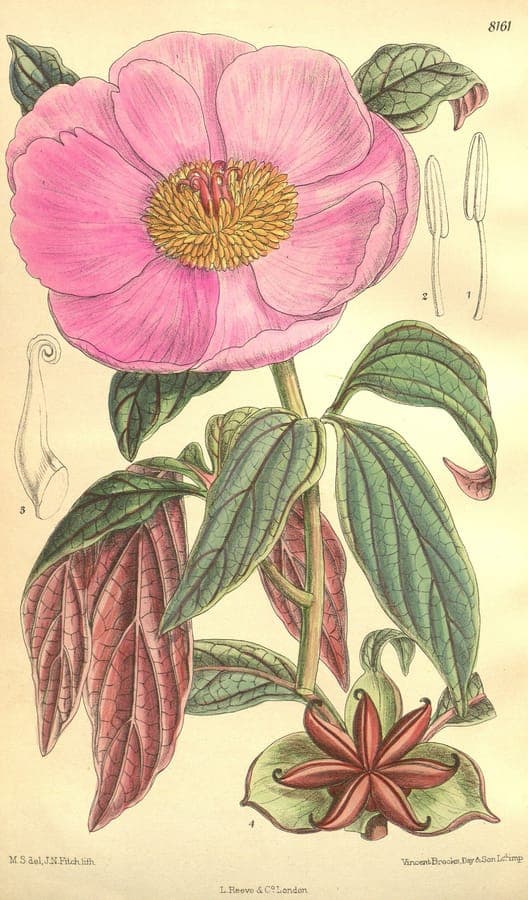
Paeonia cambessedesii, commonly known as the Balearic peony or Mallorcan peony, is an exceptionally rare and exclusive perennial native to the islands of Majorca and Minorca in the Balearic archipelago. This botanical rarity is found wild only on these islands and is extremely difficult to obtain in cultivation. The plant belongs to the Paeoniaceae family and distinguishes itself through its unique growth pattern and enchantingly beautiful flowers in pink tones.
Due to its limited natural occurrence and specific culture requirements, the Balearic peony is much sought by enthusiasts and collectors. The plant reaches heights of 30-50 centimeters with elegant, finely divided foliage that may have reddish tints. The flowering period runs from April through May, when the plant displays lovely pink blooms.
Appearance & Bloom
The flowers of Paeonia cambessedesii are extraordinarily beautiful. They reach diameters of 5-8 centimeters with soft pink to deep red-pink coloration. The flowers consist of numerous petals elegantly arranged. Golden stamens within the flower contrast beautifully against the pink outer petals.
The foliage is equally impressive. The leaves are very finely divided and possess an elegant, delicate structure. In youth stage, the leaves may have a reddish tint, making the plant extra decorative. The compact habit and fine foliage make this plant particularly suitable for small gardens and rock gardens.
Ideal Location
Paeonia cambessedesii thrives best in partial shade to full sun. The plant prefers protection from intense midday sun in very warm regions. Ideal conditions include 2-3 hours of direct morning sun with afternoon shade protection. The plant also suits locations with filtered light well.
Plant in locations sheltered from strong winds, as the delicate foliage can be damaged. The plant prefers dry, well-draining conditions. Avoid low-lying areas where water accumulates after heavy rain.
Soil
Paeonia cambessedesii requires very well-draining, nutrient-rich soil. The ideal is heavy clay improved with sand and gravel. A pH of 6.0-7.5 is acceptable. The plant prefers somewhat dry conditions and cannot tolerate waterlogged soils.
When planting, incorporate abundant sand, gravel and organic material to improve drainage. In regions with wet, heavy clay soils, planting in raised beds may be necessary. During the growing season, add organic material to maintain soil fertility.
Diseño gratis
¿Quieres ver Paeonia cambessedesii: complete guide en tu jardín? Crea un diseño gratis ahora.
Watering
Paeonia cambessedesii prefers moderately moist soil during growth, but requires much less water than many other peonies. Excessive watering is very harmful. Water regularly but avoid promoting waterlogged conditions. The plant can suffer greatly under persistently wet feet.
Ensure the soil dries somewhat between waterings. In winter, when the plant rests, watering can be reduced significantly. It is better to underwater than overwater.
Pruning
Paeonia cambessedesii requires very minimal pruning. Remove spent blooms regularly after flowering. In autumn, when foliage begins to die, cut the plant down to 5 centimeters above ground. Avoid aggressive pruning.
Young plants should not be aggressively pruned for several years. Only remove spent portions and clearly dead stems.
Maintenance Calendar
March: Check plant for winter damage. Prune very carefully. Begin moderate watering.
April-May: Flowering period. Add modest organic feeding. Maintain moderately moist soil.
June-July: Summer growth. Provide regular watering but avoid excess. Remove spent blooms.
August-September: Plant begins preparing for dormancy. Reduce watering frequency. Add organic material.
October-November: Foliage dies. Remove dead foliage. Cut plant back to 5 centimeters.
December-February: Winter dormancy. Minimal watering. Protect against severe frost.
Winter Hardiness
Paeonia cambessedesii is somewhat winter hardy to approximately -10 degrees Celsius. In temperate climates the plant can grow outdoors, but winter protection is advisable. In severe winters, protecting the plant with mulch or leaf mold may be necessary.
In very cold regions or areas with wet winters, overwintering in a cool greenhouse may be worthwhile. Ensure soil drains well to survive frost cycles.
Companion Plants
Paeonia cambessedesii combines well with other Mediterranean-origin plants. Plant together with low-growing species like alpine sedums and saxifrages. Combinations with white-flowering alpine blooms provide nice contrasts.
This peony fits excellently in rock gardens. In containers on south-facing terraces, it grows compactly.
Conclusion
Paeonia cambessedesii is truly a jewel in the garden for serious plant lovers. This very rare plant requires careful attention, well-draining soil and modest watering. With such care, this unique plant grows and blooms fantastically. The plant is very difficult to find but can be obtained through specialized enthusiasts. Visit gardenworld.app for inspiration and garden design with rare and exclusive plants.
¿Quieres ver Paeonia cambessedesii: complete guide en tu jardín? Crea un diseño gratis ahora.
Sube una foto, elige un estilo y obtén un diseño fotorrealista con lista de plantas en menos de un minuto.
Más de 10.000 jardines diseñados
Sin tarjeta de crédito


Plantas similares
Tree peony (Paeonia x suffruticosa): complete guide
Paeonia x suffruticosa
Discover tree peonies: cultivation, care essentials, and garden placement. Magnificent flowers and long-lived shrub plants.
Paeonia californica: complete guide
Paeonia californica
Discover California peony, a spectacular flowering plant with deep red blooms. Complete growing guide with design tips and care instructions.
Paeonia brownii: complete guide
Paeonia brownii
Brown's peony is a hardy perennial from western North America. Learn how to grow this exceptional wildflower species in your garden with practical care and planting advice.