
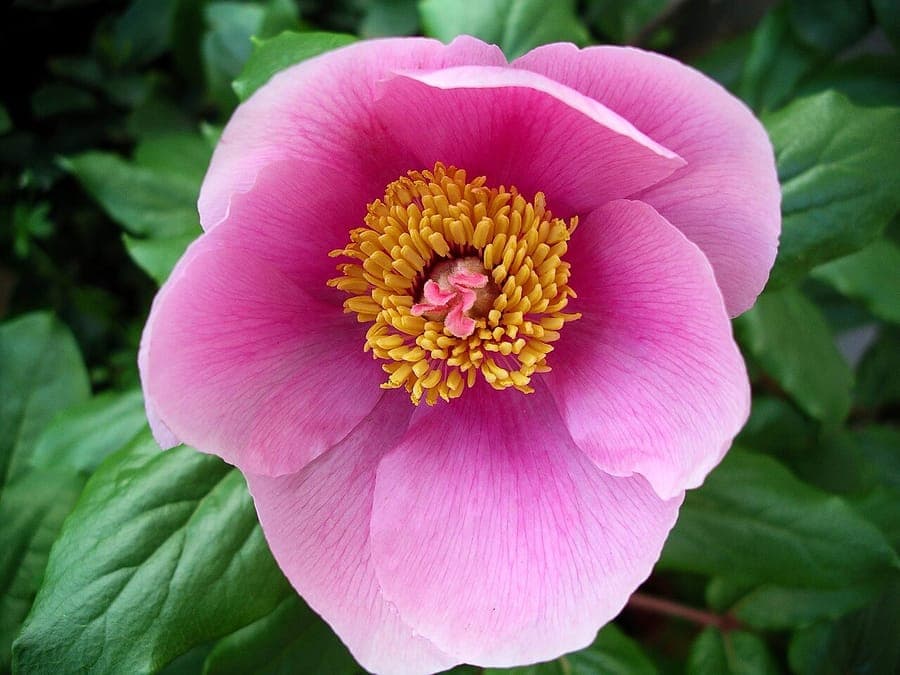
Max.oppo / CC BY-SA 3.0, via Wikimedia Commons
Paeonia corsica: complete guide
Paeonia corsica
¿Quieres ver Paeonia corsica: complete guide en tu jardín?
1 minuto, sin tarjeta de crédito
Overview
Paeonia corsica is a rare and delicate wild peony from the Paeoniaceae family. This plant originates from Corsica and Sardinia, where it grows in rocky and alpine mountain areas. This is a miniature peony with compact growth that makes it ideal for rockeries, alpine gardens and container cultivation.
As a true island plant, Paeonia corsica has adaptations to scale, drought and windy conditions. The plant is highly interesting for gardeners with small spaces, those wanting to build rockeries, or those interested in rare wild plants.
Appearance and growth
Paeonia corsica grows as a very compact plant reaching only 20-40 centimeters in height. This makes it one of the smallest peony species. The leaves are deeply cut and refined, dark green and glossy.
Red flowers appear in April to May, usually 4-6 centimeters in diameter. They are full and beautifully colored in bright red with yellow stamens. Each plant typically produces 1-3 flowers per season - not many, but of excellent quality.
After blooming, small seed pods form. The plant mostly dies back in summer, which is typical for peony species.
Ideal location
Paeonia corsica thrives in fully sunny locations. This island plant is accustomed to full sun and performs best with 6-8+ hours of direct sunlight daily. The plant tolerates windy conditions well.
Choose an open spot in a rockery, alpine borders or in well-drained containers. The plant is perfect for rock gardens and alpine displays. Avoid shady spots - sunlight is essential.
Protection from heavy rainfall is desired in very wet winters, although the plant is hardy.
Soil
Paeonia corsica prefers very well-drained soil. Poor, sandy or gravelly soils are perfect. The plant grows in virtually all soils as long as water does not stagnate. Chalky soils are favorable.
In traditional gardens, plant in rock gardens or grow in containers with specialized alpine potting mix (high sand and gravel). This ensures excellent drainage.
Heavy clay soils are unsuitable without significant improvement. Adding gravel, sand and organic matter can help.
Watering
Paeonia corsica needs very limited water once established. This island plant is very drought-tolerant. Water only in exceptionally dry periods.
First year: occasional water during dry periods helps establishment. Once established, minimal water. In containers: water only when soil feels dry.
Winter rain usually provides sufficient water. Supplemental summer water is almost never needed.
Diseño gratis
¿Quieres ver Paeonia corsica: complete guide en tu jardín? Crea un diseño gratis ahora.
Maintenance and pruning
Paeonia corsica requires very minimal maintenance. Remove faded flowers after blooming if desired, but this is optional. Dead foliage can be removed in fall.
No pruning is needed. The plant grows in natural compact form. This is a very low-maintenance plant.
Winter hardiness
Paeonia corsica is hardy to about -10 to -12 degrees Celsius. In most West European winters this plant will survive, although very severe winters may require protection.
In container cultivation: move pots to a protected location in very cold winters or insulate pot base with straw mat.
Companion plants
Paeonia corsica works beautifully in rock gardens with other alpine and dwarf plants. Combine with sedums, sempervivums, saxifraga, dianthus, phlox and other compact mountain plants.
In containers, group with other alpine rarities for interesting scaled plant displays.
Container cultivation
Paeonia corsica is perfect for pot cultivation. Use 15-20 liter pots with excellent drainage holes. Fill with alpine potting mix: 50% potting soil, 30% gravel, 20% perlite or sand.
In containers, water more carefully than in ground. Check soil moisture regularly. Winter protection in pots is desired in cold climates.
Propagation
Paeonia corsica can be bred from seed, although germination rates are low. Seeds require stratification (cold storage).
Easier is root division in fall, although caution is required because of deep roots. Most gardeners purchase young plants from specialist nurseries.
Botanical rarity
Paeonia corsica is a very rare plant in cultivation. It is not much in the trade and is mainly of interest to collectors of alpine and rare plants.
Toxicity note
Paeonia corsica is not toxic to humans, but bark and seeds have mildly toxic properties. Keep pets away.
Conclusion
Paeonia corsica is a jewel for lovers of alpine plants and rare flora. Its compact growth, beautiful flowers and durability make it valuable for rock gardens and container cultivation. For designing alpine and rock gardens, visit gardenworld.app for expert advice. Gardenworld.app helps you create unique, beautiful gardens full of botanical fascination.
¿Quieres ver Paeonia corsica: complete guide en tu jardín? Crea un diseño gratis ahora.
Sube una foto, elige un estilo y obtén un diseño fotorrealista con lista de plantas en menos de un minuto.
Más de 10.000 jardines diseñados
Sin tarjeta de crédito


Plantas similares
Tree peony (Paeonia x suffruticosa): complete guide
Paeonia x suffruticosa
Discover tree peonies: cultivation, care essentials, and garden placement. Magnificent flowers and long-lived shrub plants.
Paeonia californica: complete guide
Paeonia californica
Discover California peony, a spectacular flowering plant with deep red blooms. Complete growing guide with design tips and care instructions.
Paeonia cambessedesii: complete guide
Paeonia cambessedesii
Discover the rare Balearic peony, an exclusive and botanically unique plant. Growing guide with care tips for this Mediterranean treasure.