
Wikimedia Commons / Public domain, via Wikimedia Commons
Oxydendrum arboreum: complete guide
Oxydendrum arboreum
¿Quieres ver Oxydendrum arboreum: complete guide en tu jardín?
1 minuto, sin tarjeta de crédito
Overview
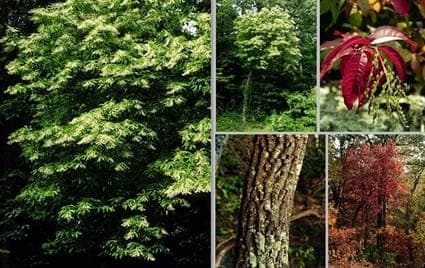
Oxydendrum arboreum, known as sourwood or lily-of-the-valley tree, is an elegant, deciduous tree from the United States. This tree is especially valued for its attractive growth pattern, spectacular red and purple autumn color, and hanging white flowers in summer.
The tree grows slowly to a neat, tapered shape and can reach up to 25 meters tall, although it usually remains smaller in gardens. With its unique flowers and beautiful autumn foliage, it is a jewel for the front garden.
Appearance and bloom
Oxydendrum arboreum has thin, fine, lance-shaped leaves that are initially soft green and later transform into a beautiful, rich red-purple in autumn. The leaves are smooth and glossy.
The flowers are small, white, bell-like, and appear in hanging clusters from June to August. They have a light sweet fragrance and attract many bees and other insects. After flowering, characteristic small fruits form.
Ideal location
Oxydendrum arboreum grows best in a sunny to semi-shady location with at least four to five hours of direct sunlight per day. The tree tolerates shade but will produce fewer flowers.
Place the tree where you can enjoy the full splendor of the autumn color. The tree also feels at home in parks and gardens where it has sufficient space.
Soil
Oxydendrum arboreum prefers acidic, well-draining, fairly moisture-retaining soil. A pH of 4.5 to 6.0 is ideal. The tree does not grow well on chalky or very dry soil.
Ensure a rich soil containing organic material. Acidic leaf mold or heather soil can be used to keep the soil moister and more acidic.
Watering
Oxydendrum arboreum loves regular water and should not dry out. Water regularly during the growing season, especially during dry periods. In the first year, regular watering is essential for establishment.
In winter, less water is needed, but ensure the root zone does not dry out completely. Mulching around the base helps retain moisture.
Diseño gratis
¿Quieres ver Oxydendrum arboreum: complete guide en tu jardín? Crea un diseño gratis ahora.
Pruning
Oxydendrum arboreum requires little pruning. Remove only dead or damaged branches. If you want to keep the tree more compact, you can cut back some branches, but this can disturb the shape.
The tree naturally grows into an attractive, tapered shape. It is best to let the tree retain its natural form.
Maintenance calendar
Spring: water regularly as the growing season begins. Add feeding with acid-binding fertilizer. Check for diseases. Summer: water regularly especially during dry periods. Enjoy the flowers. Autumn: admire the beautiful autumn color. Water less as it gets colder. Winter: minimal watering. No feeding needed. Tree is hardy.
Winter hardiness
Oxydendrum arboreum is hardy in temperate climates, hardiness to approximately -15 to -20 degrees Celsius. The tree overwinters without problems in temperate regions.
Very young plants may need some protection in their first winters, but mature trees are very robust.
Companion plants
Oxydendrum arboreum combines well with other moisture-loving, acid-loving shrubs such as Rhododendron, Kalmia, Gaultheria, and Euonymus alatus. This combination creates beautiful autumn planting.
Closing
The sourwood is a special choice for those looking for a tree with four seasons of interest. The white summer flowers, green summer color, and especially the spectacular autumn color make this a jewel for any garden.
Looking for an elegant, slow-growing tree? Oxydendrum arboreum certainly deserves a place in your garden. Available from tree nurseries and larger garden centers.
More inspiration can be found on gardenworld.app.
¿Quieres ver Oxydendrum arboreum: complete guide en tu jardín? Crea un diseño gratis ahora.
Sube una foto, elige un estilo y obtén un diseño fotorrealista con lista de plantas en menos de un minuto.
Más de 10.000 jardines diseñados
Sin tarjeta de crédito


Plantas similares
Zenobia pulverulenta: complete guide
Zenobia pulverulenta
Everything about Zenobia pulverulenta (honeycup): siting, acid soil, pruning and the fragrant white bells, in this complete care guide.
Dwarf huckleberry: complete guide
Gaylussacia dumosa
Everything about dwarf huckleberry (Gaylussacia dumosa): acidic soil, partial shade, pruning and care for this compact North American berry shrub.
Drooping leucothoe: complete guide
Leucothoe fontanesiana
Everything about drooping leucothoe (Leucothoe fontanesiana): shade tolerance, soil, watering, pruning, hardiness and companion plants.