
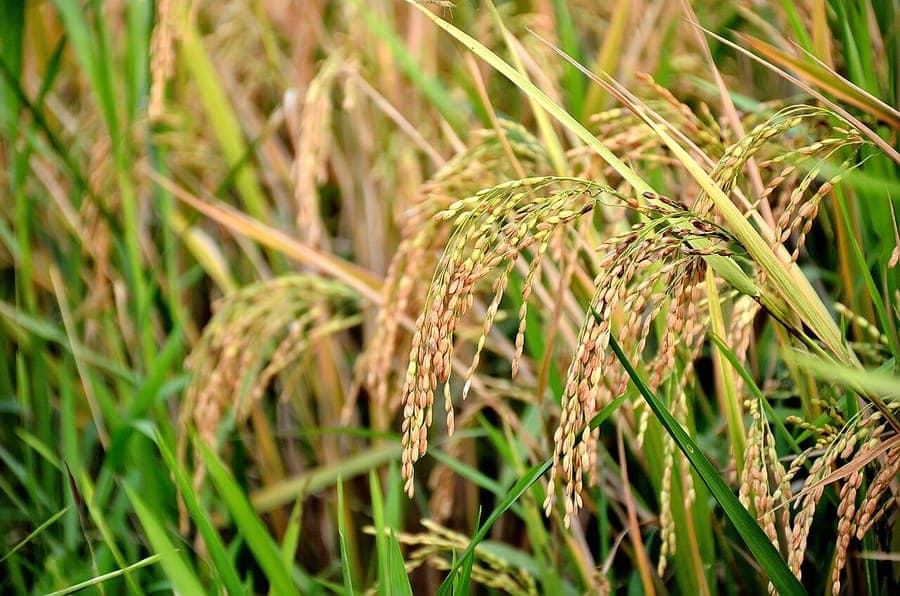
Augustus Binu : flickr : Instagram / CC BY-SA 3.0, via Wikimedia Commons
Oryza sativa: complete guide
Oryza sativa
¿Quieres ver Oryza sativa: complete guide en tu jardín?
1 minuto, sin tarjeta de crédito
Overview
Oryza sativa, better known as common rice or lowland rice, is one of the world's most important food crops. This member of the Poaceae grass family is a cultigen originating from China and now grown in dozens of countries. Rice feeds more than half the world's population and is an essential food in many cultures.
In home gardens, rice is grown less frequently, but for hobbyists it offers a fascinating opportunity to cultivate this fundamental grain crop yourself. The plant grows approximately 90 to 150 centimeters tall and produces long, feathery seed heads filled with small grains. Cultivation in Europe is certainly possible, especially in warmer climates or protected environments.
Appearance and Bloom
Oryza sativa is a grass-like plant with long, slender leaves that are green to yellow-green. The plant forms adventitious roots from the nodes, which contributes to stability in water. The stems are hollow, typical for grasses, and reach their full height in approximately four months.
Flowering occurs around July and August. The seed heads are golden to pale yellow, with many small flowers that arrange into a characteristic plume. After pollination, which typically happens through self-fertilization, the grains form. These start green and gradually become yellow, then grayer until they turn golden.
Ideal Location
Oryza sativa loves warm, sunny locations. Provide at least six to eight hours of direct sunlight daily. The plant grows best in subtropical to temperate climates. In Northern Europe, you should grow rice in containers and place them in a greenhouse or greenhouse-like environment. In Southern Europe and other warm regions, you can cultivate rice in open ground.
The plant needs abundant water, so position it near water sources. In traditional rice cultivation, fields are flooded several centimeters deep.
Soil
Oryza sativa grows better on moist, rich soil that is well-fertilized. The plant requires plenty of nitrogen. Clay soil is actually best because it can hold water. Add plenty of organic matter, such as compost or manure, for good nutrition.
Preparation: Work the growing area thoroughly with compost. A pH of 6.0 to 7.0 is ideal. For container cultivation, many growers use rich potting mixes with extra drainage options.
Diseño gratis
¿Quieres ver Oryza sativa: complete guide en tu jardín? Crea un diseño gratis ahora.
Watering
Water is essential for rice. In traditional cultivation methods, rice paddies are flooded 5-10 centimeters deep. For home gardens, you can simulate this by using containers that you water regularly. Ensure the soil remains constantly moist to wet, especially during the growing period from May to September.
During the sowing period (March-April), keep soil moist but not waterlogged. Once the plant becomes established, water levels should increase.
Pruning
Rice requires no drastic pruning. It naturally forms branches and side shoots. You may remove weak or damaged shoots, but this is not essential. Ensure good air circulation between plants to prevent fungal diseases.
At the end of the season, when rice grains are ripe and golden, you can harvest the entire plant and let it dry.
Maintenance Calendar
March-April: Sow seeds in containers or directly in ground in warm climates. Keep moist. May-June: Seedlings grow rapidly. Add extra water and nutrients. July-August: Flowering occurs. Ensure water level remains constant. September-October: Grains ripen. Gradually reduce water. November: Harvest when grains are golden. Let them dry.
Winter Hardiness
Oryza sativa is not winter-hardy in Europe's traditional sense. In temperate climates, the plant dies after frost. This is normal: rice is an annual crop. Next season you can grow again from seeds. In warm regions, you can grow rice as a perennial.
Companion Plants
Rice grows well when combined with water-loving plants such as water mint, reeds, and other water grasses. In small water gardens, rice offers interesting vertical dimension.
Rice attracts birds, dragonflies, and other water organisms, especially when grown in water. This is valuable for the garden ecosystem.
Conclusion
Growing Oryza sativa in your own garden is not difficult, especially if you live in a warm climate. Even in cooler areas, you can grow it in containers in a greenhouse. The advantage: you understand where your food comes from and appreciate rice more. The harvest is limited for home growing, but the experience is invaluable.
Want to read more guides? Visit gardenworld.app for comprehensive information about edible plants and vegetables you can grow at home.
Visit gardenworld.app for more plant guides and gardening tips. Discover thousands of plant profiles and make your garden dreams come true.
¿Quieres ver Oryza sativa: complete guide en tu jardín? Crea un diseño gratis ahora.
Sube una foto, elige un estilo y obtén un diseño fotorrealista con lista de plantas en menos de un minuto.
Más de 10.000 jardines diseñados
Sin tarjeta de crédito


Plantas similares
Sporobolus pungens: complete guide
Sporobolus pungens
Sporobolus pungens is a stoloniferous Mediterranean coastal grass with outstanding salt and drought tolerance, perfect for seaside and dry gardens.
Mediterranean aegilops: complete guide
Aegilops biuncialis
Everything about Aegilops biuncialis, a Mediterranean annual grass with ornamental spikes and outstanding drought tolerance for dry gardens.
Silver bluestem: complete guide
Bothriochloa saccharoides
Full guide to Bothriochloa saccharoides (silver bluestem): site, soil, watering, winter hardiness, pruning, and garden companions.