
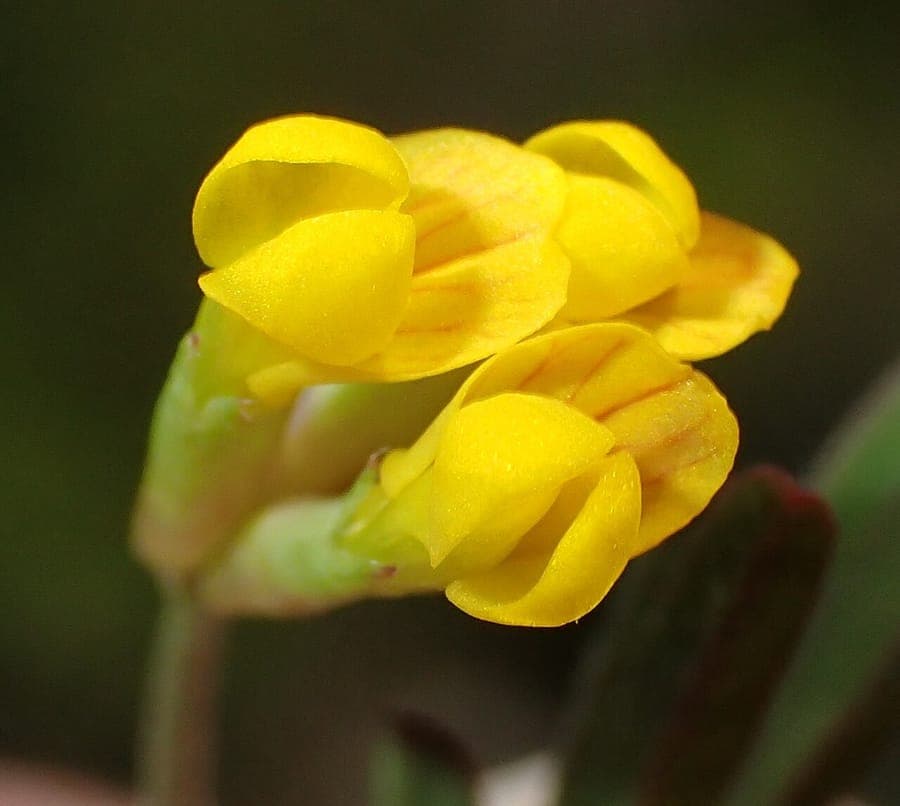
Nicola van Berkel / CC BY-SA 4.0, via Wikimedia Commons
Ornithopus pinnatus: complete guide
Ornithopus pinnatus
¿Quieres ver Ornithopus pinnatus: complete guide en tu jardín?
1 minuto, sin tarjeta de crédito
Overview
Ornithopus pinnatus, better known as slender serradella or yellow bird's-foot, is a charming Mediterranean plant from the Fabaceae family. This legume is naturally distributed from Macaronesia to the Mediterranean and Western Europe. It is a small, elegant plant that offers many benefits to gardeners in warm climates.
This plant is particularly valuable as a forage crop and for soil improvement. Like many legumes, it forms a symbiosis with nitrogen-fixing bacteria, making it a sustainable choice for gardeners who want to improve their soil.
Appearance and Blooming
Ornithopus pinnatus is a small herb that usually grows 20 to 40 centimeters tall. It has the characteristic feathered foliage of legumes, with small, elliptical leaflets arranged in pairs along the midrib.
The flowers are golden to orange, small but very attractive, in loose clusters. They appear in late spring to early summer. The plant gets its name because the seed pods have very characteristic bird's foot-like shapes, making it botanically very distinctive.
The seed pods are curved, line-like structures with 4 to 8 segments. They start out green and later turn brownish-red. This unique seed pattern is very characteristic of the Ornithopus genus.
Ideal Location
Ornithopus pinnatus thrives best in full sun. It requires at least six to eight hours of direct sunlight daily. In very warm climates, some afternoon shade may be beneficial.
Provide shelter from strong winds that can damage the sides. The plant can also grow well on slopes or in dry areas where other plants struggle.
This is ideal for Mediterranean gardens, xeriscaping projects, wildflower meadows, and drought-tolerance applications.
Soil
The plant grows best in lightly alkaline to neutral soil with pH 6.5-7.5. It can adapt to various soils, from sand to clay, as long as drainage is good.
Ensure the soil is well-draining. Too much water can lead to root rot problems. Organic matter helps but is not essential because the plant can grow in poor soils.
Once established, it requires no rich soils and can even grow in poor, dry grounds.
Diseño gratis
¿Quieres ver Ornithopus pinnatus: complete guide en tu jardín? Crea un diseño gratis ahora.
Watering
After establishment, very little water is needed. Ornithopus pinnatus is excellent drought-tolerant. Only water when the plant appears very dry.
Water regularly in the first growing season to promote establishment. Once established, rarely to never water under normal rainfall.
Overwatering can be harmful, so it is better to underwater than overwater. In Mediterranean climates with summer rains, watering is almost never needed.
Pruning
Pruning is generally not necessary. The plant grows naturally compact. Remove dead branches and spent flower clusters if desired.
If the plant grows too large or awkwardly, you can cut it back to about half height. Prune in late autumn or early spring for best results.
The plant will normally recover and encourage more compact growth.
Maintenance Calendar
Spring: Sow seeds directly in the ground or pre-germinate indoors. Little water needed.
Summer: Monitor for pests. Enjoy golden to orange flowers. Minimal water.
Autumn: Save seeds for next season. Prepare for winter.
Winter: Dormant in cold climates. Stays green in mild winters.
Winter Hardiness
Ornithopus pinnatus is fairly winter hardy and can withstand winters down to about -5 degrees C. However, in very cold climates it may die. In USDA zones 7-10 it is permanent. In cold zones it can grow as an annual.
In its native Mediterranean climate it is a winter-green crop that remains present year-round.
Companion Plants
Ornithopus pinnatus works well with other drought-tolerant plants such as lavender, rosemary, sage, thyme, and ornamental grasses. It can also grow well with other legume species.
Avoid planting with water-lovers that need much wetter soils. Group plants together that have similar watering needs.
Closing Thoughts
Ornithopus pinnatus is a valuable, charming plant for dry, Mediterranean gardens. With its elegant golden-orange flowers, unique bird's foot-like seed pods, and low maintenance requirements, it offers many benefits. It is also valuable for soil improvement and can be used as a forage crop.
Availability: You can find seeds at specialized seed dealers. Visit gardenworld.app for more inspiration and discover how this plant can transform your dry garden. Visit gardenworld.app for more design and plant ideas!
¿Quieres ver Ornithopus pinnatus: complete guide en tu jardín? Crea un diseño gratis ahora.
Sube una foto, elige un estilo y obtén un diseño fotorrealista con lista de plantas en menos de un minuto.
Más de 10.000 jardines diseñados
Sin tarjeta de crédito


Plantas similares
Tall Silky Lupine: complete guide
Lupinus elatus
Tall silky lupine is a fast-growing Californian perennial with silvery foliage and blue-purple flower spikes, ideal for a prairie-style garden.
Garfield Lupine: complete guide
Lupinus garfieldensis
The Garfield lupine is a rare, fast-growing American perennial for alkaline, dry grassland gardens, with striking blue flower spikes.
Lupinus elegans: complete guide
Lupinus elegans
Lupinus elegans, the elegant lupine, is a spectacular blooming plant from Mexico with blue flower spikes. Care, cultivation and garden use.