
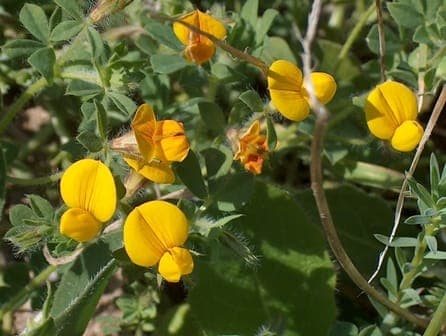
Laura Morelli / CC BY-SA 3.0, via Wikimedia Commons
Yellow restharrow: complete guide
Ononis natrix
¿Quieres ver Yellow restharrow: complete guide en tu jardín?
1 minuto, sin tarjeta de crédito
Overview
Yellow restharrow (Ononis natrix), also known as sticky restharrow, is a beautiful flowering shrub belonging to the Fabaceae family. This species originates from the Mediterranean region and grows from Spain to Syria, and from North Africa to Central Europe. The plant is known for its bright yellow flowers that appear in May and bloom through July. Yellow restharrow is one of the best choices for dry, sunny gardens where many other shrubs struggle.
Yellow restharrow grows as a compact shrub with fine, greenish leaves that have a distinctive fragrance. The plant is exceptionally drought-tolerant and loves poor soils. This makes it ideal for Mediterranean gardens and gardens in warm climates. The plant requires minimal maintenance and offers abundant flowers throughout the season.
Appearance and bloom
Yellow restharrow reaches a height of 40 to 90 centimeters, depending on growing conditions. It has fine, three-part compound leaves characteristic of legumes. The leaves have a distinctive strong, herbal smell (the species name natrix refers to this fragrance). This is actually an advantage for bees and butterflies.
The flowers are incredibly bright: large, yellow flowers sometimes with orange spots, grouped in clusters. The bloom is abundant from May to July. After flowering, small elongated fruits form containing seeds. The plant is semi-persistent, so it retains much foliage even in winter, making it decorative year-round.
Ideal location
Yellow restharrow loves full sun. Plant it in a location where it receives at least 6-8 hours of direct sunlight per day. Make sure the plant is well-ventilated, with pleasant air circulation. In warm climates the plant can also grow in light partial shade, but full sun is better.
Place it in a location exposed to the elements, as wind is not harmful to this hardy plant. It grows well on rocky slopes, in Mediterranean gardens, or in xeriscaping designs. The plant is not suitable for sheltered, humid locations where stagnant air can promote disease.
Soil
Yellow restharrow thrives best on dry, poor, well-drained soils. The plant prefers neutral to alkaline pH (7.0-8.0). The plant is not soil-critical and actually grows better on poor soils than on very nutrient-rich soils. Both sand and clay are suitable.
If your soil is too moist, add sand for better drainage. The plant hates waterlogging. A well-drained, dry soil is essential for long-lived, healthy growth. Poor soil is actually better for this Mediterranean native.
Diseño gratis
¿Quieres ver Yellow restharrow: complete guide en tu jardín? Crea un diseño gratis ahora.
Watering
Yellow restharrow is very drought-tolerant once established. In the first growing year, you must water regularly until the plant is well-rooted. After that, the plant can grow without artificial irrigation, even during dry periods.
During very dry periods, some water gives a boost to flowering. But overall, watering is not crucial. Too much water is more harmful than too little. This makes the plant valuable for water conservation and sustainable gardening practices.
Maintenance
Yellow restharrow does not require much maintenance. After flowering, you can remove spent flowers to encourage more blooms, although this is not necessary. The plant shapes itself with an attractive, natural appearance.
If the plant becomes too large, you can lightly prune it after flowering. This encourages more compact growth. Otherwise the plant requires no special care. The plant is very self-sufficient and trouble-free.
Maintenance calendar
Throughout the year, yellow restharrow has different needs:
- January to February: Plant is partly dormant, limited growth.
- March: Growth begins, start regular watering.
- April to May: Preparation for blooming, ensure sufficient sun.
- May to July: Flowering, provide regular water in first year.
- August to October: Growth slows, less water needed.
- November to December: Plant rests partially, no maintenance needed.
Winter hardiness
Yellow restharrow is moderately winter hardy (hardiness zone 6-10). In mild climates it grows year-round. In harsher climates it may suffer some damage but will usually survive. The plant does not die back above ground in most climates.
In very cold areas (zone 5 and colder) you can add extra mulch for protection. But in most Western European gardens the plant grows without problems and rewards you with consistent bloom.
Companion plants
Yellow restharrow fits well in Mediterranean gardens with other drought-tolerant plants. Combine it with rosemary, lavender, sage, and other Mediterranean herbs. Also works well with succulents and other yellow bloomers.
Plant it in groups of three to five for maximum visual impact. The plant competes well with other vigorous growers and forms interesting combinations with silvery-leaved plants. Create a harmonious Mediterranean palette.
Closing
Yellow restharrow is a fantastic choice for those with a dry, sunny garden. It combines beauty with low maintenance and is exceptionally sustainable. You can buy plants at garden centers where they are usually available in spring. Visit gardenworld.app for more inspiration and designs with Mediterranean plants. With yellow restharrow you get bright yellow flowers and a contribution to water conservation. Visit also gardenworld.app for advice on creating a complete Mediterranean garden.
¿Quieres ver Yellow restharrow: complete guide en tu jardín? Crea un diseño gratis ahora.
Sube una foto, elige un estilo y obtén un diseño fotorrealista con lista de plantas en menos de un minuto.
Más de 10.000 jardines diseñados
Sin tarjeta de crédito


Plantas similares
Tall Silky Lupine: complete guide
Lupinus elatus
Tall silky lupine is a fast-growing Californian perennial with silvery foliage and blue-purple flower spikes, ideal for a prairie-style garden.
Garfield Lupine: complete guide
Lupinus garfieldensis
The Garfield lupine is a rare, fast-growing American perennial for alkaline, dry grassland gardens, with striking blue flower spikes.
Lupinus elegans: complete guide
Lupinus elegans
Lupinus elegans, the elegant lupine, is a spectacular blooming plant from Mexico with blue flower spikes. Care, cultivation and garden use.