
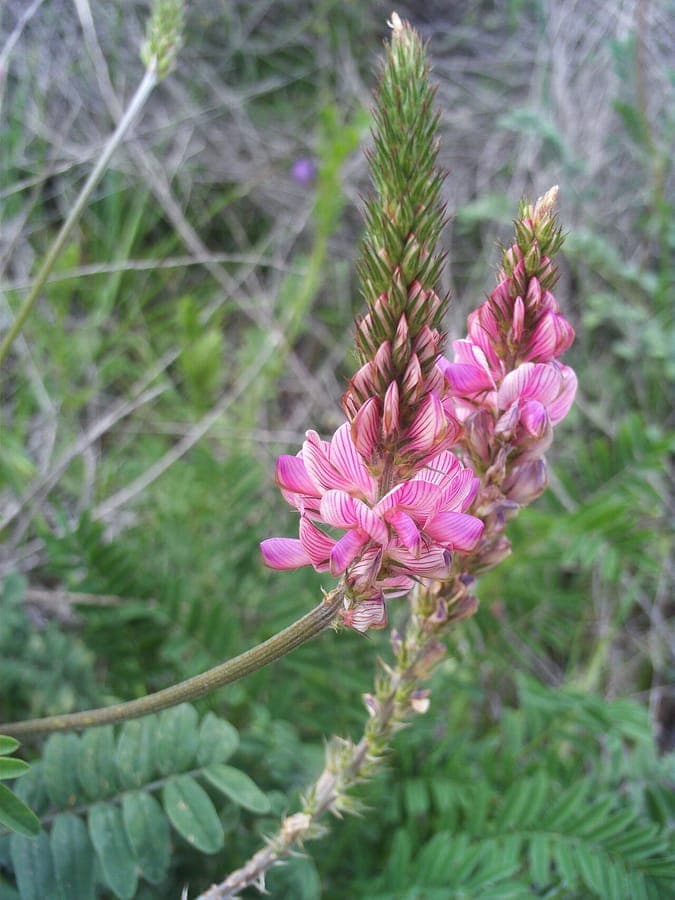
javier martin / Public domain, via Wikimedia Commons
Sainfoin: complete guide
Onobrychis viciifolia
¿Quieres ver Sainfoin: complete guide en tu jardín?
1 minuto, sin tarjeta de crédito
Overview
Sainfoin (Onobrychis viciifolia), also known as esparcet, is a valuable fodder plant and ornamental plant belonging to the Fabaceae family. This species originates from Central and Southeast Europe and has been used for centuries as livestock feed and green manure. The plant is renowned for its nutritious hay, which is richer in protein than many pastures and has high energy content. For organic farming, sainfoin is an indispensable crop, but it also has its place in ornamental gardening.
Sainfoin is a hairy, nitrogen-fixing plant that binds nitrogen from the air, meaning it enriches the soil. It grows from a deep taproot, making it exceptionally drought-tolerant. The plant is widely cultivated in mountainous areas and grasslands throughout Europe, and is known for its love of light and preference for well-drained soils. It plays an important ecological role in many regions.
Appearance and bloom
Sainfoin is a sturdy upright plant that can grow 40 to 70 centimeters tall. The plant has pinnate leaves, a typical characteristic of legumes. The leaves are grass-green and have delicate veining. The plant has strong, fine hairiness on stems and leaves, giving it a rough appearance.
The flowers are incredibly attractive: dense clusters of pink to purple flowers, often with white markings. The flowering period runs from May to July, during which the plant offers bird-like bird feed and attracts butterflies. After flowering, kidney-shaped pods form containing seeds. This is actually why the plant is so valuable as a fodder plant: it has high nutritional value during the flowering and grass phase.
Ideal location
Sainfoin loves full sun. Make sure the plant receives at least 6-8 hours of direct sun per day for optimal growth. In partial shade it grows less lushly, but can still survive. The plant grows well in open meadows, on slopes, and in mountainous areas, where it naturally occurs.
Plant it in a location with good air circulation and plenty of light. The plant is not suitable for very damp or shady spots, so choose a central position in your garden where it is completely exposed to the elements.
Soil
Sainfoin thrives best on well-drained, lime-rich soils. The plant prefers pH 6.5-8.0, so more on the alkaline side. The plant is not very soil-critical, but grows best on moderately nutrient-rich soils. Sand, clay, and loam are all suitable as long as they drain well.
If your soil is acidic, add lime before planting sainfoin. This helps the plant grow better. The deep taproot means the plant can tolerate drought well, but in the first growing year you must water regularly until the plant is established.
Diseño gratis
¿Quieres ver Sainfoin: complete guide en tu jardín? Crea un diseño gratis ahora.
Watering
Once established, sainfoin is exceptionally drought-tolerant thanks to its deep taproot. In the first growing year, you must water regularly until the plant is well-rooted. After that, the plant can grow without artificial irrigation, especially in areas with moderate rainfall.
During very dry periods, some water gives a boost to flowering and foliage growth. But overall, watering is not crucial after the first season. This makes the plant valuable for natural garden ecosystems. The plant largely sustains itself once established.
Maintenance
Sainfoin does not require much maintenance. After flowering, you can remove the spent stems if you wish, or you can let the plant stand for seed dispersal and bird feed. The plant is very self-sufficient and requires no feeding or special care.
If the plant becomes too large, you can cut it to a better shape. However, this does not always stimulate new growth, so be careful. In case of very shallow soil, you can add support. Overall, the plant is self-maintaining.
Maintenance calendar
Throughout the year, sainfoin has different needs:
- January to February: Plant is dormant, no maintenance needed.
- March: Growth begins, check moisture levels.
- April to May: Flowering begins, water regularly in dry weather.
- May to July: Flowering, ensure sufficient water in first year.
- August: Seed development, less maintenance needed.
- September to October: Preparation for dormancy.
- November to December: Sleep mode, no maintenance needed.
Winter hardiness
Sainfoin is very winter hardy (hardiness zone 3-9) and grows as a biennial or perennial plant. The plant can survive the coldest winters and will regrow in spring. The plant does not die above ground, so it can remain green in winter in many climates.
In very severe winters, leaves may suffer frost damage, but the taproot will survive and the plant will recover.
Companion plants
Sainfoin fits well in meadow mixes with other legumes and grasses. Combine it with birdsfoot trefoil, clover, and other natural pasture herbs. In the ornamental garden it works well with other flowering perennials like rosemary and seathrift.
Keep it away from very aggressive growers, but the plant can compete well with many other plants. Plant it together with other forage plants for a natural meadow look. It establishes well-balanced ecosystems.
Closing
Sainfoin is a fantastic choice for those pursuing organic farming or natural gardens. It combines beauty with nutritional value and is exceptionally low maintenance. You can buy seeds at garden centers where they are usually available in spring. Visit gardenworld.app for more inspiration and designs with fodder plants. With sainfoin you get not only beautiful pink flowers, but also a contribution to soil fertility. Visit also gardenworld.app for advice on combining forage plants in your garden.
¿Quieres ver Sainfoin: complete guide en tu jardín? Crea un diseño gratis ahora.
Sube una foto, elige un estilo y obtén un diseño fotorrealista con lista de plantas en menos de un minuto.
Más de 10.000 jardines diseñados
Sin tarjeta de crédito


Plantas similares
Tall Silky Lupine: complete guide
Lupinus elatus
Tall silky lupine is a fast-growing Californian perennial with silvery foliage and blue-purple flower spikes, ideal for a prairie-style garden.
Garfield Lupine: complete guide
Lupinus garfieldensis
The Garfield lupine is a rare, fast-growing American perennial for alkaline, dry grassland gardens, with striking blue flower spikes.
Lupinus elegans: complete guide
Lupinus elegans
Lupinus elegans, the elegant lupine, is a spectacular blooming plant from Mexico with blue flower spikes. Care, cultivation and garden use.