
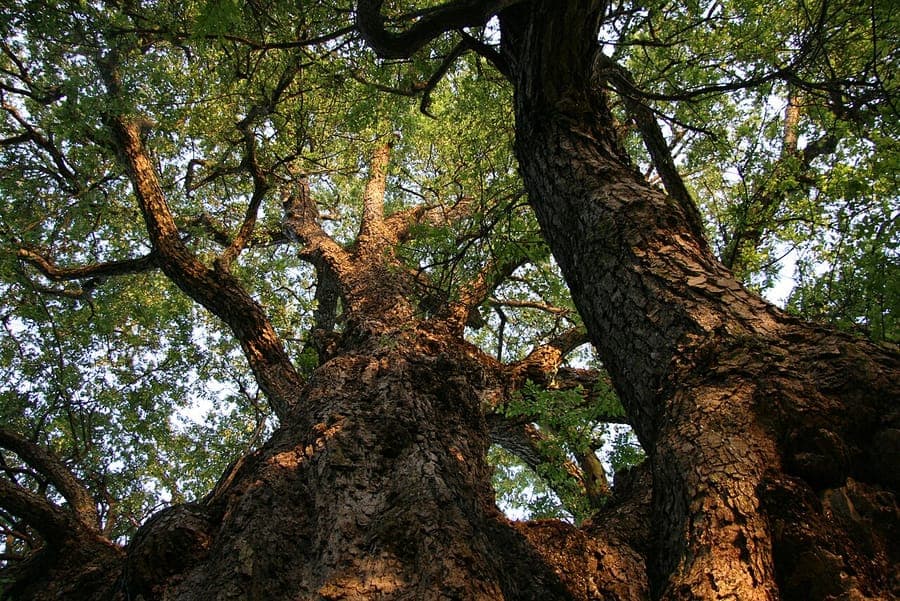
Diucón / CC BY 3.0, via Wikimedia Commons
Nothofagus obliqua: complete guide
Nothofagus obliqua
¿Quieres ver Nothofagus obliqua: complete guide en tu jardín?
1 minuto, sin tarjeta de crédito
Overview
Nothofagus obliqua, commonly known as Patagonian oak or roble, is an impressive deciduous tree native to the mountain regions of Chile and southern Argentina. This medium to large tree is valued for its elegant leaf structure, rapid growth, and adaptability to temperate climates. Although not native to Europe, it is becoming increasingly popular in landscape architecture due to its strong winter hardiness and ornamental value.
Nothofagus obliqua represents a unique choice for those seeking trees with character and shade provision. With its South American origin, it offers an exotic dimension to European gardens without excessive climate demands.
Appearance and deciduousness
Nothofagus obliqua typically reaches 15 to 25 meters in height, with a straight trunk and elegant, spray-like branching. The tree forms a slender to conical crown with an elegant appearance. The bark is dark, grayish-brown with deep furrows, giving the tree a stately appearance.
The leaves are small, elongated, and sharply serrated, only 2 to 3 centimeters long, creating a very refined appearance. In spring, young leaves are bright green and very soft, becoming dark green in summer. In autumn, the leaves color beautifully red to yellow-orange before dropping, offering a captivating autumn show.
The tree is strictly deciduous; all leaves fall in autumn. Male and female flower clusters are inconspicuous and green, so flowering is not visually prominent. The fruits are small nuts in characteristic wooden cupules.
Ideal location
Nothofagus obliqua grows best in full sun to light shade. The tree tolerates partial shade well, although full sun stimulates optimal growth and autumn color. However, the tree is quite wind-sensitive; strong winds can cause branch breakage and damage to the crown form.
Wind-protected locations are therefore preferred. This can be achieved by placing the tree in a woodland edge or using protection from taller trees. In very windy regions, the tree may lose its form and may not be ideal.
The tree is extremely winter-hardy and grows well in temperate climates throughout Europe. It tolerates temperatures down to approximately -20 degrees Celsius, even colder depending on acclimatization.
Soil
Nothofagus obliqua grows best in fertile, well-draining soils well-supplied with humus. The tree prefers soils that are neither too dry nor too wet. Very dry, poor soils will slow growth. On the other hand, the tree tolerates slightly moister soils.
The tree is quite tolerant of various soil types, from sandy loams to clay-based soils, provided sufficient humus content and good drainage are present. Strongly acidic soils with pH below 5.5 may be problematic; neutral to slightly acidic soils (pH 5.5 to 7) are ideal.
When planting, organic matter or compost should be added to improve soil nutrition. This is important for young trees to provide a good growth start.
Diseño gratis
¿Quieres ver Nothofagus obliqua: complete guide en tu jardín? Crea un diseño gratis ahora.
Watering
Young Nothofagus obliqua trees require regular watering until well-rooted, usually in their first two growing seasons. Keep the soil consistently moist, especially during warm, dry periods.
Once well-established, the tree tolerates dry periods reasonably well, although optimal growth is achieved with regular moisture. In extremely dry years, supplemental water may be needed.
In wet winters and on waterlogged growth sites, good soil drainage must be present. Waterlogging can cause root problems. Ensure good surface drainage around the tree.
Pruning
Nothofagus obliqua grows naturally into an elegant form and requires minimal pruning. Light pruning can be done in winter after leaves drop to remove dead branches and maintain crown form.
Heavy pruning is not recommended, as the tree may suffer from it. The natural, elegant form is best maintained by selectively removing diseased, dead, or crossing branches.
Young trees can be lightly pruned to encourage central stem development, but once a central stem is established, pruning can be minimized.
Maintenance calendar
February-March: Pruning of dead branches in late winter/early spring, before growth begins. Inspection for winter damage.
April-May: Spring flowering, young leaf development. Water young trees regularly.
June-August: Full summer growth. Ensure adequate moisture. Monitor for disease or insect problems.
September-October: Autumn coloration and leaf drop. Admire the autumn show. Clear fallen leaves from pathways.
November-January: Dormant period. No pruning needed except for necessity. Protect young trees from strong wind.
Winter hardiness
Nothofagus obliqua is extremely winter-hardy and tolerates temperatures down to approximately -20 degrees Celsius, even colder depending on acclimatization. In virtually all European regions, this tree will thrive without problems. Only exceptionally severe winters in very northern regions may cause light damage.
Young trees may be more susceptible to frost damage than established specimens. It is advisable to provide young trees with protection, such as a wind screen in very windy locations.
The tree is fully deciduous and very hardy. Rapid regrowth occurs in spring as temperatures rise.
Companion trees
Nothofagus obliqua works well in combination with other trees:
Douglas fir (Pseudotsuga menziesii) - This conifer provides good contrast with Nothofagus's deciduousness and autumn color.
Metasequoia (Dawn redwood) - This also creates beautiful contrasts in growth and seasonal change.
Oak (Quercus species) - Other deciduous trees offer similar ecological values.
Linden (Tilia) - Nicely complemented by other deciduous trees.
Maples (Acer species) - For more seasonal color, Japanese maples can be used as understory plantings.
Conclusion
Nothofagus obliqua represents a unique and valuable addition to European gardens and park landscapes. With its elegant form, rapid growth, winter hardiness, and spectacular autumn color, this South American tree offers character and beauty. Though a less well-known choice, it deserves recognition as an excellent park tree and screening plant.
Look for Nothofagus obliqua at tree nurseries specializing in larger trees and park material. For more inspiration and advice, visit gardenworld.app for more tree guidance and garden design ideas.
¿Quieres ver Nothofagus obliqua: complete guide en tu jardín? Crea un diseño gratis ahora.
Sube una foto, elige un estilo y obtén un diseño fotorrealista con lista de plantas en menos de un minuto.
Más de 10.000 jardines diseñados
Sin tarjeta de crédito


Plantas similares
Magellan's Beech: complete guide
Nothofagus betuloides
Nothofagus betuloides, commonly known as Magellan's Beech, is an evergreen tree from South America. Learn about care, ideal conditions, and landscape applications.
Rauli beech: complete guide
Nothofagus alpina
Discover the majestic Rauli beech from South America. Learn how to select, grow, and maintain this imposing tree in your garden. Perfect addition for large landscapes.
Antarctic beech: complete guide
Nothofagus antarctica
Learn all about the Antarctic beech: cultivation, care and benefits of this impressive tree.