
Wikimedia Commons / Public domain, via Wikimedia Commons
Rauli beech: complete guide
Nothofagus alpina
¿Quieres ver Rauli beech: complete guide en tu jardín?
1 minuto, sin tarjeta de crédito
Overview
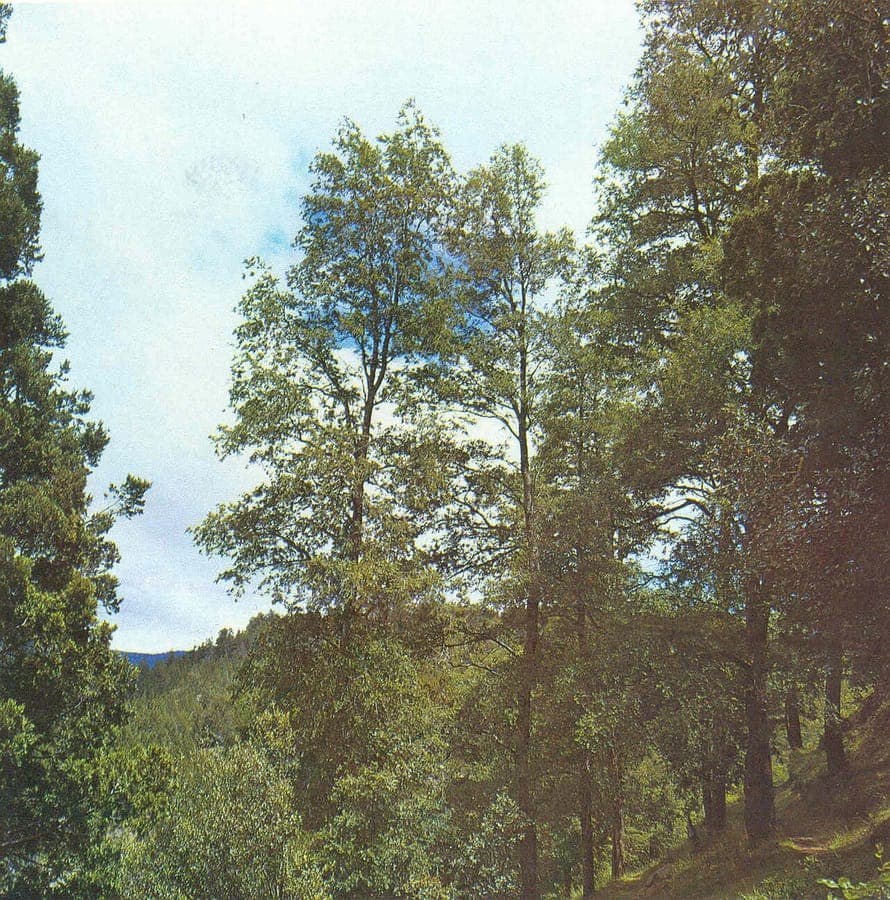
The Rauli beech (Nothofagus alpina) is an impressive deciduous tree from the mountain regions of Chile and Argentina. This tree belongs to the Nothofagaceae family and is renowned for its elegant growth habit and valuable wood texture. In its natural habitat, the Rauli beech grows in mountain forests at elevations between 900 and 2,000 meters. This tree has been introduced to Europe for ornamental value and is celebrated for its rapid growth and spectacular autumn coloration.
Appearance and bloom
The Rauli beech is a medium to large tree that can reach 20-35 meters high in its natural environment. The leaves are elliptical to oval, about 5-8 cm long, with a smooth surface and fine serrated edges. In autumn, the foliage turns warm shades of gold, red, and brown - a spectacular display. Flowers appear in April-May as small, inconspicuous blooms. The male flower parts form small catkins, while female flowers are solitary. The bark of mature trees is smooth and gray to brown in color, often with interesting patterning.
Ideal location
Choose a location with full sun to partial shade for your Rauli beech. The tree grows best where it receives at least 4-6 hours of direct sunlight daily. In temperate climates, partial shade can be beneficial, especially in harsh summers. Ensure the tree receives adequate air circulation to prevent fungal problems. Avoid sheltered, dense corners. Provide sufficient space for growth - the tree can spread considerably with its natural forked structure.
Soil
The Rauli beech prefers fertile, well-draining soils. A neutral to slightly acidic pH (6.0-7.0) is ideal. The tree does not tolerate waterlogged conditions and therefore requires good drainage. Sandy to clay-like soils work well, as long as water does not accumulate. In heavy clay soils, we recommend adding organic matter when planting. The soil should certainly be nutrient-rich - add compost or aged manure during planting. Regular additions of organic material keep the soil healthy.
Watering
Young Rauli beeches (first two years after planting) need regular water. Keep the soil somewhat moist during the growing season - water deeply but infrequently to encourage deeper root development. Once established, the tree is fairly drought-tolerant, especially in temperate climates. During dry spells in summer, however, especially for young specimens, you should add supplemental water. Mature trees in temperate climates rarely need additional water, except during pronounced droughts. Avoid waterlogging in all cases.
Diseño gratis
¿Quieres ver Rauli beech: complete guide en tu jardín? Crea un diseño gratis ahora.
Pruning
The Rauli beech requires minimal pruning when young. Allow the natural form to develop. A frost-damaged terminal shoot can be carefully removed. Mature trees mainly need maintenance pruning - remove dead, diseased, or damaged branches. Thin out old heavy branches if the crown becomes too dense. Avoid heavy pruning in fall, as this can increase frost susceptibility. Pruning wounds heal relatively slowly on this tree.
Maintenance calendar
March-April: Check the tree for winter damage. Remove dead branches. April-May: Add organic fertilizer around the root zone. June-August: Ensure regular water supply. September-October: Enjoy the spectacular autumn coloration. Fall: Collect and compost fallen leaves for soil improvement. November-December: Protect young trees against frost damage with mulch around the trunk base.
Winter hardiness
The Rauli beech is fairly hardy in temperate European climates. Mature trees tolerate temperatures down to about -15 to -20 degrees Celsius. In very severe winters, leaf drop may occur without permanent damage. Young trees are more frost-sensitive and should be protected with a 10-15 cm mulch layer around the trunk base. In very cold regions, we recommend lightly wrapping young trees in burlap or frost cloth in winter. In southern regions with mild winters, the tree grows without any protection.
Companion plants
The Rauli beech works excellently in combination with other large trees in mixed tree-and-shrub plantings. Plant Japanese maples or other shade-tolerant plants at its base. Evergreens such as Sarcococca and Hedera can pleasantly fill the shade zone under the crown. In larger gardens, the Rauli beech can be used as a focal point. Avoid other fast-growing large trees nearby, as competition for nutrients adversely affects growth.
Closing
The Rauli beech brings a sense of majesty and scale to any large garden. Although the tree needs several years to establish itself, the wait is certainly worthwhile - you will then have a spectacular tree with impressive autumn coloration and characteristic growth. With good drainage and regular watering in young years, your Rauli beech will easily last for decades, becoming ever more beautiful. Visit local nurseries for large tree offerings. Garden centers regularly stock these trees.
¿Quieres ver Rauli beech: complete guide en tu jardín? Crea un diseño gratis ahora.
Sube una foto, elige un estilo y obtén un diseño fotorrealista con lista de plantas en menos de un minuto.
Más de 10.000 jardines diseñados
Sin tarjeta de crédito


Plantas similares
Magellan's Beech: complete guide
Nothofagus betuloides
Nothofagus betuloides, commonly known as Magellan's Beech, is an evergreen tree from South America. Learn about care, ideal conditions, and landscape applications.
Nothofagus obliqua: complete guide
Nothofagus obliqua
Discover the Patagonian oak: an impressive tree species with elegant leaves from South America. Perfect choice for large gardens and park landscapes.
Antarctic beech: complete guide
Nothofagus antarctica
Learn all about the Antarctic beech: cultivation, care and benefits of this impressive tree.