
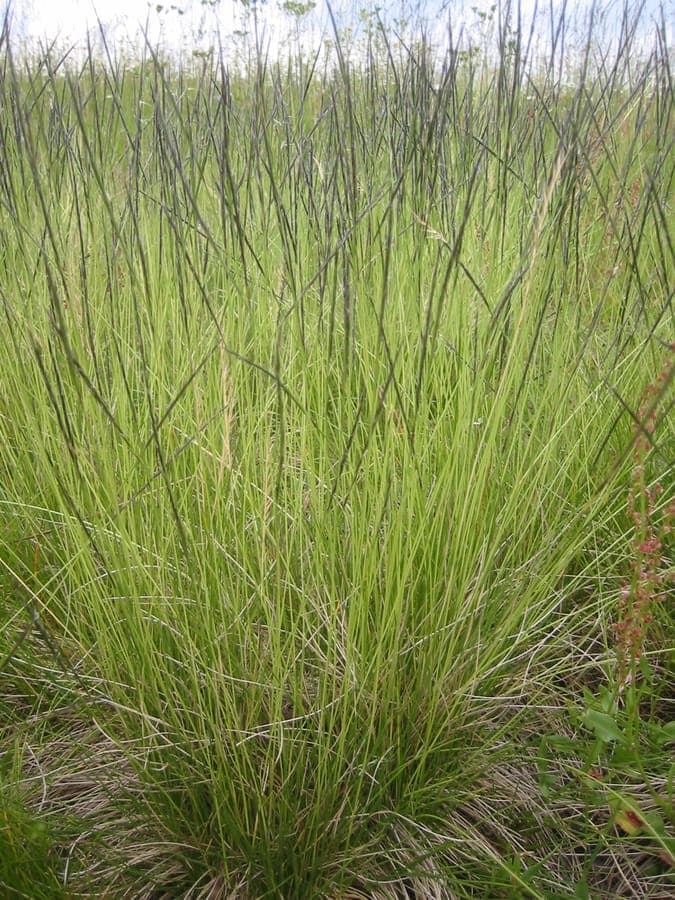
Conny / CC BY-SA 3.0, via Wikimedia Commons
Matgrass: complete guide
Nardus stricta
¿Quieres ver Matgrass: complete guide en tu jardín?
1 minuto, sin tarjeta de crédito
Matgrass, scientifically known as Nardus stricta, is a remarkable and frost-hardy grass distinguished by its extremely rigid and upright culms. This native European grass is particularly valuable for landscape applications in dry, nutrient-poor conditions where many other plants struggle. The plant is characterized by thin, stiffly upright culms that can grow to approximately 15-30 cm in height, with narrow, greyish leaves arranged in dense tufts.
Appearance and bloom
Matgrass presents itself as an extremely compact, dense tuft with rigid upright culms that resemble small brushes - hence the common name. The leaves are very narrow, often less than 1 mm wide, and have a characteristic grey-green color. From May to July, fine and stiff flowering panicles appear, approximately 2-3 cm long. The flowers are small and inconspicuous, but form attractive silhouettes against the light. After flowering, the plant produces seed that is eaten by birds. The foliage maintains its structure throughout winter, offering interesting textures in the winter landscape.
Ideal location
Matgrass thrives best in completely sunny locations receiving at least 6-8 hours of direct sunlight daily. The plant is highly tolerant of windy locations and grows well on exposed hillsides and open meadows. This makes it perfect for coastal areas, windy gardens and exposed sites. The plant does not grow well in shade or partial shade and will be thinner and less robust there.
Soil and planting hole
One of Matgrass's greatest strengths is its ability to grow in extremely nutrient-poor, acidic soils. The plant has a strong preference for soils with a pH between 4.0 and 4.5, which means it performs exceptionally well on heathland, peaty soils and acidic sand. When planting, the soil should be loosened to approximately 20-25 cm depth. Do not mix compost or fertilizer into the soil - this plant prefers unamended, nutrient-poor earth. In heavy clay soils, add sand to improve drainage.
Water management
After establishment of the grass (first 4-6 weeks), Matgrass is extremely drought-tolerant. Young plants should be watered regularly until well rooted - approximately twice weekly, depending on weather. Once established, this grass species requires little water and suffers from excess moisture. In regions receiving less than 600 mm annual rainfall, it grows excellently without supplemental irrigation. Ensure water does not stagnate around the plant, as this can lead to root rot.
Pruning and maintenance
Matgrass requires minimal pruning and maintenance. In early spring (March-April), you can carefully comb out dead material from previous years with an iron rake or fine comb. This promotes air circulation and helps remove dead leaves. Avoid heavy cutting or mowing - the plant grows naturally neat and compact. In very fertile soils, the plant may grow vigorously and require occasional trimming. This is not normally necessary in the nutrient-poor conditions for which this plant is intended.
Diseño gratis
¿Quieres ver Matgrass: complete guide en tu jardín? Crea un diseño gratis ahora.
Maintenance calendar
In March-April, carefully remove dead foliage. May through July is the flowering period, which you can best leave undisturbed. From August to October, the plant can freely set seed - this need not be removed. November through February is dormancy, although the plant remains attractively evergreen and offers winter interest.
Winter hardiness and frost
Matgrass is exceptionally winter-hardy and thrives in all European climate zones. It is native to much of Europe, from Great Britain through the Alps and into southern Spain. In the UK, it naturally occurs in heathland and nutrient-poor grassland. The plant survives temperatures to minus 20 degrees Celsius without problems and grows even better after cold winters. The leaves remain green and strong throughout winter, providing value to the winter landscape.
Planting dimensions and spacing
For mass planting as ground cover, space Matgrass 30-40 cm apart. For wilder, more natural effects, plant with greater spacing (50-60 cm) and allow it to expand and densify naturally. In stronger growing conditions (slightly richer soils), it fills in faster than in very nutrient-poor conditions.
Companion plants and combinations
Matgrass combines beautifully with other nutrient-poor soil indicators such as lavender (Lavandula), thrift (Armeria) and dyer's broom (Genista tinctoria). Combinations with creeping rockfoils and small stonecrops are also very attractive. The plant fits excellently in heather gardens alongside rowan and dwarf juniper. At gardenworld.app you can find more inspiration for combining nutrient-poor species.
Availability and purchase
Matgrass is available at larger garden centers with good grass assortments. You can also order from specialized suppliers of natural garden plants. Young plants in 10-15 cm pots typically cost between 3 and 6 euros per plant. For large area planting (more than 100 m2), it's better to negotiate bulk prices through garden centers.
Closing remarks
Matgrass is an unusual choice for the modern garden, but highly effective for specific locations and designs. Especially in naturalistic gardens, dry slopes and windy corners, this grass offers the balanced combination of robustness, low maintenance requirements and attractive appearance. Thanks to its preference for acidic, nutrient-poor soils, it can be successfully used where many garden plants would fail. Its value as bird food provides additional ecological benefit. This unique grass certainly deserves more attention in landscape designs, particularly where sustainability and low maintenance costs are priorities.
¿Quieres ver Matgrass: complete guide en tu jardín? Crea un diseño gratis ahora.
Sube una foto, elige un estilo y obtén un diseño fotorrealista con lista de plantas en menos de un minuto.
Más de 10.000 jardines diseñados
Sin tarjeta de crédito


Plantas similares
Sporobolus pungens: complete guide
Sporobolus pungens
Sporobolus pungens is a stoloniferous Mediterranean coastal grass with outstanding salt and drought tolerance, perfect for seaside and dry gardens.
Mediterranean aegilops: complete guide
Aegilops biuncialis
Everything about Aegilops biuncialis, a Mediterranean annual grass with ornamental spikes and outstanding drought tolerance for dry gardens.
Silver bluestem: complete guide
Bothriochloa saccharoides
Full guide to Bothriochloa saccharoides (silver bluestem): site, soil, watering, winter hardiness, pruning, and garden companions.