
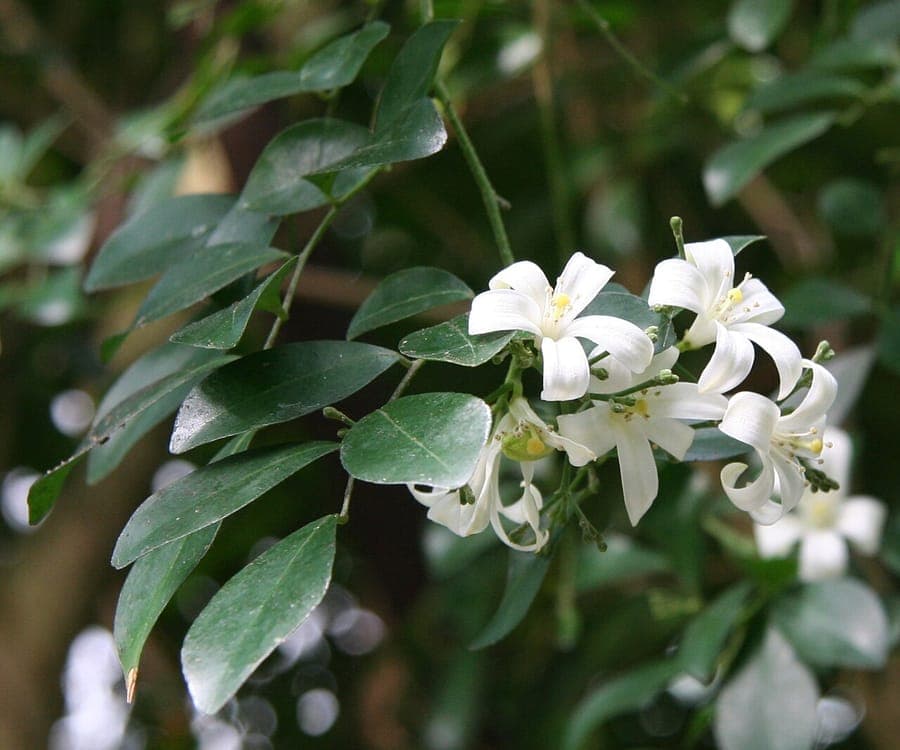
Michael Wolf / CC BY-SA 3.0, via Wikimedia Commons
Murraya paniculata: complete guide
Murraya paniculata
¿Quieres ver Murraya paniculata: complete guide en tu jardín?
1 minuto, sin tarjeta de crédito
Overview
The Murraya paniculata, also known as Orange Jasmine or Kemuning, is a beautiful ornamental shrub from the Rutaceae family, native to tropical and subtropical Asia. This elegant plant is renowned for its delicate, fragrant white flowers and glossy green foliage. The Murraya paniculata is well-suited for gardens in warmer climate zones and can also be cultivated as a potted plant in greenhouses or conservatories.
With its compact growth habit and attractive appearance, this shrub is a favorite among garden enthusiasts seeking a refined accent in their outdoor space. The plant grows at a slow to moderate rate and forms a dense crown with gracefully arching branches.
Appearance and Bloom
Murraya paniculata reaches a height of 1 to 4 meters, depending on growing conditions. The plant has opposite, pinnate leaves with a fine texture and glossy, dark green color. The leaves can grow up to 10 centimeters long.
Flowers appear in dense, branched clusters and are small, white to cream-colored. They emerge in spring and summer, often followed by small red to orange berries that serve as bird food. The flowers emit a pleasant, sweet aroma that becomes stronger in the evening. This fragrance makes the plant especially attractive to birds and insects.
Ideal Location
Murraya paniculata thrives best in a warm, sunny location. The plant requires at least six to eight hours of direct sunlight daily to bloom optimally and display its most attractive appearance.
Partial shade is tolerated, but may reduce flower production. In temperate climates, it is advantageous to place the plant against a south-facing wall or warm terrace for extra cold protection.
When grown as a potted plant, position the Murraya paniculata in a bright, well-ventilated location, such as a windowsill with morning sun.
Soil
Murraya paniculata requires well-draining soil. The plant grows best in slightly acidic soil. Sandy loam, moist but not waterlogged soil is ideal.
Add organic matter to the planting site: approximately 20 to 30 percent composted leaves or garden compost. This improves water drainage and nutrient content. For potted plants, use a potting soil mixture with added peat and sand or perlite.
The pH value should be between 5.5 and 7.0. An annual top layer of compost helps maintain soil structure.
Diseño gratis
¿Quieres ver Murraya paniculata: complete guide en tu jardín? Crea un diseño gratis ahora.
Watering
Murraya paniculata requires regular watering, especially during the growing season. Ensure the soil remains moist but not waterlogged. Excessive moisture can lead to root rot.
In winter, as the plant grows more slowly, you can slightly reduce watering. Moisture measurement is useful: water only when the top 2 centimeters of soil feel dry.
During drought and strong sunshine, daily watering may be necessary. For potted plants, check more frequently and water regularly, as the soil dries out faster.
Pruning
Regular pruning helps Murraya paniculata maintain a dense, compact crown. Pruning work is best done in early spring, just before the growing season begins.
Remove dead or damaged branches completely. Thin out overly long branches and shorten shoots that grow too far from the crown. This also stimulates lateral branching and flower induction.
Keep interventions moderate, as heavy pruning can cause growth setbacks. For potted plants, formative pruning can help maintain an attractive shape.
Maintenance Calendar
January to March: Prune and check for pests. Water carefully.
April to May: Growing season begins, increase watering. Begin monthly fertilization.
June to August: Peak growth and flowering. Ensure adequate water and light. Continue fertilization.
September to October: Gradually reduce watering as growth slows.
November to December: Prepare for winter rest. Reduce watering and stop fertilization. Protect from frost.
Winter Hardiness
Murraya paniculata is sensitive to frost and tolerates temperatures below freezing poorly. In temperate climates, the plant can only grow outdoors in very sheltered, warm locations.
In case of threatened frost, cover the plant with burlap or special plant protection material. Frost-sensitive areas are better overwintered in a greenhouse or plant room.
The minimum survival temperature is approximately 0 to 5 degrees Celsius. Prolonged exposure to cold damage the plant permanently.
Companion Planting
Murraya paniculata works well with other heat-loving plants. Combine with:
- Fuchsias for contrasting colors
- Loropetalum for similar fine textures
- Clethra for fragrance and flower formation
- Lagerstroemia for flowering accents
In mixed borders, plant groups of three for better effect. Ensure neighbors have similar water and nutrient requirements.
Conclusion
Murraya paniculata is a distinguished choice for gardens with warmer locations. Its elegant appearance, pleasant fragrance, and attractive flowers make it valuable in garden design.
With attention to location, soil, and water, this shrub will grow to maturity. For gardeners in cooler climates, container cultivation offers a way to enjoy this tropical beauty.
Visit gardenworld.app for more garden design inspiration and plant recommendations.
¿Quieres ver Murraya paniculata: complete guide en tu jardín? Crea un diseño gratis ahora.
Sube una foto, elige un estilo y obtén un diseño fotorrealista con lista de plantas en menos de un minuto.
Más de 10.000 jardines diseñados
Sin tarjeta de crédito


Plantas similares
Thamnosma montana: complete guide
Thamnosma montana
Everything about Thamnosma montana, the aromatic turpentine broom from the Mojave Desert. Location, soil, care and companion planting explained.
Narrow-leaved fringed rue: complete guide
Ruta angustifolia
Everything about Ruta angustifolia: location, soil, watering, pruning and winter care for this Mediterranean subshrub.
Mountain rue: complete guide
Ruta montana
A complete guide to Ruta montana: best location, soil, watering, pruning and overwintering of this aromatic Mediterranean subshrub.