
Rantingsteve at English Wikipedia / Public domain, via Wikimedia Commons
Curry leaf tree: complete guide
Murraya koenigii
¿Quieres ver Curry leaf tree: complete guide en tu jardín?
1 minuto, sin tarjeta de crédito
Overview
The Curry leaf tree (Murraya koenigii), also known as Curry bush or Indian jasmine, is a small tropical shrub or tree that is native to India. Despite its name, the plant contains no turmeric, but its fragrant, delicately aromatic leaves are widely used in Indian and Asian cuisine. In Europe, the plant is primarily cultivated as a decorative potted or topiary plant, especially in warmer climates or in temperate greenhouses.
Appearance and Bloom
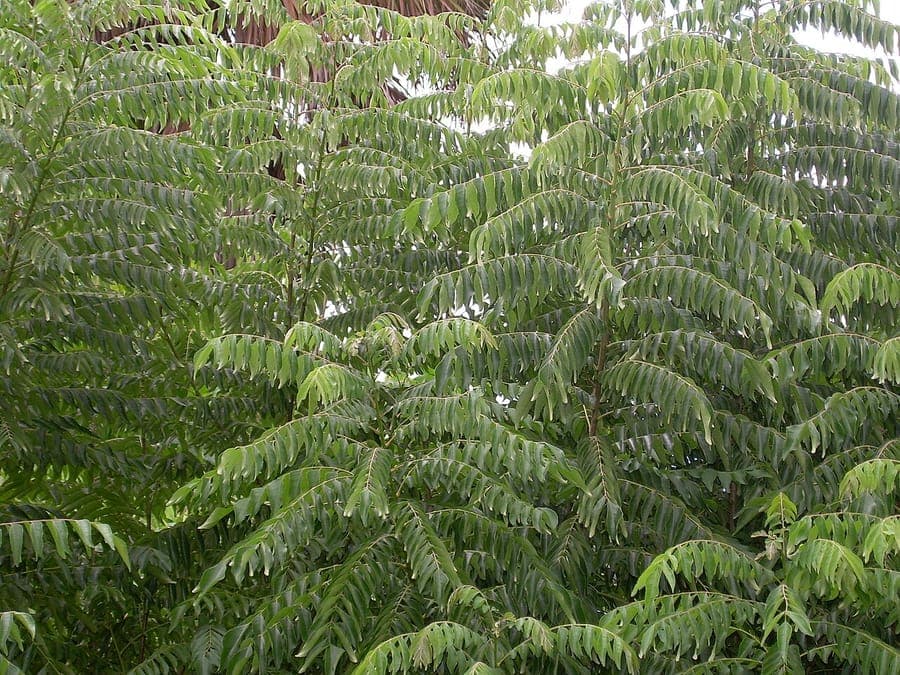
The Curry leaf tree grows to approximately 2-4 meters tall, though in pots it typically remains smaller. The plant has thin, delicate-looking pinnate compound leaves that are strongly aromatic and smell curry-like when crushed. The plant flowers with small, delicate white flowers that are very fragrant and appear in spring and summer. After flowering, small black or red fruits appear, depending on the cultivar.
Ideal Location
The Curry leaf tree requires plenty of warmth and light and grows best in full sun locations. In temperate climates, it should receive a minimum of 6 hours of direct sun daily. If grown indoors, provide a location near a warm, southeast-facing window. The plant is not frost-hardy and must be protected from temperatures below 10 degrees Celsius.
Soil
The Curry leaf tree requires well-draining, fertile soil. A mixture of garden loam, peat, and sand works well. The plant prefers a pH around 6.0-7.0. Ensure the pot has good drainage holes to prevent root rot. Repotting into a slightly larger pot is necessary as root growth increases.
Diseño gratis
¿Quieres ver Curry leaf tree: complete guide en tu jardín? Crea un diseño gratis ahora.
Watering
The Curry leaf tree prefers moist, but not waterlogged, soil. Water regularly during the growing season (spring and summer), less frequently in autumn and winter. Ensure the soil dries somewhat between waterings. Excessive water can lead to root rot. In hot periods, daily misting of leaves can be beneficial.
Pruning
The Curry leaf tree responds well to pruning and can be cut to maintain a more compact, bushy form. Pruning can take place during the growing season. Regular pinching of young shoots encourages more leaves and denser growth. It is best to remove dead or diseased branches immediately.
Maintenance Calendar
Spring: Begin clear growth, water regularly. Summer: Feed out regularly and water regularly; harvest leaves as desired. Autumn: Lower watering as growth slows. Winter: Limited water and protect from cold.
Winter Hardiness
The Curry leaf tree is very sensitive to cold and does not survive outdoors in severely cold climates. In Southern Europe, it can grow outdoors, but in Northern Europe it must be kept indoors or in a temperate greenhouse in winter. Temperatures below 10 degrees can cause damage or death.
Companion Plants
The Curry leaf tree can be combined with other heat-loving plants in a greenhouse or tropical garden, such as bougainvillea, passionflower, and other aromatic herbs. In container cultivation, it can be combined with complementary tropical plants.
Closing
The Curry leaf tree is a fascinating choice for garden design in warm climates or for greenhouse/container cultivation in temperate regions. The combination of ornamental value and culinary value makes it attractive to herb enthusiasts. Available through specialized nurseries and plant suppliers.
¿Quieres ver Curry leaf tree: complete guide en tu jardín? Crea un diseño gratis ahora.
Sube una foto, elige un estilo y obtén un diseño fotorrealista con lista de plantas en menos de un minuto.
Más de 10.000 jardines diseñados
Sin tarjeta de crédito


Plantas similares
Thamnosma montana: complete guide
Thamnosma montana
Everything about Thamnosma montana, the aromatic turpentine broom from the Mojave Desert. Location, soil, care and companion planting explained.
Narrow-leaved fringed rue: complete guide
Ruta angustifolia
Everything about Ruta angustifolia: location, soil, watering, pruning and winter care for this Mediterranean subshrub.
Mountain rue: complete guide
Ruta montana
A complete guide to Ruta montana: best location, soil, watering, pruning and overwintering of this aromatic Mediterranean subshrub.