
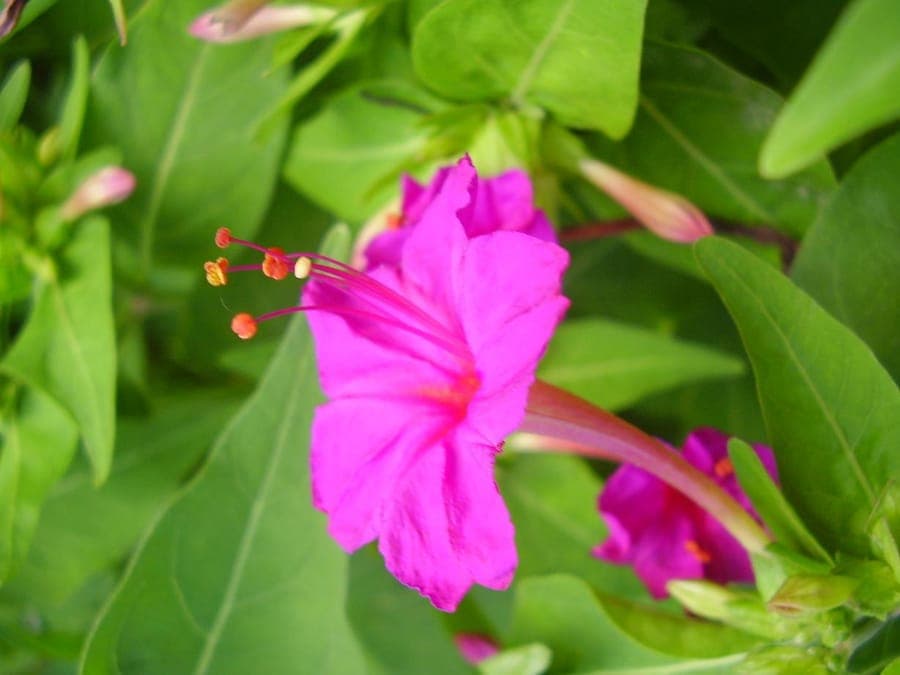
Khalid Mahmood at English Wikipedia / Public domain, via Wikimedia Commons
Four O'Clock (Mirabilis jalapa): complete guide
Mirabilis jalapa
¿Quieres ver Four O'Clock (Mirabilis jalapa): complete guide en tu jardín?
1 minuto, sin tarjeta de crédito
Overview
Four O'Clock, scientifically known as Mirabilis jalapa, is a fascinating semi-woody perennial plant from the Nyctaginaceae family (four o'clock family). This exotic plant originates from Mexico and Central America, where it naturally inhabits warm, dry mountainous regions. The plant is celebrated for its striking flowers that open exclusively in the evening, hence the common name 'Beauty-of-the-night.' This remarkable timing makes it a unique and conversation-starting garden plant.
Four O'Clock typically reaches a height of 60 to 90 centimeters and forms dense, bushy structures with glossy green foliage. In temperate climates, the plant is usually grown as an annual or as a potted plant brought indoors during winter. The plant is prized for its unexpected blooms and interesting tuberous root systems.
Appearance and Bloom Cycle
Four O'Clock is immediately recognizable by its large, glossy leaves with prominent veining. The leaves measure 5 to 12 centimeters long, are oval to lance-shaped, and display dark green coloration. The plant grows as a compact, rounded shrub with well-branched stems.
The bloom is the plant's most striking feature. The flowers measure approximately 2 to 3 centimeters in diameter, with four to five petals in vivid colors: bright red, pink, yellow, white, or combinations thereof. Remarkably, the flowers open exclusively in the evening (approximately 4:00 PM) and close again by morning. This natural 'timing mechanism' is unique among garden plants.
Blooming occurs from June through October, with hundreds of flowers per plant. Following flowering, black, spherical fruits about the size of hazelnuts form. These fruits contain the plant's characteristic compounds.
Ideal Location
Four O'Clock thrives best in very warm, sunny locations with full sun exposure. The plant is extremely light-hungry and blooms only with abundant direct sunlight. A minimum of 8 to 10 hours of direct sun daily is essential for flowering. In shade, the plant grows but blooms very poorly.
In temperate climates like the Netherlands and Belgium, Four O'Clock is best planted in sunny terraces and balconies in containers. The plant is frost-sensitive and must be brought indoors at any frost threat. Plant the plant against south-facing walls where heat accumulates.
Soil Requirements
Four O'Clock thrives best in well-draining, sandy soils with a pH of 6.0 to 7.5. The plant tolerates poor soils and even thrives in nutrient-lean sand. However, excellent drainage is crucial, as waterlogging quickly leads to root rot.
For container culture, a mixture of one-third potting soil, one-third sand, and one-third perlite works well. Ensure pots have large drainage holes. The plant even tolerates saline soils, which is typical of tropical coastal areas.
Diseño gratis
¿Quieres ver Four O'Clock (Mirabilis jalapa): complete guide en tu jardín? Crea un diseño gratis ahora.
Watering
Four O'Clock has moderate water requirements, especially after establishment. During the growing season (May through October), water regularly but allow the soil to dry somewhat between waterings. Excessive moisture, especially combined with cool temperatures, can lead to root rot.
In containers, water more frequently, especially on hot summer days. Avoid waterlogging and maintain consistent moisture levels. In winter, reduce watering, especially if the plant is in a cool room (10-15 degrees Celsius).
Pruning and Maintenance
Four O'Clock requires minimal pruning. The plant naturally forms an attractive, compact shape. After flowering (October), remove spent flower stems. In spring (March), the plant can be carefully pruned to encourage more compact growth. Remove dead or diseased foliage as needed.
The plant may grow slowly during winter, especially if kept in warm conditions. Regular pest checks are important, particularly for spider mites and whitefly.
Maintenance Calendar
February/March: Season preparation; repot in fresh soil; prune for shape.
April/May: Increase temperature; begin regular watering.
June-October: Full growing season; regular watering; blooming; pest monitoring.
October/November: Reduce watering; prepare for winter; remove dead foliage.
December-January: Rest period; minimal watering; cool conditions (10-15 degrees Celsius).
Winter Hardiness
Four O'Clock is not winter hardy and cannot tolerate temperatures below 10 degrees Celsius. In temperate climates, the plant must be brought indoors in autumn and placed on a sunny, warm spot in the home. The minimum winter temperature is approximately 10-12 degrees Celsius.
In regions with frost-free winters (zone 10 and higher), the plant can remain outdoors. In areas with harsh winters, the plant can be grown annually from seed.
Companion Plants and Combinations
Four O'Clock combines beautifully with other heat-loving plants. In terrace gardens, plant alongside other exotic plants such as Ipomoea (morning glory), Lantana, and Abutilon (flowering maple). The vivid Four O'Clock blooms contrast nicely with silver-foliaged plants like Helichrysum (strawflower).
Other good combinations include:
- Solanum: purple fruits and flowers
- Coleus: colorful foliage
- Begonia: pastel-colored blooms
- Amaranthus: red foliage
- Iresine: raspberry-colored leaves
In containers, Four O'Clock can be used as a focal flower on terraces and balconies. Combine with other summer bloomers for extended flowering.
At local garden centers, Four O'Clock is sometimes sold in spring.
Closing Thoughts
Mirabilis jalapa is a wondrous plant for those who enjoy something exotic and unexpected in the garden. With its evening-opening blooms and tropical appearance, it brings magic to terraces and balconies. Despite its frost sensitivity, it is easy to grow in containers. For more inspiration on integrating exotic plants into your garden design and creating tropical atmospheres, visit gardenworld.app and discover how to use this fascinating plant. Gardenworld.app offers advanced design techniques for transforming your outdoor space into a tropical paradise.
¿Quieres ver Four O'Clock (Mirabilis jalapa): complete guide en tu jardín? Crea un diseño gratis ahora.
Sube una foto, elige un estilo y obtén un diseño fotorrealista con lista de plantas en menos de un minuto.
Más de 10.000 jardines diseñados
Sin tarjeta de crédito


Plantas similares
Colorado four o'clock: complete guide
Mirabilis multiflora
Complete guide to Mirabilis multiflora: a showstopping perennial with magenta blooms opening at dusk, highly drought-tolerant and pollinator-friendly.
Sand-verbena: complete guide
Abronia umbellata
Discover sand-verbena, a beautiful pink flower from California perfect for sunny, dry gardens and groundcover with low maintenance needs.
Bougainvillea spectabilis: complete guide
Bougainvillea spectabilis
Great bougainvillea from Brazil with spectacular colored bracts. Climbing plant for warm climates. Care and propagation techniques.