
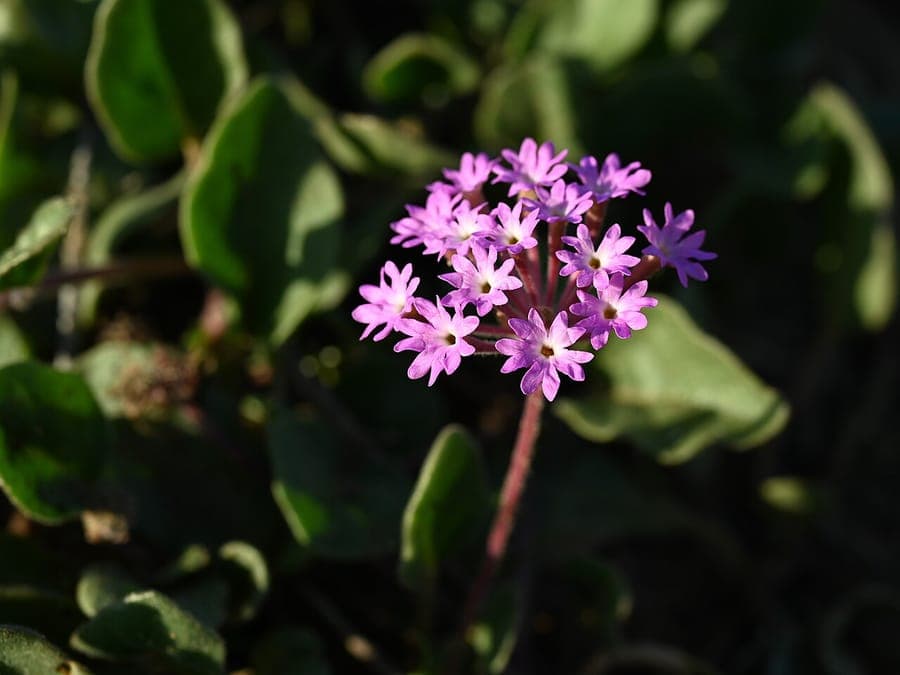
Krzysztof Ziarnek, Kenraiz / CC BY-SA 4.0, via Wikimedia Commons
Sand-verbena: complete guide
Abronia umbellata
¿Quieres ver Sand-verbena: complete guide en tu jardín?
1 minuto, sin tarjeta de crédito
Overview
Sand-verbena (Abronia umbellata), also known as pink sand-verbena or beach sand-verbena, is a beautiful flowering plant native to the western United States, particularly California to Mexico. This member of the Nyctaginaceae family is a semi-shrub that perfectly adapts to sandy and coastal landscapes. With its charming pink flowers and trailing growth habit, sand-verbena is an excellent choice for sunny, dry gardens and groundcover applications.
The plant naturally grows on sand dunes along the coast, adapting to poor, dry soils and sea breezes. This heritage makes it an ideal plant for challenging, sunny locations in gardens.
Appearance and Bloom
Sand-verbena has a low, trailing growth pattern, typically 15-30 cm tall but spreading to 60 cm wide. The leaves are small, green, and oval-shaped, densely arranged along reddish or purple stems.
The flowers are the main feature of this plant. They appear in ball-shaped clusters atop the stems and display a beautiful pink to purple color. The flowers emit a pleasant fragrance, especially in evening and morning hours.
The blooming period extends from June to October, with peak bloom during warm summer months. The plant continues flowering throughout summer if you remove spent flowers.
Ideal Location
Sand-verbena thrives best in full sun and benefits from 6-8 hours of direct sunlight daily. This produces the most abundant and beautiful flowers. The plant tolerates light shade but blooming is less profuse.
Position sand-verbena in sunny, windy locations such as sunny borders, container gardens, or garden edges. The plant tolerates sea breezes well and flourishes in coastal areas. Avoid shaded locations and moisture-retentive microclimates.
Soil
Sand-verbena prefers poor, sandy or granitic soils. It actually grows better in lean conditions, making it perfect for locations where other plants struggle.
Ensure very well-draining soil, as this plant cannot tolerate waterlogged conditions. Amend planting holes with sand and fine gravel to further improve drainage. Avoid adding organic matter, as this can reduce water-draining capacity.
Diseño gratis
¿Quieres ver Sand-verbena: complete guide en tu jardín? Crea un diseño gratis ahora.
Watering
Sand-verbena is highly drought-tolerant thanks to its coastal heritage. Once established, it needs little water. Water only when the top 5 cm of soil is completely dry.
During dry periods, check weekly and water if necessary. Avoid overwatering, as this can cause root rot. In rainy periods, usually no additional water is needed.
Pruning
Sand-verbena requires minimal pruning. Regularly remove spent flowers to encourage continuous blooming. This stimulates the plant to produce new flowers continuously.
At season's end or in spring, cut the plant back to about 15 cm height. This promotes dense, compact growth.
Maintenance Calendar
April-May: Establish plant, water regularly until rooted. June-September: Deadhead regularly. Water weekly in very dry periods. October-November: Reduce watering. Prepare plant for winter. December-March: Minimal care. Careful protection in cold climates.
Winter Hardiness
Sand-verbena is not fully winter-hardy in temperate climates. In areas with temperatures below -5 degrees Celsius, it rarely survives winter without protection. In warmer regions (USDA zones 8-11), it can grow year-round.
In colder climates, sand-verbena is typically cultivated as an annual or brought indoors for winter.
Companion Plants
Sand-verbena combines well with other drought-tolerant plants such as: sedums, agaves, lavender, salvia, and other Mediterranean herbs.
Also pair with other coastal standard plants for an integrated, natural landscape.
Conclusion
Sand-verbena is an underrated gem for sunny, dry gardens. With its beautiful pink flowers and low maintenance needs, this plant delivers months of bloom. Build a water-efficient garden with sand-verbena and other drought-tolerant plants.
Find sand-verbena plants at specialty nurseries, often available in spring. For more garden inspiration and design tips, visit gardenworld.app!
Want to learn more about this fantastic coastal flower? Consult gardenworld.app for further advice!
¿Quieres ver Sand-verbena: complete guide en tu jardín? Crea un diseño gratis ahora.
Sube una foto, elige un estilo y obtén un diseño fotorrealista con lista de plantas en menos de un minuto.
Más de 10.000 jardines diseñados
Sin tarjeta de crédito


Plantas similares
Colorado four o'clock: complete guide
Mirabilis multiflora
Complete guide to Mirabilis multiflora: a showstopping perennial with magenta blooms opening at dusk, highly drought-tolerant and pollinator-friendly.
Bougainvillea spectabilis: complete guide
Bougainvillea spectabilis
Great bougainvillea from Brazil with spectacular colored bracts. Climbing plant for warm climates. Care and propagation techniques.
Red spiderling: complete guide
Boerhavia diffusa
Red spiderling (Boerhavia diffusa), also known as spreading hogweed, is a versatile tropical plant with traditional medicinal uses. Discover cultivation and care tips.