
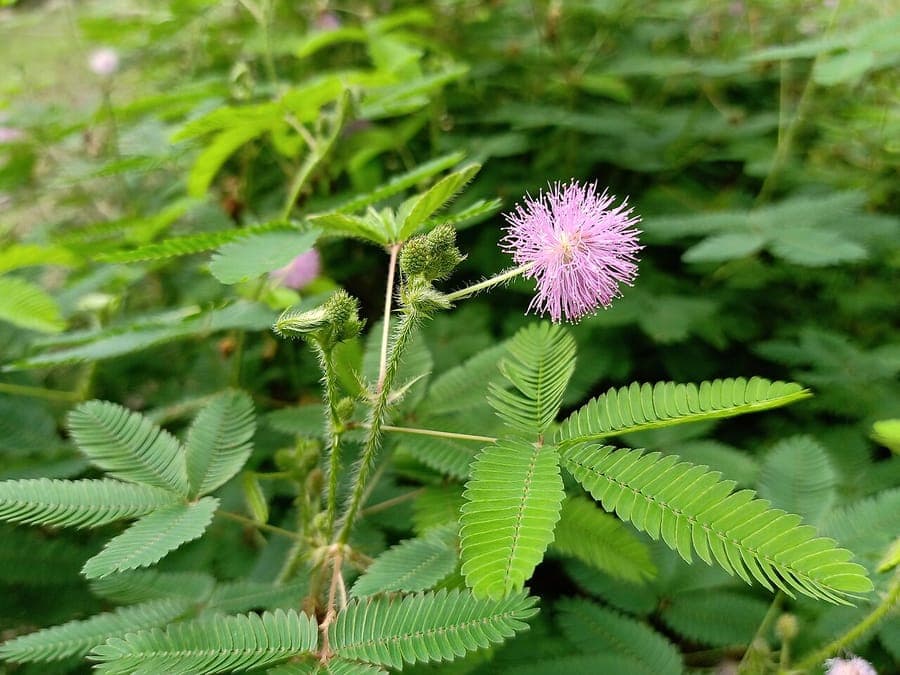
Suyash.dwivedi / CC BY-SA 4.0, via Wikimedia Commons
Mimosa pudica: complete guide
Mimosa pudica
¿Quieres ver Mimosa pudica: complete guide en tu jardín?
1 minuto, sin tarjeta de crédito
Overview
Mimosa pudica, commonly known as the sensitive plant, is a remarkable tropical specimen belonging to the Fabaceae family. This plant is famous for its unique property: when you touch its leaves, they fold closed immediately. This defense mechanism makes Mimosa pudica a fascinating choice for plant enthusiasts who want an interactive accent in their home.
Originally from Mexico and tropical America, the Mimosa pudica thrives in warm, humid conditions. The plant reaches heights of 30 to 90 centimeters and produces delicate pink flowers that appear almost pompom-like. Though the growth process requires careful attention, this plant is certainly worth the effort for those seeking something truly unique.
Appearance and bloom cycle
The Mimosa pudica is a herbaceous plant with feathery leaves growing along thin stems. The leaflets have a remarkable property: when you touch them or when the plant experiences stress (such as shaking or cold), the leaves fold shut as if clenching a fist. This happens due to changes in cell pressure in the leaf stems.
The flowers are small, round, and pink to purplish in color. They appear throughout the summer months, giving the plant a delicate, romantic appearance. After pollination, seed pods develop with their own characteristic movements.
Ideal location
The Mimosa pudica thrives best in a warm location with plenty of indirect light. Place your plant preferably on a windowsill facing southeast or southwest, so it receives diffuse light throughout the day. Direct afternoon sun can cause leaf scorch, so filter the light with a sheer curtain if you notice yellowing leaves.
Temperature is crucial: ensure the environment stays at least 18-20 degrees Celsius, ideally 21-25 degrees. The plant is not frost-hardy and will die if exposed to temperatures below 10 degrees.
Soil requirements
The Mimosa pudica prefers nutrient-rich, well-draining potting soil. Mix standard potting soil with 30% peat moss or coconut fiber and 20% perlite or sand to improve drainage. A pH of 6.0 to 6.5 is ideal.
Ensure drainage holes in your pot, as this plant can be sensitive to root rot if left in wet soil. A layer of terracotta shards at the bottom of the pot also helps considerably.
Diseño gratis
¿Quieres ver Mimosa pudica: complete guide en tu jardín? Crea un diseño gratis ahora.
Watering
The Mimosa pudica needs regular watering, especially during the growing season (April to September). Water the plant once the top 2 centimeters of soil feel dry. In winter, you can water more cautiously, but ensure the soil never completely dries out.
Use lukewarm water - cold water can shock the plant and cause leaves to close. Avoid stagnant water and ensure good drainage. Overwatering is the most common cause of death for this plant.
Pruning
The Mimosa pudica grows naturally as a compact shrub. In spring (March-April), you can carefully prune the plant to encourage a fuller shape. Remove dead branches and stems, and pinch off the tips of growing shoots to encourage branching.
The plant can also be grown from seed, which can be an enjoyable project. Seeds germinate readily and quickly.
Maintenance calendar
March-April: Prune and repot into fresh soil; Start growing season. May-August: Water regularly and feed monthly with organic plant food. September: Gradually reduce watering frequency. October-February: Rest period; Minimal watering, no feeding. Year-round: Check regularly for pests.
Winter hardiness
The Mimosa pudica is not winter-hardy and cannot grow outdoors in temperate climates. In the UK, northern Europe, and North America, you must keep this plant indoors year-round. In very warm regions of Southern Europe (southern Spain, southern Portugal) it might possibly survive outdoors in protected, very warm locations, but this is unreliable.
Companion plants
The Mimosa pudica combines beautifully with other tropical houseplants, such as Anthurium, Philodendron, and Begonia. These plant groups have similar watering and light requirements. For a more humid microclimate, you can place them together in a terrarium.
Closing remarks
The Mimosa pudica is truly a special plant that fascinates both children and adults alike. Its interactive nature makes gardening enjoyable and educational at the same time. With attention to warmth, light, and well-draining soil, you will enjoy this tropical treasure for years to come.
Discover more plant species on gardenworld.app, where you'll find advice for all your gardening projects. Visit gardenworld.app for tips on combining this plant with other tropical species in your home.
¿Quieres ver Mimosa pudica: complete guide en tu jardín? Crea un diseño gratis ahora.
Sube una foto, elige un estilo y obtén un diseño fotorrealista con lista de plantas en menos de un minuto.
Más de 10.000 jardines diseñados
Sin tarjeta de crédito


Plantas similares
Tall Silky Lupine: complete guide
Lupinus elatus
Tall silky lupine is a fast-growing Californian perennial with silvery foliage and blue-purple flower spikes, ideal for a prairie-style garden.
Garfield Lupine: complete guide
Lupinus garfieldensis
The Garfield lupine is a rare, fast-growing American perennial for alkaline, dry grassland gardens, with striking blue flower spikes.
Lupinus elegans: complete guide
Lupinus elegans
Lupinus elegans, the elegant lupine, is a spectacular blooming plant from Mexico with blue flower spikes. Care, cultivation and garden use.