
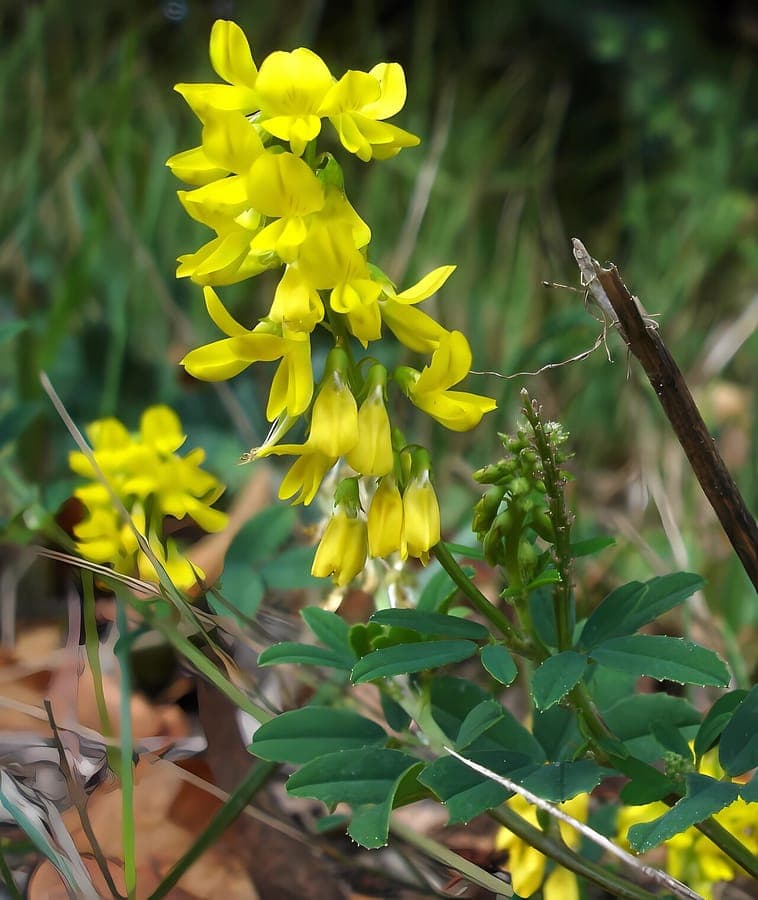
Bouba at French Wikipedia / CC BY-SA 3.0, via Wikimedia Commons
Tall melilot: complete guide
Melilotus altissimus
¿Quieres ver Tall melilot: complete guide en tu jardín?
1 minuto, sin tarjeta de crédito
The Tall melilot, scientifically Melilotus altissimus, is a stately biennial plant from the Fabaceae family native to Europe. Formally recognized since 1799, this plant belongs to the Melilotus genus, famous for their fragrant flowers and nutritious properties for bees and butterflies. The plant grows naturally in moist meadows, along riverbanks, and in ruderal habitats throughout Europe.
The appearance of Melilotus altissimus is impressively elegant and decidedly vertical. The plant reaches 80 to 150 centimeters height, sometimes even taller under optimal conditions. The stems are thin yet sturdy, lightly hairy, and green to reddish. The leaves are trifoliate compound with oblong leaflets approximately 1 to 2 centimeters long, dark green and smooth. From June through September, tiny golden flowers appear in dense, cylindrical spikes reaching up to 10 centimeters long. Each flower is merely 5 to 7 millimeters, yet together they form spectacular golden inflorescences. The bloom period attracts numerous pollinators and produces abundant nectar. After flowering, small brown seed pods develop, approximately 3 to 5 millimeters long.
The ideal location for Melilotus altissimus is a sunny spot receiving at least six hours of direct sunlight. The plant also thrives in partial shade but grows more compact and flowers less luxuriantly. Plant this species where it can be well observed, for instance along pathways or in wildflower borders. The plant is very wind-hardy and tolerates windy positions well.
Regarding soil composition, Melilotus altissimus is not particular. The plant grows in virtually all soil types, from sandy to clay soils, provided drainage is reasonable. A pH of 5.5 to 8.0 is acceptable. The plant even tolerates poor soils with minimal nutrients, because as a nitrogen-fixing legume, it uses its own bacterial associations for nutrition production. Add minimal compost when planting. This plant actually thrives better in minimally fertile soils.
Watering is needed only during the first growing season. Once established, Melilotus altissimus is extremely drought-tolerant. Ensure regular watering during the first year, but thereafter supplemental water is practically unnecessary unless extreme drought occurs. The plant even grows in marshy conditions along riverbanks.
Pruning is not essential but can be useful to keep the plant more compact. In spring of the second year, before new growth begins, you may remove dead stems. If the plant becomes too tall, you may pinch back growing tips, but leave at least 60 centimeters height for insects to reach. After flowering, you may harvest seed spikes for seed collection or leave them for natural self-seeding next season.
The maintenance calendar for Tall melilot is remarkably simple. During the first year in April and May, provide regular water. In the second year in March, remove dead material. From June through September, enjoy the preference of bees and butterflies. In October, you may harvest seeds. In November, you may completely remove the plant after seed harvest.
Winter hardiness is exemplary. Melilotus altissimus is fully hardy to approximately minus 15 degrees Celsius or lower. The plant survives winters in most temperate climates without protection. Because it is a biennial, it grows only leaf rosettes the first year and dies back after seed-setting in the second year. This is completely normal biological behavior.
As a garden companion, Melilotus altissimus works beautifully with other wildflowers and pollinator-friendly species. Combine it with cornflower, poppy, and vetches for an authentic wildflower meadow. The plant grows excellently alongside other legumes such as white clover and red clover, creating together ecologically valuable habitats.
Tall melilot is an invaluable plant for bees, butterflies, and other pollinators. Many beekeepers deliberately sow this species along their hives. With minimal investment costs, striking golden flowers, and immense nutritional value for wildlife, this plant is ideal for ecological gardens. You will find seed very readily from seed merchants and garden centers. For best results, consult local nurseries for seed packets. Gardenworld.app can help you determine where this plant fits best in your wildflower strategy. This is a plant you can re-seed annually or which will self-seed under favorable conditions. The Tall melilot is a plant that brings gardens to life by attracting insects. With its fragrant blooms, ecological benefits, and easy cultivation, this plant will contribute joy and biological value to your gardens.
¿Quieres ver Tall melilot: complete guide en tu jardín? Crea un diseño gratis ahora.
Sube una foto, elige un estilo y obtén un diseño fotorrealista con lista de plantas en menos de un minuto.
Más de 10.000 jardines diseñados
Sin tarjeta de crédito


Plantas similares
Tall Silky Lupine: complete guide
Lupinus elatus
Tall silky lupine is a fast-growing Californian perennial with silvery foliage and blue-purple flower spikes, ideal for a prairie-style garden.
Garfield Lupine: complete guide
Lupinus garfieldensis
The Garfield lupine is a rare, fast-growing American perennial for alkaline, dry grassland gardens, with striking blue flower spikes.
Lupinus elegans: complete guide
Lupinus elegans
Lupinus elegans, the elegant lupine, is a spectacular blooming plant from Mexico with blue flower spikes. Care, cultivation and garden use.