
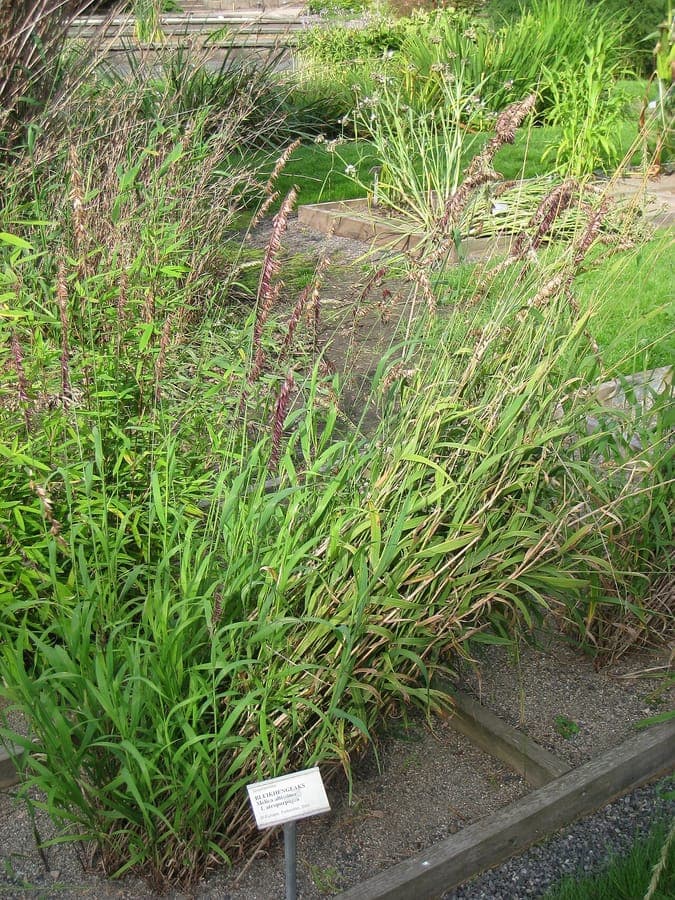
Daderot / Public domain, via Wikimedia Commons
Siberian melic (Melica altissima): complete guide
Melica altissima
¿Quieres ver Siberian melic (Melica altissima): complete guide en tu jardín?
1 minuto, sin tarjeta de crédito
Overview
Siberian melic (Melica altissima) is an elegant ornamental grass native to Central and Eastern Europe through Siberia and Iran. This Poaceae species is known for its elegant growth, characteristic flower structure and value for dry landscapes. The grass grew wild in steppe areas and mountain meadows.
In gardens, Siberian melic is highly valued for its considerable height (up to 100 cm), elegant flower spikes and resilience. It forms compact clumps and produces fascinating seed structures. This makes it a favorite grass for contemporary landscapes, prairie gardens and dry slope situations.
Appearance and Bloom
Siberian melic grows as an upright, compact grass clump, usually 60 to 100 cm tall. The fine leaves are narrow and green to gray-green, providing attractive contrast with broad-leaved garden partners.
The flower spikes appear in June-July and are truly impressive. These are elongated, elegantly rising above the leaf clumps, usually 40 to 60 cm above foliage level. Individual flowers are small and inconspicuous green or purple-tinted.
What truly makes this a special grass are the seed structures that form after flowering. These retain their form and color through fall and winter, creating seasonal interest. The seed spikes curl gracefully and have a fine, lace-like texture.
Ideal Location
Siberian melic thrives best in full sunlight. At least six hours of direct sun is essential, though eight or more hours is ideal. In very shady locations, the grass grows slender and produces fewer flowers.
The plant tolerates windy conditions well - indeed, light wind helps the flower spikes maintain their elegant form. Open locations are perfect. In sheltered, stagnant locations, the grass can sometimes be affected by moisture-related diseases.
When choosing location, seek space where the grass can grow in full sun and move slightly without strong gusts.
Soil
Siberian melic requires well-draining soil. Sandy to light loamy soil, neutral to slightly alkaline pH (6.5 to 7.5) is favorable. The grass tolerates dry conditions very well and grows better in dry than wet soils.
Organic matter can be moderately added, but is not necessary. The grass grows well in nutrient-poor soils without fertilization. Heavy clay soils should be significantly improved with sand and gravel additions.
The plant is not a heavy feeder - indeed, heavy fertilization can sometimes cause the grass to fall over or produce excessive foliage.
Diseño gratis
¿Quieres ver Siberian melic (Melica altissima): complete guide en tu jardín? Crea un diseño gratis ahora.
Watering
Siberian melic is very drought-tolerant once established. During first growth period (first 4-6 weeks), keep lightly moist regularly. After that, water only during very dry periods (longer than 4 weeks without rain).
In natural rainfall areas, usually no supplemental water needed. Excessive watering promotes foliage growth and can make the plant more susceptible to diseases. The grass feels best in dry to semi-dry conditions.
Pruning
Minimal pruning required. After seed ripeness (September-October), seed spikes can be removed if desired, but many gardeners retain them for winter interest. Dry seed spikes are decorative and feed birds.
In early spring (March-April), dead material can be removed. This can be done by combing out dead foliage with hands or tools. Don't prune the grass itself until after winter.
No regular pruning needed - let the grass maintain its natural form.
Maintenance Calendar
March-April: Divide plants or sow seed. Soil preparation in well-dug conditions.
May-July: Enjoy growth and blooming. Minimal water. No fertilization needed.
August-October: Seed spikes dry. Photographic interest. Bird food.
November-February: Comb out dead foliage. Winter rest. No pruning.
Winter Hardiness
Siberian melic is very winter-hardy. This grass survives temperatures to -25C or even colder without protection. It is perfectly excellent for Northern European climates.
In all European garden regions (even towards Scandinavia), this grass grows reliably. No protection needed. The plant actually prefers cold weather and grows better in northern climates than in very warm regions.
Established plants are very frost-resistant.
Companion Plants
Siberian melic pairs beautifully with other drought-tolerant plants: lavender, santoline, artemisia, sedum. This combination creates a modern, dry landscape.
In prairie gardens, it works well with red hot poker, coreopsis, and other dry wildflowers. The elegant seed spikes contrast nicely with more sturdy flower forms.
In contemporary gardens, the grass combines with stone and modern hardscape. Ask about other Melica species for extra variety - M. ciliata and M. nutans are also good.
Conclusion
Siberian melic is an excellent choice for those seeking elegant, low-maintenance ornamental grasses. Its height, elegant blooming and seed interest make it a worthwhile addition. With dry soil and minimal care, it thrives beautifully. Available from plant suppliers in all regions.
Find plants at garden centers. German garden enthusiasts search for "Hohes Perlgras" at quality retailers.
¿Quieres ver Siberian melic (Melica altissima): complete guide en tu jardín? Crea un diseño gratis ahora.
Sube una foto, elige un estilo y obtén un diseño fotorrealista con lista de plantas en menos de un minuto.
Más de 10.000 jardines diseñados
Sin tarjeta de crédito


Plantas similares
Sporobolus pungens: complete guide
Sporobolus pungens
Sporobolus pungens is a stoloniferous Mediterranean coastal grass with outstanding salt and drought tolerance, perfect for seaside and dry gardens.
Mediterranean aegilops: complete guide
Aegilops biuncialis
Everything about Aegilops biuncialis, a Mediterranean annual grass with ornamental spikes and outstanding drought tolerance for dry gardens.
Silver bluestem: complete guide
Bothriochloa saccharoides
Full guide to Bothriochloa saccharoides (silver bluestem): site, soil, watering, winter hardiness, pruning, and garden companions.