
Gideon Pisanty (Gidip) גדעון פיזנטי / CC BY 3.0, via Wikimedia Commons
Medicago scutellata: complete guide
Medicago scutellata
¿Quieres ver Medicago scutellata: complete guide en tu jardín?
1 minuto, sin tarjeta de crédito
Overview
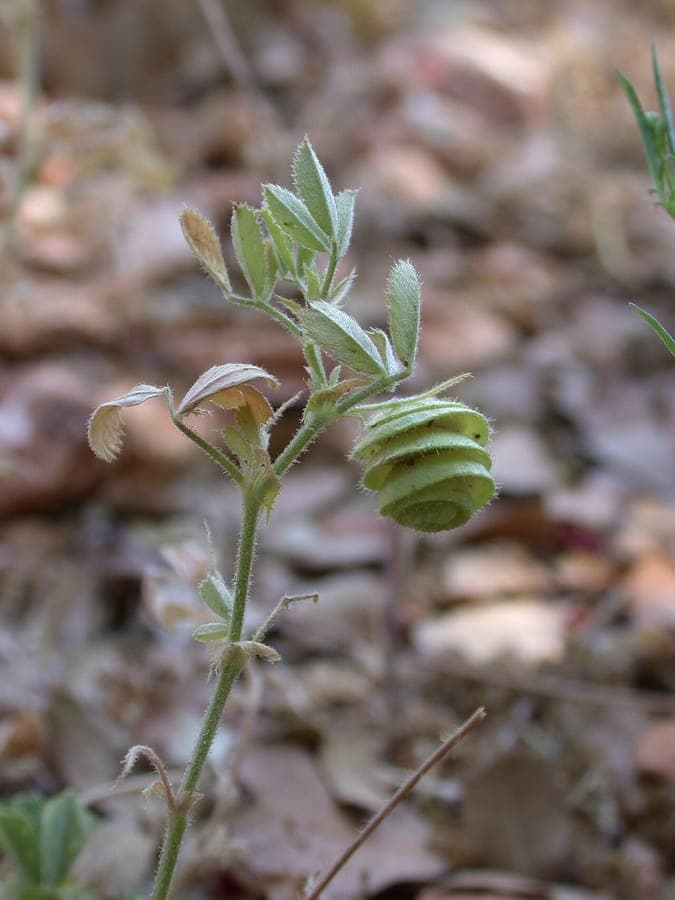
Medicago scutellata, better known as snail medic or shield medick, is a fascinating Mediterranean plant from the legume family (Fabaceae). This plant is native to southern Europe around the Mediterranean and is particularly noted for its distinctive shell-shaped seed pods, which resemble tiny snail shells.
As a member of the Medicago genus (the same family as alfalfa), this plant has valuable ecological properties. It fixes nitrogen in the soil and attracts many pollinators. The plant is becoming increasingly popular in modern gardens, especially in areas with dry, poor soils where many other plants struggle.
Appearance and bloom
Medicago scutellata forms a compact, creeping to semi-upright plant that typically grows 30 to 50 cm tall. The stems are hairy and branched, forming a fairly dense growth.
The leaves are the classic trifoliate leaves of legumes, with three small, elongated leaflets. They have a fine texture and are dark green in colour. The leaves fold together in the evening and in rainy weather.
The flowers are small, approximately 5 to 8 mm wide, and grow in dense clusters of 5 to 20 flowers per cluster. They have an intense golden-yellow colour and resemble tiny clover-like flowers. Flowering begins in May and lasts until June-July, providing ideal bee forage.
The most characteristic feature of this plant is the fruit. After flowering, small, spiral to shell-shaped pods develop, resembling tiny snail shells. These seed pods are yellow to brown in colour and remain on the plant all season, providing interesting texture.
Ideal location
Medicago scutellata grows best in sunny spots. The plant requires at least 6 to 8 hours of direct sunlight daily. In less sunny locations, the plant grows poorly and flowers less profusely.
The plant tolerates windy sites well, making it suitable for gardens in open areas.
Soil
Medicago scutellata grows in virtually all soils but thrives best in poor, lean soils. On rich soils, more foliage grows at the expense of flowers. The plant tolerates dry, stony soils perfectly and even grows well in sand.
A pH between 5.9 and 7.5 is ideal. As a legume, this plant can fix its own nitrogen, so fertiliser is not needed, even undesirable.
No special soil preparation is needed; the plant thrives in marginal and poor soils.
Diseño gratis
¿Quieres ver Medicago scutellata: complete guide en tu jardín? Crea un diseño gratis ahora.
Watering
Once established, Medicago scutellata is highly drought-tolerant. This Mediterranean plant can survive long periods without water thanks to its deep root system.
During the growing season, regular watering can promote growth, but is not strictly necessary. Excessive watering actually poses a risk and can cause root rot.
Young plants need more moisture attention than mature specimens.
Pruning
Medicago scutellata requires little pruning. The plant naturally grows into a neat shape. If the plant grows too densely or unevenly, irregular stems can be carefully removed in spring.
If you wish to retain seed pods for decoration or seed collection, be sure not to prune them.
Maintenance calendar
Spring (March-May): Sow seeds directly outdoors after frost. Seeds can also be started in containers.
Summer (June-August): Enjoy the blooms and distinctive shell-shaped seed pods. Watering not needed unless very dry.
Autumn (September-October): Blooming and seed production conclude. Plant gradually dies back.
Winter (November-February): Winter annual plants die off or go dormant.
Winter hardiness
Medicago scutellata's hardiness depends on location and microclimate. In many temperate regions, it functions as a winter annual, meaning seed germinates in autumn and the plant overwinters for spring growth.
In very cold regions (USDA zones below 6), it works better as a spring-sown annual.
Preferably sow in autumn (September-October) for early spring flowering in mild temperate climates.
Companion plants
Medicago scutellata creates beautiful combinations with other dry-soil and Mediterranean plants.
Good combinations include:
- Lavender (Lavandula)
- Sage (Salvia)
- Catnip (Nepeta cataria)
- Sedum
- Thyme (Thymus)
- Avens (Geum)
- Coneflower (Echinacea)
Closing thoughts
Medicago scutellata is a fascinating plant for lovers of Mediterranean or ecological gardens. The distinctive shell-shaped seed pods provide season-long interest, while the golden-yellow flowers attract valuable pollinators. The plant is easy to grow and requires minimal maintenance, making it suitable for dry or extensive gardens.
Seed is available from specialist seed suppliers. Plant Medicago scutellata in groups of at least five specimens for best effect. For more inspiration and plant selection, visit gardenworld.app.
¿Quieres ver Medicago scutellata: complete guide en tu jardín? Crea un diseño gratis ahora.
Sube una foto, elige un estilo y obtén un diseño fotorrealista con lista de plantas en menos de un minuto.
Más de 10.000 jardines diseñados
Sin tarjeta de crédito


Plantas similares
Tall Silky Lupine: complete guide
Lupinus elatus
Tall silky lupine is a fast-growing Californian perennial with silvery foliage and blue-purple flower spikes, ideal for a prairie-style garden.
Garfield Lupine: complete guide
Lupinus garfieldensis
The Garfield lupine is a rare, fast-growing American perennial for alkaline, dry grassland gardens, with striking blue flower spikes.
Lupinus elegans: complete guide
Lupinus elegans
Lupinus elegans, the elegant lupine, is a spectacular blooming plant from Mexico with blue flower spikes. Care, cultivation and garden use.