
Wikimedia Commons / CC BY-SA 3.0, via Wikimedia Commons
Medicago littoralis: complete guide
Medicago littoralis
¿Quieres ver Medicago littoralis: complete guide en tu jardín?
1 minuto, sin tarjeta de crédito
Overview
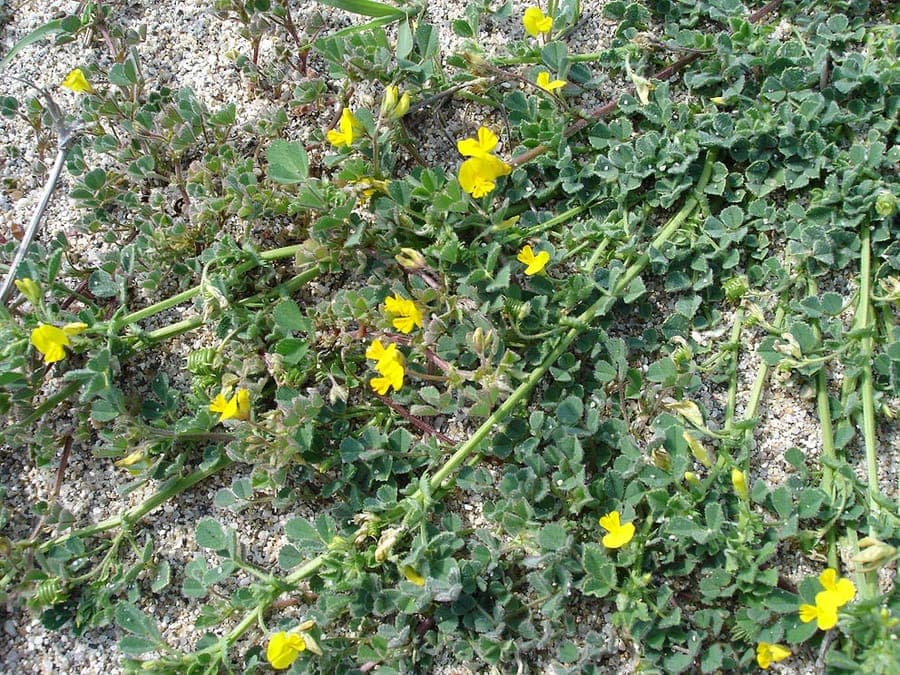
Medicago littoralis, commonly known as water medick or strand medic, is a herbaceous plant from the Fabaceae family. This Mediterranean species grows along coastlines of the Mediterranean basin and is notably salt-tolerant. The plant produces yellow flowers and distinctive spiral seed pods. While not ornamental in the traditional sense, it holds ecological value and can be interesting for naturalistic gardens.
Appearance and Bloom
Water medick is a low, spreading herb that typically reaches 20-40 cm in height. The plant features trifoliate leaves with small, rounded leaflets. The flowers are bright yellow and appear from May to August, grouped in small clusters. The most distinctive characteristic is the spiral-shaped seed pod that develops after flowering, distinguishing this plant from related Medicago species. These pods may be armed with spines or bristles.
Ideal Location
Medicago littoralis thrives best in sunny locations with at least 6 hours of direct sunlight daily. The plant is extremely salt-tolerant and flourishes in salt-rich soils along coastlines. This makes it ideal for gardens near the sea where many other plants struggle. Avoid shaded locations, where growth will be less robust.
Soil
This plant is not particularly fussy about soil composition but grows best in well-draining soils. It tolerates salty and calcium-rich soils better than most plants. The pH can range from 6.5 to 7, although it can thrive in nutrient-poor soils. The plant is nitrogen-fixing through its relationship with root bacteria, preventing the need for heavy fertilization.
Watering
Once established, water medick is highly drought-tolerant and requires minimal watering. This makes it ideal for dry climates and xeriscape gardens. Young plants need water for establishment, but mature plants survive on natural rainfall. Overwatering can cause problems, especially in heavy soils.
Diseño gratis
¿Quieres ver Medicago littoralis: complete guide en tu jardín? Crea un diseño gratis ahora.
Pruning
Minimal to no pruning is needed for Medicago littoralis. Occasional deadheading may be applied to encourage continued blooming, though this is not essential. The plant will naturally spread through self-seeding, so some seed dispersal in wild areas is acceptable. In formal gardens, you can cut back after flowering, though this is optional.
Maintenance Calendar
Spring: Plant seedlings during warm periods and ensure establishment. Summer: Minimal care required; monitor for insects that may serve as food for beneficial insects. Fall: Allow seed pods to form for natural self-seeding. Winter: In cold climates the plant will not survive; in Mediterranean climates it remains evergreen.
Winter Hardiness
Medicago littoralis is not very cold-hardy and tolerates brief frost periods but not extended sub-zero temperatures. In southern climates (zones 8-10) it can overwinter. In colder regions it is better treated as an annual or protected in containers.
Companion Plants
Water medick combines well with other Mediterranean plants such as lavender, rosemary, and cistus. The yellow flowers harmonize nicely with other yellows or with purple and blue tones. Plant it alongside other salt-tolerant species for coastal gardens.
Conclusion
While Medicago littoralis is not the flashiest choice for ornamental value, it is a fascinating plant for specialized coastal or Mediterranean gardens. Its ecological value and salt-tolerant properties make it a worthwhile element for certain garden settings, particularly in coastal regions.
Available at: Specialized nurseries focusing on Mediterranean plantings and native plant specialists.
¿Quieres ver Medicago littoralis: complete guide en tu jardín? Crea un diseño gratis ahora.
Sube una foto, elige un estilo y obtén un diseño fotorrealista con lista de plantas en menos de un minuto.
Más de 10.000 jardines diseñados
Sin tarjeta de crédito


Plantas similares
Tall Silky Lupine: complete guide
Lupinus elatus
Tall silky lupine is a fast-growing Californian perennial with silvery foliage and blue-purple flower spikes, ideal for a prairie-style garden.
Garfield Lupine: complete guide
Lupinus garfieldensis
The Garfield lupine is a rare, fast-growing American perennial for alkaline, dry grassland gardens, with striking blue flower spikes.
Lupinus elegans: complete guide
Lupinus elegans
Lupinus elegans, the elegant lupine, is a spectacular blooming plant from Mexico with blue flower spikes. Care, cultivation and garden use.