
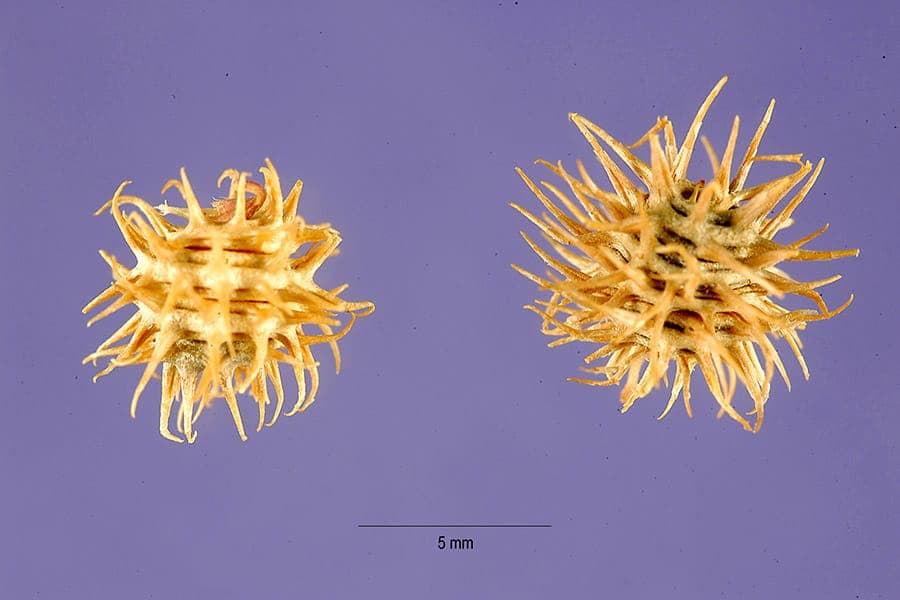
Tracey Slotta @ USDA-NRCS PLANTS Database / Public domain, via Wikimedia Commons
Tattered Medick (Medicago laciniata): complete guide
Medicago laciniata
¿Quieres ver Tattered Medick (Medicago laciniata): complete guide en tu jardín?
1 minuto, sin tarjeta de crédito
Overview
Tattered medick, scientifically Medicago laciniata, is a fascinating, robust legume originating from a vast area from Macaronesia to Ethiopia, Tanzania, and southern Africa, with distribution extending through Asia to the west Himalayas. This versatile plant is less known than more popular relatives but offers unique properties making it particularly suited to dry, marginal lands where many other alfalfas cannot thrive. The name 'laciniata' refers to the characteristic, finely cut foliage instantly distinguishing it from other medick species.
Tattered medick is an annual herb exhibiting exceptional drought tolerance and thriving extensively in semi-arid and arid regions. The plant proves equally adaptive and can be successfully grown in temperate climates where it functions as a cover crop or fodder plant. With nitrogen fixation comparable to other alfalfas, tattered medick offers distinctive advantages for growers working marginal lands or facing water scarcity. The plant attracts diverse insects and supports local biodiversity.
Appearance and Bloom Cycle
Tattered medick grows as a low, compact crop reaching approximately 15 to 40 centimeters tall, with finely branched stems growing relatively weak and spreading. The plant forms dense, low coverage, making it ideal as ground cover. The foliage represents the most striking feature: leaves are finely cut or lacerated, creating characteristic, almost lace-like appearance. This finely divided leaf structure is not merely visually attractive; it helps the plant retain moisture and provides texture contrast in garden designs.
Flowers are yellow, small, approximately 5-8 millimeters in diameter, appearing in compact flower clusters. Blooming occurs from May through October, with peak bloom in June-July, providing an extended attractive period. Following pollination, characteristic, spiky-bristled or rough-textured seed pods form – highly recognizable. These pods contain only several seeds but are extremely durable and can persist for years.
Ideal Location
Tattered medick grows best in sunny locations receiving at least six to eight hours of direct daily sunlight. The plant is exceptionally drought-tolerant and thrives in hot, arid conditions where many plants fail. In the Netherlands and Belgium, it grows well in normal humid summers, though it also withstands dry years. The plant feels most comfortable in open, well-ventilated growing positions.
Wind tolerance is excellent; tattered medick grows well in windy areas. Low, compact growth offers little wind resistance.
Soil Requirements
Tattered medick accepts many soil types, from sandy to clay, provided drainage exists. The plant can grow in very poor soils, improving them through nitrogen fixation. Ideal pH ranges from neutral to slightly alkaline (6.5-7.5), but the plant can also thrive in more acidic terrain. Waterlogging is fatal; well-drained soils are essential.
The plant is non-critical regarding fertility; it thrives in marginal soils where many other crops fail. This makes it invaluable for growers with limited inputs.
Diseño gratis
¿Quieres ver Tattered Medick (Medicago laciniata): complete guide en tu jardín? Crea un diseño gratis ahora.
Watering
Tattered medick is exceptionally drought-tolerant once established. Young plants require more regular watering during their first three to four weeks. Thereafter, they can endure substantial dry periods with minimal yield loss. In temperate zones, the plant typically manages with natural rainfall, though supplemental watering during warm summers stimulates growth.
Once established, the plant can sustain itself on very minimal water supply. This is one of its greatest advantages for arid regions.
Maintenance Requirements
Tattered medick is exceptionally low-maintenance. No fertilization or pruning needed. The plant grows autonomously. Weed control may be needed in first season, but given its aggressive growth, the plant quickly suppresses weeds. For harvesting as fodder or green manure, mow when plant is in bloom for optimal nutritive value.
Because of its annual nature, the plant requires no winter preparation; it dies naturally at frost.
Maintenance Calendar
April-May: Direct seed sowing into ground, minimal preparation. June-July: Growth, first bloom. July-August: Blooming period. August-October: Continued blooming, seed formation. October-November: Plant ages, can be removed or incorporated. December onwards: Plant dies after frost.
Winter Hardiness
Tattered medick is annual and cannot survive frost. This is actually advantageous for soil management; the plant terminates naturally at season end. In very mild climates (southern France), volunteer seedling regrowth may occur in subsequent seasons, enabling spontaneous regeneration. In temperate zones, reseeding is required annually.
Companion Planting and Agricultural Value
Tattered medick works well on marginal terrain where many other crops fail. Planting on slopes prevents erosion while nitrogen is fixed. The plant can also be used as quick green manure on depleted soils. The fine, cut foliage makes it visually interesting in garden arrangements.
Fodder value is adequate, with reasonable protein content, though lower yields than traditional alfalfas in more fertile soils.
Benefits and Applications
Tattered medick offers unique advantages for marginal-land growers. Extreme drought tolerance, adaptation to poor soils, and reliable nitrogen fixation makes it invaluable for sustainable systems in dry regions. The plant also supports biodiversity by attracting beneficial insects.
For growers with normal soils, tattered medick can serve as quick green manure or ground cover, where its cut foliage adds textural interest.
Gardenworld.app helps growers integrate tattered medick into marginal-land systems. With advice based on photographs, learn how tattered medick improves soils and supports biodiversity in challenging conditions.
Conclusion
Tattered medick is a wonderful addition for marginal-land growers. The characteristic finely-cut foliage, extreme drought tolerance, and efficient nitrogen fixation make this crop essential for sustainable agriculture in arid and semi-arid regions. Sow in April-May, enjoy autonomous growth throughout the season, and harvest or incorporate in October-November as green manure. This adaptive, low-maintenance crop delivers agricultural value under the most challenging conditions.
¿Quieres ver Tattered Medick (Medicago laciniata): complete guide en tu jardín? Crea un diseño gratis ahora.
Sube una foto, elige un estilo y obtén un diseño fotorrealista con lista de plantas en menos de un minuto.
Más de 10.000 jardines diseñados
Sin tarjeta de crédito


Plantas similares
Tall Silky Lupine: complete guide
Lupinus elatus
Tall silky lupine is a fast-growing Californian perennial with silvery foliage and blue-purple flower spikes, ideal for a prairie-style garden.
Garfield Lupine: complete guide
Lupinus garfieldensis
The Garfield lupine is a rare, fast-growing American perennial for alkaline, dry grassland gardens, with striking blue flower spikes.
Lupinus elegans: complete guide
Lupinus elegans
Lupinus elegans, the elegant lupine, is a spectacular blooming plant from Mexico with blue flower spikes. Care, cultivation and garden use.