
Vlmastra / Public domain, via Wikimedia Commons
Purple bush-bean: complete guide
Macroptilium atropurpureum
¿Quieres ver Purple bush-bean: complete guide en tu jardín?
1 minuto, sin tarjeta de crédito
Overview
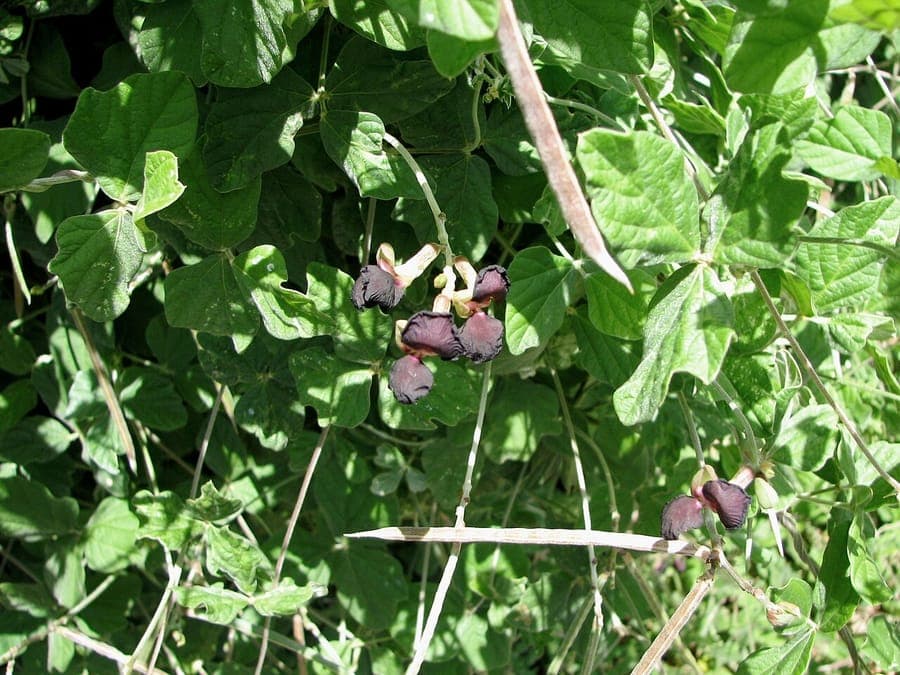
Macroptilium atropurpureum, commonly known as purple bush-bean or siratro, is a vigorous climbing perennial from the legume family. This tropical American plant produces attractive dark purple flowers and can function as a climber, rambler, or groundcover. With its tropical appearance and abundant blooms, it is a striking addition to warm, sunny garden borders.
Appearance & Bloom
Purple bush-bean grows 1-2 meters in length, forming a slender, twining plant with finely divided foliage. The leaves consist of three leaflets with a smooth texture. Flowers appear from July through October as small, dark purple pea-like blooms. The plant produces long, slender pods containing black seeds.
Ideal Location
This plant demands full sun exposure, minimum 6-8 hours daily. Position in warm, sunny locations where the dark purple flowers are well visible. Purple bush-bean excels trained on trellises, nets, or arbours, or as a groundcover for warm banks. Provide adequate support for optimal growth.
Soil
Well-draining, moderately fertile soil is ideal. The plant tolerates acidic to neutral pH (5.0-7.0). Avoid waterlogged conditions. Incorporate organic matter for improved structure and moisture retention.
Diseño gratis
¿Quieres ver Purple bush-bean: complete guide en tu jardín? Crea un diseño gratis ahora.
Watering
Once established, purple bush-bean requires moderate water. Water deeply but infrequently. Water more generously during growth and flowering periods. Avoid excessive moisture, which promotes leaf diseases. Mulch in dry regions to conserve moisture.
Pruning
Deadhead spent flowers to encourage continued blooming. Remove straggly or damaged growth. The plant can grow vigorously, so regular pruning maintains control and shape. In cold climates, the plant dies back in frost and regrows from roots in spring.
Maintenance Calendar
May: Plant after last frost in warm soil. June: Maintain consistent moisture. July-October: Enjoy purple flowers. November: Remove frost-damaged growth. December-April: Light dormancy.
Winter Hardiness
In temperate climates, the above-ground growth dies back at frost, though roots may survive. In subtropical regions, the plant remains perennial. It is native from Mexico to South America where it thrives year-round.
Companion Plants
Combine with other warm-season lovers: Solanum jasminoides, Trachelospermum jasminoides, Clematis, Passiflora. These pairings create dramatic vertical gardens with extended interest.
Closing
Purple bush-bean delivers years of dark purple flowers in warm, sunny locations. Seek this tropical beauty at specialized nurseries. Once properly trained on sunny trellises or structures, it becomes a spectacular long-term garden feature. Discover more plant guides at gardenworld.app.
¿Quieres ver Purple bush-bean: complete guide en tu jardín? Crea un diseño gratis ahora.
Sube una foto, elige un estilo y obtén un diseño fotorrealista con lista de plantas en menos de un minuto.
Más de 10.000 jardines diseñados
Sin tarjeta de crédito


Plantas similares
Tall Silky Lupine: complete guide
Lupinus elatus
Tall silky lupine is a fast-growing Californian perennial with silvery foliage and blue-purple flower spikes, ideal for a prairie-style garden.
Garfield Lupine: complete guide
Lupinus garfieldensis
The Garfield lupine is a rare, fast-growing American perennial for alkaline, dry grassland gardens, with striking blue flower spikes.
Lupinus elegans: complete guide
Lupinus elegans
Lupinus elegans, the elegant lupine, is a spectacular blooming plant from Mexico with blue flower spikes. Care, cultivation and garden use.