
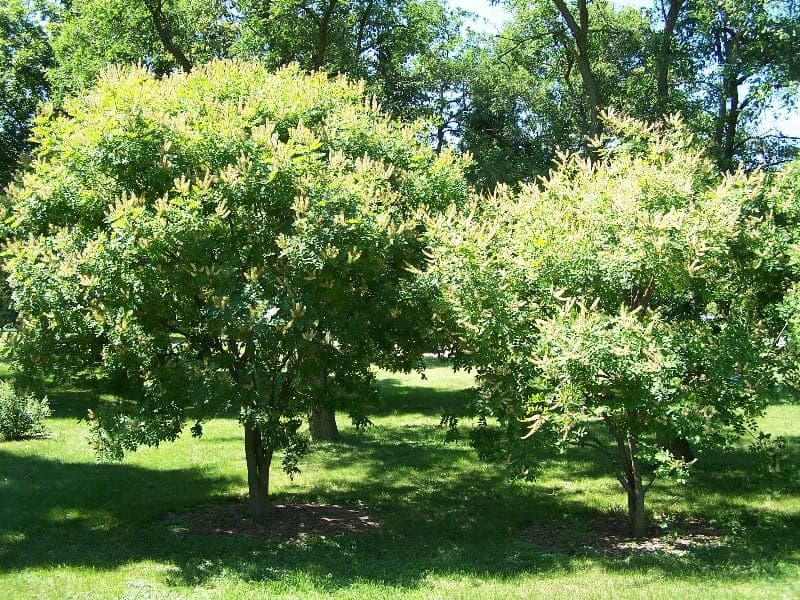
Bruce Marlin / CC BY-SA 2.5, via Wikimedia Commons
Maackia amurensis: complete guide
Maackia amurensis
¿Quieres ver Maackia amurensis: complete guide en tu jardín?
1 minuto, sin tarjeta de crédito
Overview
Maackia amurensis, commonly known as Amur maackia, is a beautiful ornamental tree from the Far East, particularly from regions around the Amur River, China, Japan, and Korea. This imposing member of the Fabaceae family (pea family) is valued for its dramatic appearance, refined architecture, and long-lasting ornamental interest. The tree is noted for its remarkable cold tolerance, delicate white flowers in summer, and unique peeling bark providing winter interest.
Appearance and Bloom
Maackia amurensis grows to 15-20 meters height with a broad, open crown. The tree displays pinnate leaves that emerge reddish and become dark green later. The most striking feature is the light, peeling bark offering interesting textural appeal, especially in winter. From July through September, the tree produces dense, upright flower clusters of small, white to cream flowers that are strongly fragrant and attract butterflies and bees. Following the flowers are elongated seed pods.
Ideal Location
Plant in full sun for optimal growth and flowering. Maackia amurensis requires at least 6 hours of direct sunlight daily. The tree tolerates windy climates well thanks to its flexible stems. Ensure adequate space for the expanding crown - minimum 5 meters distance from other large trees. In urban settings, it works well as a specimen tree or in small groupings.
Soil
Maackia amurensis is remarkably frost-hardy and grows well on varied soil types. It prefers well-draining, moderately moist soil with neutral pH. The tree tolerates both acidic and neutral soils. Avoid compacted soil that may weaken roots. In urban plantings, best amended with organic matter to support root development.
Watering
Water regularly after planting until well established (first year or two). Once established, the tree is relatively drought-tolerant, though regular moisture is preferred for optimal growth. Apply supplemental watering during dry periods, especially in the first five years. Ensure roots don't sit in water.
Diseño gratis
¿Quieres ver Maackia amurensis: complete guide en tu jardín? Crea un diseño gratis ahora.
Pruning
Pruning is generally unnecessary for healthy natural form. If needed, weak or crossing branches can be removed in early spring. Remove dead or diseased wood annually. Avoid hard pruning as this can diminish natural form. Allow the tree to maintain its natural architecture.
Maintenance Calendar
Spring: Inspect for winter damage. Begin regular watering.
Summer: Feeding can be beneficial, especially for young trees. Watch for pest problems.
Fall: Reduce watering as the growing season ends. Collect seed pods for propagation if desired.
Winter: Minimal care needed. Peeling bark adds winter interest. Avoid pruning in winter.
Winter Hardiness
Maackia amurensis is extremely winter-hardy, tolerating temperatures down to about -30 degrees Celsius without substantial damage. This makes it suitable for cold climates across Northern Europe and North America. The tree survives hard frosts without special protection. In very cold regions, young plants may benefit from winter protection.
Companion Plants
Use Maackia amurensis as a specimen tree or in groups for screening or shelter. The tree works well in parks, large gardens, and urban green spaces. Combines nicely with other large trees and shrubs. White flowers contrast beautifully with dark conifers. Good plant companions include maples, birches, and other deciduous trees.
Closing
Maackia amurensis is a valued ornamental tree that adds brightness, fragrance, and architecture to large gardens. With its exceptional hardiness, longevity, and minimal maintenance requirements, it's an excellent choice for sustainable landscapes. Peeling bark provides winter interest, and summer flowers attract pollinators. Find this beautiful tree through specialized tree nurseries and garden centers. Explore more guides on gardenworld.app and create your front yard into a rustic oasis.
¿Quieres ver Maackia amurensis: complete guide en tu jardín? Crea un diseño gratis ahora.
Sube una foto, elige un estilo y obtén un diseño fotorrealista con lista de plantas en menos de un minuto.
Más de 10.000 jardines diseñados
Sin tarjeta de crédito


Plantas similares
Tall Silky Lupine: complete guide
Lupinus elatus
Tall silky lupine is a fast-growing Californian perennial with silvery foliage and blue-purple flower spikes, ideal for a prairie-style garden.
Garfield Lupine: complete guide
Lupinus garfieldensis
The Garfield lupine is a rare, fast-growing American perennial for alkaline, dry grassland gardens, with striking blue flower spikes.
Lupinus elegans: complete guide
Lupinus elegans
Lupinus elegans, the elegant lupine, is a spectacular blooming plant from Mexico with blue flower spikes. Care, cultivation and garden use.