
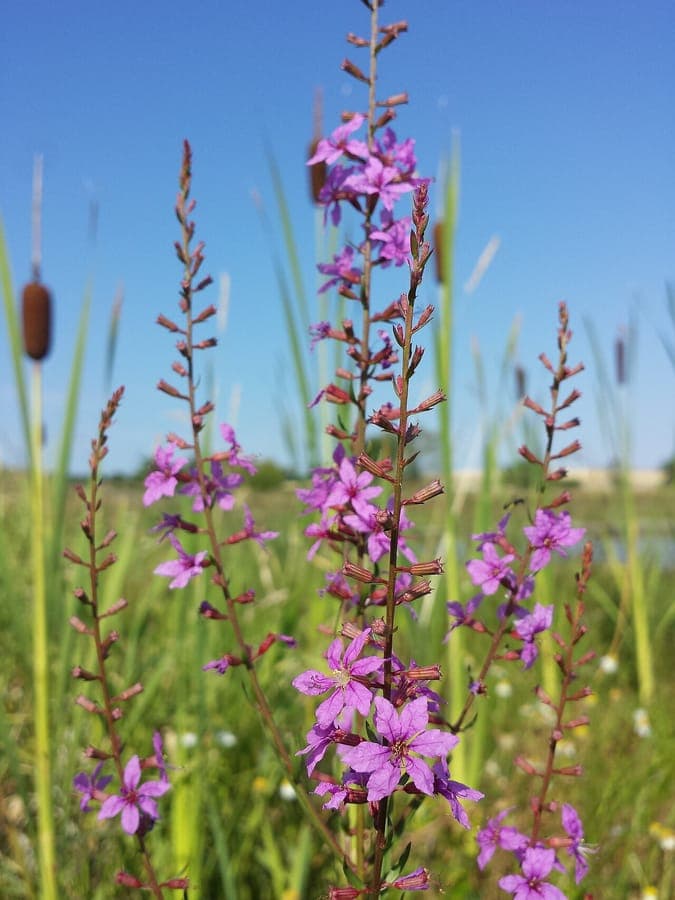
Stefan.lefnaer / CC BY-SA 4.0, via Wikimedia Commons
Lythrum virgatum: complete guide
Lythrum virgatum
¿Quieres ver Lythrum virgatum: complete guide en tu jardín?
1 minuto, sin tarjeta de crédito
Overview
Lythrum virgatum, commonly known as European wand loosestrife or Slender loosestrife, is an elegant perennial from the Lythraceae family. This striking plant originates from Eastern and Central Europe and is particularly valued for its beautiful purple flowers and compact growth. Lythrum virgatum is an excellent choice for marsh edges, water features, and moist garden areas.
Appearance and bloom
Lythrum virgatum grows to a height of 60 to 100 centimeters. The plant has narrow, linear to lance-shaped leaves growing opposite to each other. The stems are slender and elegant. The flowers appear in long, dense spikes at the top of stems and are usually bright purple to magenta in color. Some cultivars also have pink to red flowers. The blooming period runs from July to September, making it a valuable autumn bloomer.
Ideal location
Lythrum virgatum thrives best in full sun, receiving at least six hours of direct sunlight. The plant can also grow in partially shaded environments, but flowering will be somewhat less abundant. The plant is suitable for water features and marsh gardens. Protection from strong winds helps protect the elegant flowers.
Soil
Lythrum virgatum is not very particular about soils. The plant grows well in virtually all soils, from sand to clay. However, preference is given to moist to wet soils. For garden applications, well-draining, moderately nutrient-rich soil is suitable. The pH may be between 6.0 and 7.5. Adding organic material helps improve moisture retention.
Diseño gratis
¿Quieres ver Lythrum virgatum: complete guide en tu jardín? Crea un diseño gratis ahora.
Watering
Lythrum virgatum needs a lot of water and grows best in boggy to wet environments. For garden use, regular watering is required, especially during dry periods. In areas with abundant rainfall, supplemental watering may not be needed. The plant even tolerates splash and swampy conditions. However, good drainage is still important to prevent root rot.
Pruning
Pruning can help maintain a more compact form. After blooming, dead spikes can be removed. In spring, damaged stems can be removed. In many cases, the plant can be cut close to the ground in late autumn, giving a neater appearance.
Maintenance calendar
Spring: New growth appears in March-April. Plant can be cut close to ground. Summer: Regular watering. Blooming begins. Autumn: Blooming continues until October. Seed ripens. Winter: Plant withdraws, minimal care.
Winter hardiness
Lythrum virgatum is extremely winter-hardy and tolerates temperatures to -30 degrees Celsius. This makes it suitable for all temperate climates. In very wet winters, good drainage is essential to prevent root rot. The plant regrows from its roots each spring.
Companion plants
Lythrum virgatum combines beautifully with other water-lovers and perennials like Iris sibirica, Filipendula, and Hosta. The purple flowers create beautiful contrasts with yellow flowers like Rudbeckia and Heliopsis.
Closing remarks
Lythrum virgatum is an excellent choice for gardeners with wet or moist gardens. The plant is available at all major garden centers and nurseries. For more inspiration with water gardens and marsh plants, find tips at gardenworld.app. Also at gardenworld.app, read more about creating waterside plant borders where Lythrum virgatum can have a prominent place.
¿Quieres ver Lythrum virgatum: complete guide en tu jardín? Crea un diseño gratis ahora.
Sube una foto, elige un estilo y obtén un diseño fotorrealista con lista de plantas en menos de un minuto.
Más de 10.000 jardines diseñados
Sin tarjeta de crédito


Plantas similares
Winged loosestrife: complete guide
Lythrum alatum
Everything about Lythrum alatum, the winged loosestrife. Care, location, pruning and garden pairings for this native North American wetland perennial.
Dnieper loosestrife: complete guide
Lythrum borysthenicum
Everything about Lythrum borysthenicum, the Dnieper loosestrife: location, bloom season, care in pond margins and bog gardens. Full growing guide included.
Grand redstem: complete guide
Ammannia robusta
Everything about Ammannia robusta: pond margins, bog gardens, soil, care and propagation. Practical advice for water garden enthusiasts in temperate climates.