
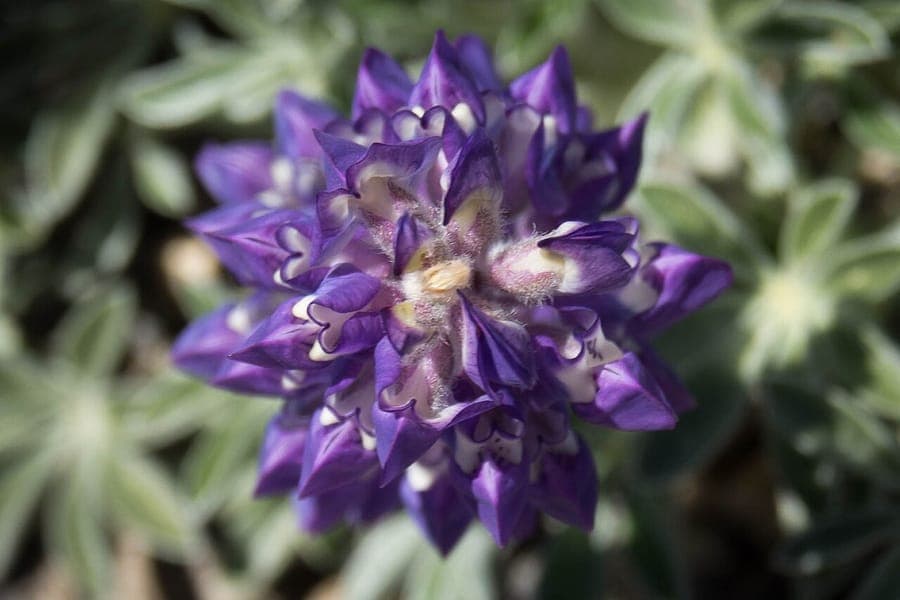
Elaine with Grey Cats from California, USA / CC BY-SA 2.0, via Wikimedia Commons
Lupinus duranii: complete guide to Mono Lake lupine
Lupinus duranii
¿Quieres ver Lupinus duranii: complete guide to Mono Lake lupine en tu jardín?
1 minuto, sin tarjeta de crédito
Overview
Lupinus duranii, known as Mono Lake lupine, is an exceptionally special and rare annual plant endemic to the Mono Basin in California. This lupine belongs to the legume family (Fabaceae) and holds immense significance for conservation. The plant naturally grows in highly specific, alkaline habitats surrounding Mono Lake, one of the world's most unique ecological regions.
This species is not only botanically interesting but also ecologically invaluable. It is listed as an endangered species, and gardeners growing this plant contribute to conservation efforts. The plant is difficult to obtain, but for conservation-minded gardeners, it represents an absolute treasure.
Appearance & Bloom
The Mono Lake lupine grows to approximately 30-40 centimeters height, making it a compact plant. The foliage is very characteristic of lupines: feathery, soft to touch, with many small fingered leaflets.
Flowers grow in compact spikes rising above the foliage. Blooms display warm blue to purple-blue tones, sometimes with subtle white or light pink accents. This provides the plant considerable visual appeal.
Individual flowers follow the papilionaceous form of legumes. The blooming period extends from late spring through early summer. Following flowering, hairy pods develop containing seeds.
The plant is annual, so it will naturally die at season's end.
Ideal Location
This lupine thrives in full sun, meaning at least 6-8 hours of direct sunlight daily. In shade, flowering becomes noticeably reduced.
The plant tolerates wind exposure well.
Drainage is extremely important. The plant grows naturally in highly well-drained, alkaline soils. This is essential for success with this species.
Diseño gratis
¿Quieres ver Lupinus duranii: complete guide to Mono Lake lupine en tu jardín? Crea un diseño gratis ahora.
Soil Requirements
This is where the Mono Lake lupine differs from most lupines. This plant naturally grows on alkaline soils, whereas most lupines prefer acidic to neutral conditions.
For successful home cultivation, attempt to create a soil mixture with calcareous sand, gravel, and excellent drainage. Add limestone or calcium carbonate to raise pH to 7.5-8.5. This is essential!
The plant also naturally grows on extremely nutrient-poor soils, so heavy fertilization is unnecessary.
Watering
Once seedlings emerge, they require minimal water. The plant naturally grows in an extremely dry climate surrounding Mono Lake.
Provide water only occasionally when soil begins to dry. This plant dislikes waterlogging. In fact, the risk of overwatering is far greater than underwatering.
Ensure drainage is perfect.
Pruning
Pruning is unnecessary for this annual plant. However, removing spent flowers (deadheading) can extend the flowering period.
If you wish to harvest seeds for next season, allow some pods to mature.
Maintenance Calendar
Spring: This is the season for sowing. Sow directly in well-drained, alkaline soil. Ensure drainage is perfect.
Summer: Plant grows and flowers. Provide minimal water. It can be extremely dry without problems. Removal of spent flowers can extend blooming.
Fall: Plant naturally dies back. Leave some pods standing for seeds.
Winter: Seeds can survive winter.
Winter Hardiness
Winter hardiness is not relevant since this is an annual. The plant will naturally die at season's end. However, seeds can be stored cool and resown the following spring.
Companion Plants
Other rare Californian lupines are difficult to find. Lupinus croceus also offers compact form. For rare plants of conservation value, botanical gardens can be a source.
Conclusion
Lupinus duranii is a special plant for conservation-minded gardeners. Growing this rare species helps conserve this threatened population. Seeds may occasionally be available through specialized seed suppliers. For more information, consult California's Endangered Plant Program. Visit gardenworld.app for more inspiration.
¿Quieres ver Lupinus duranii: complete guide to Mono Lake lupine en tu jardín? Crea un diseño gratis ahora.
Sube una foto, elige un estilo y obtén un diseño fotorrealista con lista de plantas en menos de un minuto.
Más de 10.000 jardines diseñados
Sin tarjeta de crédito


Plantas similares
Tall Silky Lupine: complete guide
Lupinus elatus
Tall silky lupine is a fast-growing Californian perennial with silvery foliage and blue-purple flower spikes, ideal for a prairie-style garden.
Garfield Lupine: complete guide
Lupinus garfieldensis
The Garfield lupine is a rare, fast-growing American perennial for alkaline, dry grassland gardens, with striking blue flower spikes.
Lupinus elegans: complete guide
Lupinus elegans
Lupinus elegans, the elegant lupine, is a spectacular blooming plant from Mexico with blue flower spikes. Care, cultivation and garden use.