
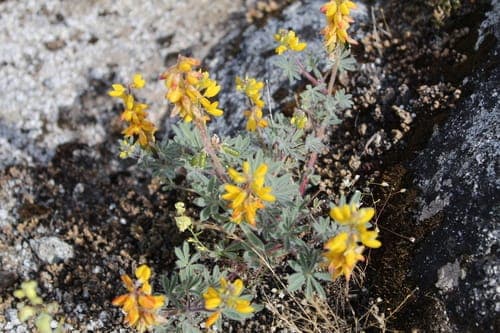
Brandon Wheeler / CC0, via Wikimedia Commons
Orangeflower Lupine: complete guide
Lupinus citrinus
¿Quieres ver Orangeflower Lupine: complete guide en tu jardín?
1 minuto, sin tarjeta de crédito
Overview
Lupinus citrinus, known as orangeflower lupine or orange lupine, is a striking and rare wildflower native to California. This distinctive plant grows only in specific regions of California and is noted among plant collectors for its unique, warm flower color.
With its fine foliage and unexpected orange-yellow blooms, Lupinus citrinus is a spectacular choice for gardeners seeking something truly distinctive. This plant is ideal for seed enthusiasts and plant collectors wanting to discover the unusual.
Appearance and Bloom
Lupinus citrinus grows as an upright herbaceous plant with finely textured, compound leaves. The foliage is characteristic of lupines, with small leaflets radiating like fingers. The plant reaches 60 to 120 centimeters in height.
The flowers are this plant's crowning glory. Blooms are small, approximately 0.8 to 1 centimeter, displaying a unique warm color ranging from orange to yellow-orange, sometimes with subtle red-orange tints. This warm coloration is highly distinctive compared to most lupines. Flowers grow in dense spikes atop tall stems, creating an impressive display. Bloom period is July through August.
Following bloom, characteristic seed pods develop containing seeds for propagation.
Ideal Location
Lupinus citrinus flourishes in full sun with at least six hours of direct sunlight daily. The plant accepts partial shade but produces fewer flowers and may stretch. It thrives in dry to moderately dry conditions.
This lupine excels in dry borders, rock gardens and naturalistic plantings. It thrives on slopes and in full sun. The plant is unsuitable for wet, moisture-rich soils. Position this plant in a prominent location where its orange flowers can shine maximally.
Soil
Lupinus citrinus prefers well-draining, nutrient-poor soils. The plant accepts sandy, gravelly, and even rocky grounds. Soil pH can range from neutral to slightly alkaline (pH 6.5 to 8.5).
Ensure excellent drainage; add sand or gravel if your soil is excessively clay-based. This plant does not value fertility. Excessive compost or manure produces poor results.
Once established, the plant tolerates poor soils exceptionally well.
Diseño gratis
¿Quieres ver Orangeflower Lupine: complete guide en tu jardín? Crea un diseño gratis ahora.
Watering
Once established, Lupinus citrinus is highly drought tolerant. Water regularly during the first growing year until the plant develops good root systems. Thereafter, water sparingly.
Excessive water is more harmful than insufficient. Overly wet conditions cause root rot. Avoid evening watering and prevent wet foliage.
Pruning
Pruning is generally unnecessary. You can remove spent flower spikes to maintain neatness and encourage further bloom. Leave some spikes for seed production if you wish the plant to self-sow.
Maintenance Calendar
May-June: Soil preparation and planting July-August: Regular watering first year; observe flowering September-October: Reduce watering; allow seed ripening November-April: Minimal care; plant overwinters as seed
Winter Hardiness
Lupinus citrinus is winter hardy throughout the Netherlands. The plant is often annual or short-lived and may decline after the first year but self-sows and returns from seed.
Don't worry if the plant dies - you can save seed and resow the following season.
Companion Plants
Lupinus citrinus pairs beautifully with:
- Eschscholzia (California poppy)
- Layia (tidy tips)
- Limnanthes (meadowfoam)
- Lupinus hartwegii (colorful lupine)
- Other warm-colored wildflowers
Closing
Lupinus citrinus is a spectacular choice for gardeners seeking something truly unique and memorable to add to their garden. This rare California lupine with its warm orange-yellow flowers brings exotic beauty to dry gardens. With full sun and well-draining soil, you'll enjoy many seasons of these striking blooms.
Find Lupinus citrinus seed or plants through specialized seed merchants or on gardenworld.app.
Searching for more colorful lupines? Explore our complete plant guide on gardenworld.app for other lupine varieties and wildflowers.
¿Quieres ver Orangeflower Lupine: complete guide en tu jardín? Crea un diseño gratis ahora.
Sube una foto, elige un estilo y obtén un diseño fotorrealista con lista de plantas en menos de un minuto.
Más de 10.000 jardines diseñados
Sin tarjeta de crédito


Plantas similares
Tall Silky Lupine: complete guide
Lupinus elatus
Tall silky lupine is a fast-growing Californian perennial with silvery foliage and blue-purple flower spikes, ideal for a prairie-style garden.
Garfield Lupine: complete guide
Lupinus garfieldensis
The Garfield lupine is a rare, fast-growing American perennial for alkaline, dry grassland gardens, with striking blue flower spikes.
Lupinus elegans: complete guide
Lupinus elegans
Lupinus elegans, the elegant lupine, is a spectacular blooming plant from Mexico with blue flower spikes. Care, cultivation and garden use.