
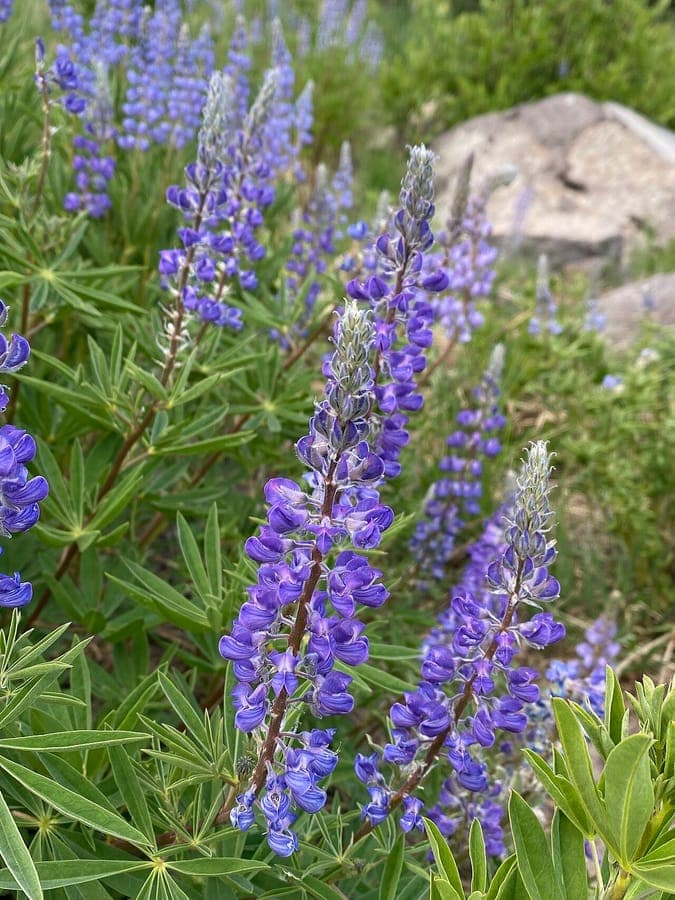
Sarah Allen https://www.inaturalist.org/people/sarah1990 / CC0, via Wikimedia Commons
Lupinus argenteus: complete guide
Lupinus argenteus
¿Quieres ver Lupinus argenteus: complete guide en tu jardín?
1 minuto, sin tarjeta de crédito
Overview
Lupinus argenteus, commonly known as Silvery lupine or Silver lupine, is a native North American plant of the Fabaceae family. This lovely plant is primarily found in western American states from Wyoming to Mexico. The silver lupine is particularly valued for its beautiful blue to purple flowers and its distinctive silvery-hairy stems that give the plant a unique appearance.
Appearance and bloom
Lupinus argenteus grows to a height of 40 to 80 centimeters. The plant has characteristic palmately compound leaves composed of several narrower leaflets. The stems are distinctly covered with silvery-white hairs, which give the plant its name. The flowers grow in dense, vertical clusters (racemes) and are usually deep blue to purple colored, although white varieties also occur. The blooming period runs from May to August.
Ideal location
Lupinus argenteus thrives best in full sun, receiving at least six to eight hours of direct sunlight. The plant is very adaptive and can also grow in partially shaded environments. In hot, dry areas, some afternoon shade helps keep the plant cool. The plant is highly wind-resistant and suitable for exposed spots.
Soil
The soil requirements of Lupinus argenteus are not very strict. The plant does well in poor to moderately nutrient-rich soils with a pH between 6.5 and 8.0. Sandy, gravel-rich soils are actually preferred over rich humus soils. Good drainage is essential; water stagnation is not tolerated. The plant is very drought-tolerant and can, once established, survive long periods without water.
Diseño gratis
¿Quieres ver Lupinus argenteus: complete guide en tu jardín? Crea un diseño gratis ahora.
Watering
Young plants of Lupinus argenteus need regular water. Once established, the plant is very drought-tolerant and can thrive without supplemental watering in temperate climates. During very dry periods, extra water can be given, but preventing overwatering is crucial. After blooming, watering can be significantly reduced.
Pruning
Pruning is not really necessary for Lupinus argenteus. Dead flowers can be removed to keep the plant neat and encourage possible reblooming. In autumn, faded flower stems can be removed. However, do not remove the green foliage, as it withdraws nutrients back to the roots.
Maintenance calendar
Spring: Seedlings appear, young plants grow rapidly. Summer: Regular watering for young plants. Blooming period: May-August. Autumn: Let seed ripen or remove stems. Winter: Minimal care in frost-free areas.
Winter hardiness
Lupinus argenteus is hardy to about -20 degrees Celsius, making it suitable for temperate and cold climates. The plant survives cold winters well, as long as the soil is not continuously wet. In very wet climates, extra drainage is needed.
Companion plants
Lupinus argenteus combines beautifully with other alpine flowers and drought-tolerant plants like Rudbeckia, Echinacea, and Salvia. The silvery stems create beautiful contrasts with the dark green foliage of other plants.
Closing remarks
Lupinus argenteus is an excellent choice for gardeners seeking a tough, drought-tolerant plant with beautiful flowers. The plant is sold by specialized nurseries in North America and many European plant nurseries. For Dutch and Belgian gardeners, the plant is available at larger garden centers. At gardenworld.app, you'll find more information on combining drought-tolerant plants in your garden. Also at gardenworld.app, read more about creating alpine gardens where this beautiful lupine thrives optimally.
¿Quieres ver Lupinus argenteus: complete guide en tu jardín? Crea un diseño gratis ahora.
Sube una foto, elige un estilo y obtén un diseño fotorrealista con lista de plantas en menos de un minuto.
Más de 10.000 jardines diseñados
Sin tarjeta de crédito


Plantas similares
Tall Silky Lupine: complete guide
Lupinus elatus
Tall silky lupine is a fast-growing Californian perennial with silvery foliage and blue-purple flower spikes, ideal for a prairie-style garden.
Garfield Lupine: complete guide
Lupinus garfieldensis
The Garfield lupine is a rare, fast-growing American perennial for alkaline, dry grassland gardens, with striking blue flower spikes.
Lupinus elegans: complete guide
Lupinus elegans
Lupinus elegans, the elegant lupine, is a spectacular blooming plant from Mexico with blue flower spikes. Care, cultivation and garden use.