
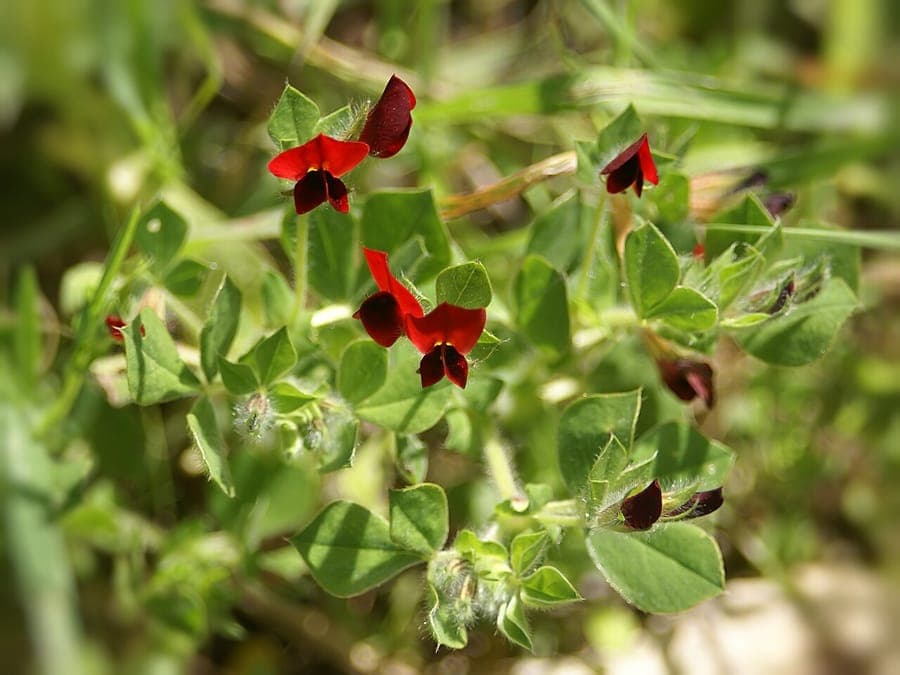
Hans Hillewaert / CC BY-SA 3.0, via Wikimedia Commons
Lotus tetragonolobus: complete guide to asparagus-pea
Lotus tetragonolobus
¿Quieres ver Lotus tetragonolobus: complete guide to asparagus-pea en tu jardín?
1 minuto, sin tarjeta de crédito
Overview of Lotus Tetragonolobus
Lotus tetragonolobus, commonly known as asparagus-pea or winged pea, is a fascinating legume distinguished by its striking red flowers and most characteristic feature: the remarkable wing-shaped pods. This Mediterranean plant belongs to the Fabaceae family and offers a unique blend of ornamental appeal and botanical curiosity. Originating from the Mediterranean region (particularly North Africa, Italy, and Spain), Lotus tetragonolobus thrives especially in warmer, sunny gardens. The plant is valuable for designers seeking something different from standard garden plants, offering a Mediterranean vibe that perfectly suits modern gardens with a warm, southern aesthetic.
The plant typically reaches 40 to 60 centimeters in height and grows in an upright, heavily branched pattern. The stems are herbaceous and reddish in color, contributing to the plant's visual appeal outside the flowering season. The leaves are trifoliolate, with individual leaflets measuring approximately 1 to 2 centimeters long. What truly distinguishes Lotus tetragonolobus, however, are the pods: these are uniquely quadrangular in cross-section and possess four clearly visible wings or ribs extending along their length. These pods reach approximately 3 to 5 centimeters long, initially green but turning reddish as they mature.
Appearance and Flowering
The flowers of Lotus tetragonolobus present a spectacular display and form a crucial ornamental element. They are bright red, sometimes with subtle yellow or orange tints, appearing in clusters of 2 to 4 flowers per axis. Each flower measures approximately 15 to 20 millimeters in diameter and displays the same butterfly shape characteristic of other legumes. The flowering period extends from May through July, with possible repeated flowering if the plant doesn't become exhausted from seed production.
Following flowering, the characteristic winged pods appear, referred to by some as 'winged peas' or 'asparagus-peas'. These pods constitute the plant's most striking feature and remain attractive throughout the summer. The wings make the pods highly recognizable and provide impressive textural contrast with other plant materials in the garden.
Ideal Location and Light Requirements
Lotus tetragonolobus is a plant requiring warmth and extensive sunlight to perform well. For optimal growth and flowering, choose a location with at least 7 to 8 hours of direct sunlight daily. In northern climates, this plant grows best in south-facing or southwesterly borders, and positioning it against a warm wall or fence that reflects additional heat is recommended. The plant will produce fewer flowers in more northerly situations, and pods may not fully develop.
Wind resistance is less critical for this plant than for smaller species, as the heavier stems of Lotus tetragonolobus are more sturdy. However, extremely strong wind can still cause damage, so some protection is beneficial.
Soil Requirements and Ground Preparation
Lotus tetragonolobus thrives in well-draining, warm-retaining soils. Unlike some other legumes, this plant is not particularly demanding regarding soil fertility but does prefer soils with good drainage. Clay and loam soils can be improved by adding sand (at least 30 percent) and well-rotted compost. A pH between 6.0 and 7.0 is ideal.
For container planting, a well-draining potting mixture is essential, consisting of potting soil, sand, and perlite in a 3:1:1 ratio. This ensures a highly porous growing medium allowing roots to breathe properly.
Diseño gratis
¿Quieres ver Lotus tetragonolobus: complete guide to asparagus-pea en tu jardín? Crea un diseño gratis ahora.
Watering and Moisture Management
Lotus tetragonolobus is drought-tolerant and actually prefers not to receive excessive water, especially during the growing season. Overwatering can prove harmful, leading to rot and fungal issues. Water sparingly, only when the top 5 centimeters of soil feel dry. During dry summers, regular watering may be necessary, but ensure water drains well.
The plant is actually more resistant to drought than to wet feet. This makes Lotus tetragonolobus ideal for gardens in warm, drier regions or even for container cultivation, where you have better control over watering.
Pruning and Maintenance
Pruning is rarely needed for Lotus tetragonolobus. However, if you desire more compact growth, you can pinch out the growing tips in early growing season (May) to encourage side-branching. This results in more branching and possibly more flowers.
Once mature, the plant is very low-maintenance. Periodically remove spent flowers to encourage further blooming, though this is not strictly necessary. The red stems can be left standing throughout autumn for winter interest.
Maintenance Calendar
May: Check growth; pinch out growing tips for more branching. June through July: Monitor weekly for flowering; remove dead flowers. August through September: Allow pods to ripen; check for seed harvesting. October through April: Minimal maintenance; plant dies back and cleanup.
Winter Hardiness and Frost Protection
Lotus tetragonolobus is only partially hardy in northern regions and cannot tolerate temperatures below 0°C. In most northern climates, this plant is therefore treated as an annual or seasonally replanted item. In warmer southern regions, the plant may sometimes overwinter if the year is mild.
If you wish to grow the plant again next season, collect seed from ripe, brown pods in October/November. Store seeds in a cool, dry place throughout winter. In April/May, sow seeds for flowering later in the season.
Companion Plants and Combinations
Lotus tetragonolobus combines beautifully with other Mediterranean and heat-loving plants:
Nerium oleander - yellow foliage and red flowers create attractive contrast. Rosmarinus officinalis (rosemary) - needle-like leaves offer textural contrast. Santolina - gray foliage sets off red flowers effectively. Ceratostigma plumbaginoides - blue flowers contrast strikingly with red. Plumbago auriculata - indigo-blue flowers create spectacular contrast.
These combinations work best in a 'warm', sunny area of the garden. On gardenworld.app, you can assemble the perfect Mediterranean garden with Lotus tetragonolobus as the star player.
Conclusion
Lotus tetragonolobus is a unique and versatile plant that gives any garden a summery, Mediterranean character. With its red flowers and characteristic winged pods, this plant forms a genuine eye-catcher in the garden. Whether you're attempting to recreate a Mediterranean garden or simply seeking something extraordinary, Lotus tetragonolobus certainly deserves a place in your garden plan. For more inspiration and garden designs featuring this unique plant material, visit gardenworld.app.
¿Quieres ver Lotus tetragonolobus: complete guide to asparagus-pea en tu jardín? Crea un diseño gratis ahora.
Sube una foto, elige un estilo y obtén un diseño fotorrealista con lista de plantas en menos de un minuto.
Más de 10.000 jardines diseñados
Sin tarjeta de crédito


Plantas similares
Tall Silky Lupine: complete guide
Lupinus elatus
Tall silky lupine is a fast-growing Californian perennial with silvery foliage and blue-purple flower spikes, ideal for a prairie-style garden.
Garfield Lupine: complete guide
Lupinus garfieldensis
The Garfield lupine is a rare, fast-growing American perennial for alkaline, dry grassland gardens, with striking blue flower spikes.
Lupinus elegans: complete guide
Lupinus elegans
Lupinus elegans, the elegant lupine, is a spectacular blooming plant from Mexico with blue flower spikes. Care, cultivation and garden use.