
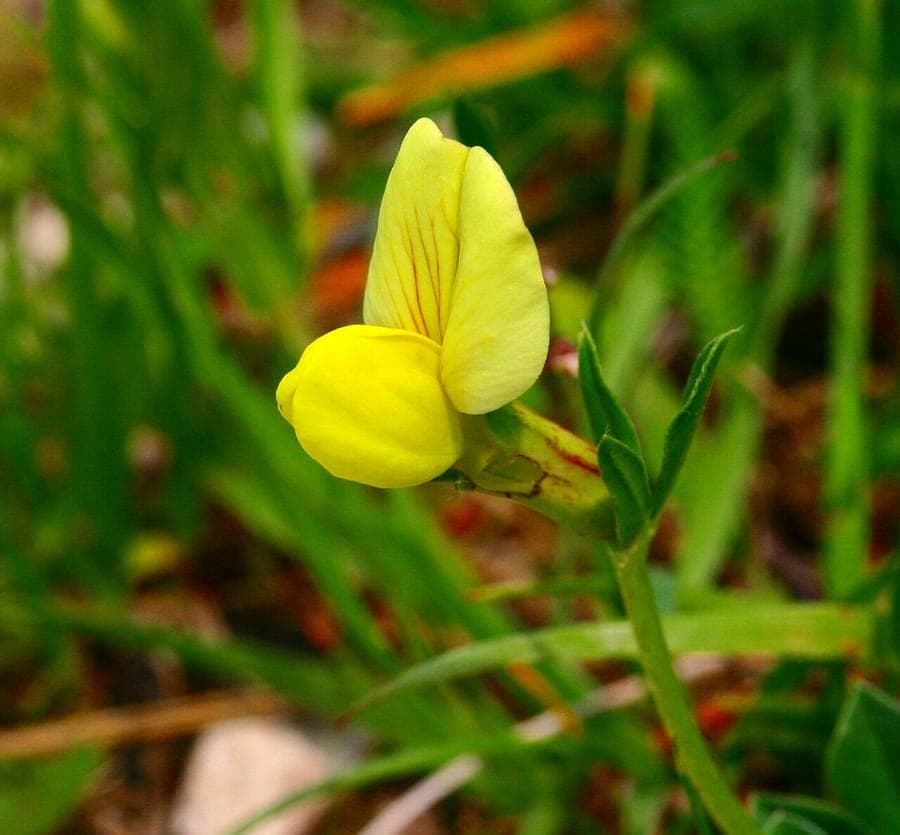
Enrico Blasutto / CC BY-SA 4.0, via Wikimedia Commons
Lotus maritimus: complete guide
Lotus maritimus
¿Quieres ver Lotus maritimus: complete guide en tu jardín?
1 minuto, sin tarjeta de crédito
Overview
Lotus maritimus, commonly called Asparagus trefoil or maritime bird's-foot trefoil, is an unusual and fascinating small perennial from Europe and North Africa. This extremely compact, slow-growing specimen is usually only well-known among serious plant collectors, but deserves far more attention. The plant is particularly valuable in coastal gardens where salt tolerance is essential, and also in alpine or container gardens where compact plants are needed.
Originally from the Mediterranean region and other coastal areas of Europe and North Africa, Asparagus trefoil grows wild on rocky shores, salt marshes and coastal grasslands. This habitat provides strong clues about its preference for salt-tolerant conditions. The plant is remarkably well-adapted and tolerates salt better than virtually any other garden plant. This makes it unequaled in value for coastal gardeners, especially those with salt spray in the air or saltwater inundation concerns.
This is not a plant for everyone - it is delicate, small and slow-growing. But for specialized applications, especially coastal gardens, alpine gardens and rockeries, Asparagus trefoil is a true gem. Its particularly interesting rectangular seed pods and bright yellow flowers add visual enchantment.
Appearance & bloom cycle
Lotus maritimus grows as an extremely compact, low cushion, usually only 5-15 cm tall and 15-30 cm wide. This is much smaller than its related bird's-foot trefoil (Lotus corniculatus). The plant forms dense green cushions of extremely fine, threadlike foliage. The leaves are tiny, composed of 5 minuscule leaflets in the characteristic bird's-foot appearance, but on a very small scale. The plant is semi-evergreen, so foliage remains visible throughout much of winter.
The flowers are bright yellow, approximately 5-8 mm long, appearing singly or in very small clusters of up to 3 flowers per head. They bloom from May through August, peaking in June and July. The flowers have the same attractive form as bird's-foot trefoil but on much more delicate scale. Despite their small size, these blooms are highly fragrant, which attracts bees despite the compact growth form.
The seed pods are the most characteristic part of this plant. They are remarkably rectangular, not like the normal bird's-foot shape, but more like tiny little asparagus tips with four distinct sides. This characteristic gives the plant its special name: Asparagus trefoil. The pods are approximately 1-2 cm long and highly attractive to insects.
Ideal location
Lotus maritimus thrives best in full sun to partial shade. The plant needs at least 5-6 hours of direct daily sunshine for optimal blooming. This is much sunnier than most other groundcovers. In shade, the plant will flower sparsely. A sunny, open location is essential.
The plant is highly wind-tolerant, making it ideal for coastal gardens. The compact growth means wind presents no problem. It also grows well on slopes and other difficult locations. A protected location is actually not necessary.
The plant grows well in containers, making it ideal for balcony or terrace gardens. Sea air and salt spray cause no problems.
Soil requirements
Asparagus trefoil tolerates salt better than virtually any other garden plant. This is its greatest advantage. The plant grows well in saline soil and even tolerates saltwater spray quite well. This makes it unequaled for coastal gardens where salt is a serious problem. The pH can range between 5.5 and 8.5.
The plant grows better in poor, lean soil than in rich soil. Good drainage is essential - the plant dislikes waterlogged conditions. In containers or rock gardens with well-draining soil, it performs best. Add sand for extra drainage if needed.
Diseño gratis
¿Quieres ver Lotus maritimus: complete guide en tu jardín? Crea un diseño gratis ahora.
Watering
Asparagus trefoil is drought-tolerant once established, which is a major advantage. Newly planted specimens should water regularly until well-rooted, approximately 1-2 times weekly during the growing season. Once established, the plant tolerates considerable drought and can actually suffer from overwatering.
In coastal gardens where the plant is exposed to saltwater spray, no supplemental water is needed - the plant receives sufficient moisture from natural sources. The plant even tolerates saltwater better than fresh water.
During winter, no watering is needed except in very dry conditions.
Pruning
Asparagus trefoil needs virtually no pruning. The plant grows naturally compact and forms attractive cushions without guidance. Dead flowers can be removed after blooming, but this is not essential. Dead twigs should be removed for neatness.
The plant does not tolerate heavy pruning well and withstands little frost damage. This is not a plant that is regularly cut.
Maintenance calendar
April: Inspect for frost damage. Carefully remove dead twigs.
May-August: Water regularly during dry periods. Enjoy yellow flowers and bee activity. Allow seeds to form.
August-September: Optional deadheading. Reduce watering.
October-November: Minimal care. Very carefully avoid disturbing green foliage.
December-March: Practically no care needed. Protection from heavy snow or ice may be necessary.
Winter hardiness
Asparagus trefoil is reasonably winter hardy and tolerates temperatures down to approximately -10 to -12°C, making it suitable for USDA zones 7-10. However, it is more frost-damage sensitive than many other groundcovers. The plant grows better in milder coastal climate zones.
In colder regions, winter protection helps - for example, protection from snow or ice and drainage of water. The plant has better chances on elevated terrain where water can drain away.
The plant is far more tolerant of maritime harsh conditions than of extreme cold.
Companion plants
Asparagus trefoil combines well with other salt-tolerant coastal plants. Armeria (sea pink) is a classic pairing. Tamarix (tamarisk) grows well in the same conditions. Limonium (sea lavender) also works well. These are all plants that tolerate salt.
In rock gardens it combines well with other alpine groundcovers like Sedums. It also works well in containers with other compact, drought-tolerant plants. In coastal gardens, many gardeners thoughtfully place it in cluster plantings where it can protect against salt.
Avoid plants with very high water requirements nearby, as this plant values drought.
Conclusion
Asparagus trefoil is a unique and fascinating plant for specialized applications, especially coastal gardens. With its exceptional salt tolerance, compact growth and bright yellow blooms, it deserves attention from more gardeners. Whether you have a coastal garden or simply seek a fascinating small plant for your rock garden, Asparagus trefoil is a valuable addition.
Discover more unique plant choices at gardenworld.app, where you'll find advice for specialized garden applications. With gardenworld.app guidance, you can create a coastal garden that thrives in harsh conditions.
¿Quieres ver Lotus maritimus: complete guide en tu jardín? Crea un diseño gratis ahora.
Sube una foto, elige un estilo y obtén un diseño fotorrealista con lista de plantas en menos de un minuto.
Más de 10.000 jardines diseñados
Sin tarjeta de crédito


Plantas similares
Tall Silky Lupine: complete guide
Lupinus elatus
Tall silky lupine is a fast-growing Californian perennial with silvery foliage and blue-purple flower spikes, ideal for a prairie-style garden.
Garfield Lupine: complete guide
Lupinus garfieldensis
The Garfield lupine is a rare, fast-growing American perennial for alkaline, dry grassland gardens, with striking blue flower spikes.
Lupinus elegans: complete guide
Lupinus elegans
Lupinus elegans, the elegant lupine, is a spectacular blooming plant from Mexico with blue flower spikes. Care, cultivation and garden use.